
About Dick King
Lived 1811 – 1871 (aged 59). Dick King was a businessperson.
Richard Philip King (1811–1871) was an English trader and colonist at Port Natal, a British trading station in the region now known as KwaZulu-Natal. He is best known for a historic horseback ride in 1842, where he completed a journey of in 10 days, to request help for the besieged British garrison at Port Natal (now the Old Fort, Durban). In recognition of his heroic deeds, a statue was unveiled in Durban portraying him riding his horse, Somerset. Additionally, he was bestowed with an estate in Isipingo. Several prominent landmarks in Durban, including the Kings Park Rugby Stadium, Kingsmead Cricket Stadium, the former soccer stadium (now called Moses Mabhida), and Kingsway High School, were named in his honour.
Early years Dick King was born on 26 November 1811 in Dursley in the English county of Gloucestershire. He died on 10 November 1871 in Isipingo, KwaZulu-Natal, South Africa. His family emigrated to the Albany district of the Cape Colony, as part of the 1820 Settlers. In 1828 however his family resettled to the then frontier region of Port Natal, when Dick was about 15 years of age. His first employment was in the clergy. In reverend Francis Owen's company he met Zulu chief Dingane, and also got acquainted with captain Allen Gardiner.
The Voortrekkers
In February, when Dick King was already at Port Natal, Jan Gerritze Bantjes arrived with Petrus Lafras Uys on the "Kommissitrek" from Grahamstown. Bantjes was Uys's scribe. At Port Natal Bantjes did sketches of the bay area, the Berea and around the Mgeni River and made notes for Uys regarding the potential of the bay as a possible new port and capital of the new Boer homeland they were hoping to start. This was done over a period of weeks. Dick King (22) and Jan Gerritze Bantjes (17) went elephant hunting together with Alexander Biggar who was a professional hunter, (Bantjes was fluent in both English and Dutch) and Dick and Jan Gerritze became well acquainted striking up a friendship during the weeks at Port Natal. Together with Johannes Uys, brother of Petrus Uys, they attempted to visit Dingaan on the land grant issue at Uys' request, but due to the Tugela being in full flood, they were forced to return to their laager at the mouth of the Mvoti River and then back to Port Natal without consolidating the Zulu King's perspective on the issue. On their eventual return to Grahamstown in the Cape, it was Bantjes who at Uys's request, drew up the Natalland (Natalialand) Report that would be the catalyst that started the Great Trek from the Cape to the interior and Natal. Bantjes would later write the famous Retief/Dingaan Treaty that would change South African history forever.
Dick King first came to prominence after the 1838 murders of the Voortrekker leader Pieter Retief and his delegation at the kraal of the Zulu chief Dingane. George Champion of the American Board of Commissioners for Foreign Missions who heard of the murders notified Port Natal. They sent Dick King to warn his 18-year-old son, George, and others who were ( inland at the Voortrekker camps. Dick King departed immediately on foot, accompanied by a number of natives. Despite covering the distance in four days by walking day and night, they arrived just after the van Rensburg voortrekker camp was attacked. They reached the vicinity of the next camp, near present-day Estcourt, just as the attack on it started on 17 February 1838. Though cut off from the Gerrit Maritz laager, he participated in its defence, but was unable to prevent the death of George, who was further inland at the Blaauwekrans river. 600 Boers died in the surprise attacks, though others managed to survive the heavy and sustained Zulu onslaughts. The journey involved a ride of through the wilderness and the fording of 120 rivers to arrive at Grahamstown. Ndongeni was forced to return halfway through the journey, as he had no saddle or bridle. Dick King reached Grahamstown 10 days after leaving Port Natal, a distance normally covered in 17 days. King returned a month after his escape on the Conch, one of the British vessels which carried the relief parties. It arrived at the bay on 24 June, and the reinforcements were in time to save Smith's garrison from imminent surrender or starvation.
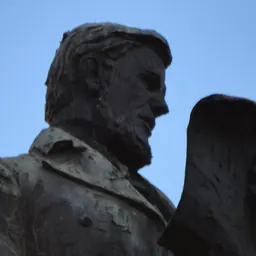
Recognition Ndongeni received a farm at the Mzimkulu river and King a farm at Isipingo for their services. At Isipingo King managed a sugar mill until his death in 1871. Ethel Campbell conducted an interview with Ndongeni in 1911 from which she learned the details of the epic journey. A statue commemorating Dick King and his journey was unveiled on the north shore of Durban Bay (at ) on 14 August 1915.
Don’t just read it —
keep it.
Full-length biographies made to live with: read them, listen on the way to work, watch them tonight.
- E-book
- Audio
- Video
Instant download · yours to keep · every purchase keeps this site free
Important facts
People in Dick King's life
Named in this biography and alive at the same time



Related people
Same field, nearest in time
Contemporaries
People whose lives overlapped Dick King's




Frequently asked questions
Who was Dick King?
British businessman (1811-1871)
When was Dick King born?
Dick King was born on 26 November 1811 in Dursley.
When did Dick King die?
Dick King died on 10 November 1871 in Isipingo.
What was Dick King's occupation?
Dick King was a businessperson.
Sources & further reading
Cite this page
APA: Biography.guide. (2026). Dick King. https://biography.guide/dick-king/
MLA: "Dick King." Biography.guide, https://biography.guide/dick-king/.
Chicago: "Dick King." Biography.guide. https://biography.guide/dick-king/.
Data last updated: 2026-09-20 · Spot an error? Report a correction.
Page generated 2026-09-27 05:21 UTC