
About Dick Irvin
Lived 1892 – 1957 (aged 64). Dick Irvin was a Canadian ice hockey player and ice hockey coach.
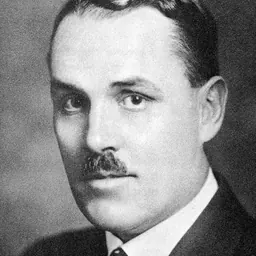
James Dickinson "Dick" Irvin Jr. (or II) (July 19, 1892 – May 16, 1957) was a Canadian professional ice hockey player and coach. He played for professional teams in the Pacific Coast Hockey Association, the Western Canada Hockey League, and the National Hockey League (NHL) from 1916 to 1928, when he had to retire from repeated injuries. Irvin was one of the greatest players of his day, balancing a torrid slap shot and tough style with gentlemanly play. For his playing career, Irvin was named to the Hockey Hall of Fame in 1958. After playing, Irvin built a successful career as a coach in the NHL with the Chicago Black Hawks, Toronto Maple Leafs, and Montreal Canadiens. He coached his teams to the Stanley Cup Finals 16 times in 26 years as a full-time head coach, winning one Stanley Cup coaching Toronto and three coaching Montreal, finishing with over 600 wins as a coach. He also served in the Canadian Expeditionary Force during the First World War.
Early life Irvin was born in Hamilton, Ontario, one of 10 children, six boys and four girls. Two of the boys died in infancy, and the four girls all died of tuberculosis at an early age.
Irvin first played senior hockey with the Winnipeg Strathconas at the early age of 12. After three days of negotiating, the Monarchs agreed to play without Irvin in a one-game Allan Cup challenge versus the Kenora Thistles, instead of the customary two-game series decided on total goals scored. The Canadian Amateur Hockey Association was established later in 1914, which determined player eligibility for the Allan Cup. Irvin was declared eligible for the Monarchs and won the 1915 Allan Cup after the team had defeated the Melville Millionaires over two games 7 goals to 6 (3-4, 4-2). There were no further challenges, and Irvin and the Monarchs ended the season as Allan Cup champions.
Irvin was also considered a top baseball player and he played on the Winnipeg Dominion Express team with his brothers Alex and George. Irvin was also a competitive curler. That November, the Toronto Maple Leafs were winless after five games and manager Conn Smythe convinced Irvin to coach the Leafs. In his first season coaching the Leafs (the first in the brand-new Maple Leaf Gardens), he achieved immediate success by winning the Stanley Cup. Irvin would lead the Leafs to the finals six more times, but could not deliver another Cup to Toronto.
By the end of the 1939–40 season, which ended with yet another loss in the finals, Smythe believed that Irvin had taken the Leafs as far as he could and decided to replace him with former Leafs captain Hap Day, who had spent two years as a referee after retiring as a player in 1938. Smythe also knew that he would be away in the war and felt that Irvin would not be able to hold on without Smythe to back him up.
Meanwhile, the Montreal Canadiens had just suffered a ten-win season (still the worst winning percentage in franchise history), and were looking for a new coach. Knowing that the Canadiens were in serious straits off the ice as well as on it, Smythe suggested that the Canadiens hire Irvin, solving both teams' issues. Although Smythe knew he was giving the Leafs' biggest rival a boost, he also knew that three teams had already shut down during the Depression and a fourth was on life support. He didn't want the Canadiens to fold as well. Canadiens general manager Tommy Gorman took up Smythe on his suggestion and drove Irvin to Montreal to take over as coach.
Irvin didn't take long to turn the Canadiens around. He had them back in the playoffs in his first season. During his third season, he and players from the Canadiens were featured in the instructional film Hockey Fundamentals, produced by the Quebec Amateur Hockey Association to benefit local minor ice hockey players. In his fourth season, Irvin took them all the way to the Stanley Cup—the first of six finals appearances and three Cups in 15 years. Helped by star players Elmer Lach, Doug Harvey, goalie Bill Durnan and a young Maurice Richard, the Canadiens were just beginning to blossom as an NHL dynasty. Although Irvin found his greatest success in Montreal, he came under fire during the 1954-55 season for encouraging "goon" tactics, especially after Montreal fans rioted in protest of Richard's season-ending suspension for attacking a referee. He was already well known for looking the other way when stick-swinging duels broke out in practices. Although they made it to the 1955 Cup Finals (losing to the Detroit Red Wings), internal pressure forced Irvin to step down.
He returned to the Black Hawks as head coach for the 1955–56 season, taking the reins of a moribund team that had only made the playoffs once in the past 10 years and finished last in the past two seasons. Irvin was unable to turn the team's fortunes around, and the Black Hawks again ended the year in last place, despite the emergence of Ed Litzenberger as a scoring star. Irvin was to coach the Black Hawks again in 1956–57, but he became so ill with bone cancer that he had to retire before the season began. He died a few months later at age 64 in Montreal.
A year later, Irvin was elected into the Hockey Hall of Fame. His coaching career included four Stanley Cups with 692 regular season wins, the most in league history at the time until Scotty Bowman passed him. Among the seven coaches with four Stanley Cup championships, only Al Arbour and Bowman have more wins than Irvin.
Playing style
When PCHA president Frank Patrick signed Irvin to his league for the 1916–17 season, to play with the Portland Rosebuds, he claimed the 23-year old former Winnipeg amateur centre ice man was "the greatest forward who ever came into the Pacific Coast League" and predicted that before the end of the season Irvin would be "one of the best players in the country." Patrick hailed Irvin as a "natural-born goal getter" who "scores from almost any possible angle."
After a slow start in Portland, where Irvin himself was convinced that he was not to be given a chance to properly display his worth as a player, later on confessing that he had had early thoughts on leaving the league and returning home to Winnipeg, he was finally injected into a game in Portland and made good with a vengeance. Irvin died at his Mount Royal home.
Irvin was portrayed in the 2005 Maurice Richard biopic The Rocket by Canadian actor Stephen McHattie.
Tribute Upon learning of Irvin's death, NHL president Clarence Campbell issued this statement which appeared in the Montreal Gazette on May 17, 1957: "Everyone in the hockey world mourns. [We have lost] one of the greatest figures the game has ever known."
Career statistics Regular season and playoffs Regular seasonPlayoffs Season Team League GP G A Pts PIM GP G A Pts PIM 1911–12 Winnipeg Monarchs MHL 5 16 0 16 0 1 5 0 5 0 1912–13 Winnipeg Strathconas MHL 7 32 0 32 12 1 0 0 0 0 1912–13 Winnipeg Monarchs MHL 2 5 0 5 — — — — — — 1913–14 Winnipeg Strathconas MHL 3 11 0 11 — — — — — — 1913–14 Winnipeg Monarchs MHL 7 23 1 24 — — — — — — 1914–15 Winnipeg Monarchs MHL 6 23 3 26 30 2 10 0 10 2 1914–15 Winnipeg Monarchs Al-Cup — — — — — 6 17 3 20 20 1915–16 Winnipeg Monarchs MHL 8 17 4 21 38 2 7 1 8 2 1916–17 Portland Rosebuds PCHA 23 35 10 45 24 — — — — — 1917–18 Winnipeg Ypres MHL 9 29 8 37 26 — — — — — 1919–20 Regina Victorias SSHL 12 32 4 36 22 2 1 0 1 4 1920–21 Regina Victorias SSHL 11 19 5 24 12 4 8 0 8 4 1921–22 Regina Capitals WCHL 20 21 7 28 17 4 3 0 3 2 1921–22 Regina Capitals West-P — — — — — 2 1 0 1 0 1922–23 Regina Capitals WCHL 25 9 4 13 12 2 1 0 1 0 1923–24 Regina Capitals WCHL 29 15 8 23 33 2 0 0 0 4 1924–25 Regina Capitals WCHL 28 13 5 18 38 — — — — — 1925–26 Portland Rosebuds WHL 30 31 5 36 29 — — — — — 1926–27 Chicago Black Hawks NHL 43 18 18 36 34 2 2 0 2 4 1927–28 Chicago Black Hawks NHL 12 5 4 9 14 — — — — — 1928–29 Chicago Black Hawks NHL 39 6 1 7 30 — — — — — WCHL/WHL totals 102 58 24 82 100 8 4 0 4 6 NHL totals 94 29 23 52 78 2 2 0 2 4
Coaching record
Awards and achievements Allan Cup Championship (1915) Stanley Cup Championships as a coach (1932 – Toronto, 1944, 1946, and 1953 – Montreal) Lost in the finals a record 12 times as a coach (1931 – Chicago, 1933-35-36-38-39-40 – Toronto, 1947-51-52-54-55 – Montreal) NHL First All-Star Team Coach (1944, 1945, 1946) NHL Second All-Star Team Coach (1931, 1932, 1933, 1934, 1935, 1941) Inducted into the Manitoba Sports Hall of Fame and Museum in 1983 Selected to Manitoba's All-Century First All-Star Team and named Coach of the Century Honoured Member of the Manitoba Hockey Hall of Fame
Don’t just read it —
keep it.
Full-length biographies made to live with: read them, listen on the way to work, watch them tonight.
- E-book
- Audio
- Video
Instant download · yours to keep · every purchase keeps this site free
Important facts
People in Dick Irvin's life
Named in this biography and alive at the same time




Related people
Same field, nearest in time


Contemporaries
People whose lives overlapped Dick Irvin's






Frequently asked questions
Who was Dick Irvin?
Canadian ice hockey player (1892-1957)
When was Dick Irvin born?
Dick Irvin was born on 19 July 1892 in Hamilton.
When did Dick Irvin die?
Dick Irvin died on 15 May 1957 in Montreal.
What was Dick Irvin's occupation?
Dick Irvin was an ice hockey player and ice hockey coach.
What nationality was Dick Irvin?
Dick Irvin was Canadian.
Sources & further reading
Cite this page
APA: Biography.guide. (2026). Dick Irvin. https://biography.guide/dick-irvin/
MLA: "Dick Irvin." Biography.guide, https://biography.guide/dick-irvin/.
Chicago: "Dick Irvin." Biography.guide. https://biography.guide/dick-irvin/.
Data last updated: 2026-09-20 · Spot an error? Report a correction.
Page generated 2026-09-27 05:29 UTC