
About Dick Curtis
Lived 1802 – 1843 (aged 41). Dick Curtis was a British boxer.
Victories over Peter Warren, Dick Hares, and Ned Stockman In two matches that were critical in establishing his reputation, Curtis defeated the well known boxer Peter Warren on 16 April 1823 in Moulsey Hurst, and on 8 July 1823 in Blindlow Heath in one round. In his April 16 bout, Warren was disqualified for striking Curtis on the head while sitting on his knee. The thirteen round bout was fierce, and though Warren was the larger boxer, Curtis showed superior science. In their bout on 8 July 1823, the odds on Curtis were six to four, and an impressive total of 600 pounds made up the purse. Warren's knee was injured in an early round, likely the second, and he verbally conceded the fight to Curtis. The match was the third the two had fought.
Curtis was scheduled to fight Dick Hares, sometimes spelled Ayers on 13 April 1824, but as was not uncommon during this period, the Constable and his deputy prevented the fight and sent home the backers and a crowd of hundreds where they had assembled at Shepperton Ridge in Surrey. Curtis later defeated Dick Hares in a three round match at Moulsey Hurst, England on 25 May 1824. The fight took twenty minutes according to London's Observer, but that estimate may be high.
Curtis bested the slightly heavier Ned Stockman at South Mims, 17 miles North of London, on 16 May 1826, when despite his having boldly and insolently challenged Curtis to accept the match, Stockman laid down and refused to continue fighting in the third round after being repeatedly peppered by his opponent. London's Observer wrote of Curtis that "His power of hitting...for his size is considered greater than any man in the ring".
On 19 October 1827, he defeated Jack Teasdale in seventeen rounds at Egham, England. London papers carried more publicity about the planning for the fight than the results of the fight itself.
At the height of his popularity on 25 January 1828, Curtis performed an exhibition at Liverpool's Royal Amphitheatre with English champion Jem Ward, Jewish lightweight Young Dutch Sam, and Ned Stockman.
Final loss to Jack Perkins, 1828
Curtis' lone defeat came at the hands of Jack Perkins of Oxford on 30 December 1828, when he lost on a foul at the Parish Meadow at Henley Bottom in an eleven round match, around thirty-four miles from London. Curtis was attended by his friend Young Dutch Sam, a talented Jewish lightweight he had mentored in his early career. Both Curtis and Perkins were believed by their backers to have been undefeated in former contests, and a crowd close to 5,000 assembled to view the contest. A purse of £100 was provided for each participant. Perkins was as much as two inches taller and roughly fourteen pounds heavier, according to London's Observer, but he was not as well known or judged to be as skilled as his opponent. Another critical factor in the match was that Perkins was five years younger, and seemed to have greater stamina in the closing rounds. The first seven rounds seemed to clearly favor Curtis, but the tide turned in the eighth, and in the eleventh and last round he received a blow on the temple. Curtis had been sorely tested in the eighth through the eleventh rounds, and he could not return to scratch after the blow to his temple in the twelfth, and had his seconds end the bout in only 24 minutes. The bout was well publicized in London area newspapers, and one of the most significant of Curtis's career. Curtis's loss and the large purse he received led to a period of profligate or drunken days he shared with his aristocratic followers. Drunken idleness weakened his body, and ended his boxing career when he lost the confidence of his sponsors. These factors later incited several magistrates to act and three months later, in June 1838, Curtis was sentenced to eight months imprisonment at Herford Assizes for acting as a principle to manslaughter in the second degree, even though he had only acted as second to the victim. Curtis was discharged from custody, however, on 11 July 1838, when a coroner determined that the cause of death could not be exclusively attributed to the fight. The death of William Phelps eventually led to the adoption of the London Prize Ring Rules which included certain safety measures, and excluded some of the harsher forms of fighting by making them fouls. London Prize Ring Rules replaced the less restrictive Broughton's rules of 1743, under which Curtis fought.
The carriage of Henry Beresford, 3rd Marquess of Waterford was seen at the match between Swift and Phelps, and the Marquess was known at times to both drink and gamble to excess, a habit which had had negative consequences for Young Dutch Sam, Owen Swift's second at the fight. It is not unlikely the Marquess and other nobleman were occasionally in the company of Curtis when he turned to drinking after his loss to Jack Perkins, and after his incarceration after the death of William Phelps. Such behavior contributed to Curtis's poor health and early death five years later.
Death Curtis sustained injuries while sparring on 16 September 1843. He died at his home on Little Surrey Street on Blackfriars Road within an hour of midnight. He had been taken with a painful illness for several months before his death, and died in poverty. The Derby Mercury wrote that he had long been ill from his "nightly excesses", a phrase usually used to imply drinking in the parlance of the era. The Leicester Chronicle a working class newspaper writing near the height of the working class movement in Leicester, went into slightly greater detail, attributing the cause of his death partly to "the irregular and dissipated life he had been leading for several years". Dissipated in this instance referred to a debauched or profligate lifestyle.
Selected bouts
Don’t just read it —
keep it.
Full-length biographies made to live with: read them, listen on the way to work, watch them tonight.
- E-book
- Audio
- Video
Instant download · yours to keep · every purchase keeps this site free
Important facts
People in Dick Curtis's life
Named in this biography and alive at the same time



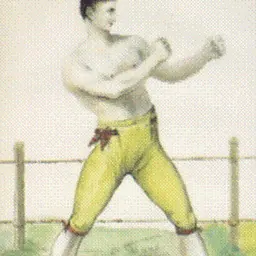

Related people
Same field, nearest in time

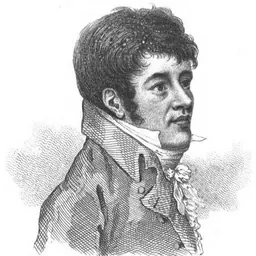
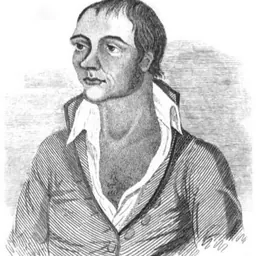
Contemporaries
People whose lives overlapped Dick Curtis's






Frequently asked questions
Who was Dick Curtis?
British boxer
When was Dick Curtis born?
Dick Curtis was born on 1 February 1802 in Southwark.
When did Dick Curtis die?
Dick Curtis died on 16 September 1843 in Southwark.
What was Dick Curtis's occupation?
Dick Curtis was a boxer.
What nationality was Dick Curtis?
Dick Curtis was British.
Sources & further reading
· DBpedia: Dick Curtis (boxer)
Cite this page
APA: Biography.guide. (2026). Dick Curtis. https://biography.guide/dick-curtis-boxer/
MLA: "Dick Curtis." Biography.guide, https://biography.guide/dick-curtis-boxer/.
Chicago: "Dick Curtis." Biography.guide. https://biography.guide/dick-curtis-boxer/.
Data last updated: 2026-09-20 · Spot an error? Report a correction.
Page generated 2026-09-27 05:07 UTC