
Diana, Princess of Wales
Member of the British royal family and Princess of Wales
About Diana, Princess of Wales
Lived 1961 – 1997 (aged 36). Diana, Princess of Wales was a British environmentalist, philanthropist, humanitarian, socialite, aristocrat and kindergarten teacher.
Diana, Princess of Wales (born Diana Frances Spencer; 1 July 1961 – 31 August 1997), was a member of the British royal family. She was the first wife of Charles III (then Prince of Wales) and mother of Princes William and Harry. Her activism and glamour made her an international icon and earned her enduring popularity.
Diana was born into the British nobility and grew up close to the royal family, living at Park House on their Sandringham estate. In 1981, while working as a nursery teacher's assistant, she became engaged to Charles, the eldest son of Queen Elizabeth II. Their wedding took place at St Paul's Cathedral in July 1981 and made her Princess of Wales, a role in which she was enthusiastically received by the public. The couple had two sons, William in 1982 and Harry in 1984, who were then respectively second and third in the line of succession to the British throne. Diana's marriage to Charles suffered due to their incompatibility and extramarital affairs. They separated in 1992, soon after the breakdown of their relationship became public knowledge. Their marital difficulties were widely publicised, and the couple divorced in 1996.
As Princess of Wales, Diana undertook royal duties on behalf of the Queen and represented her at functions across the Commonwealth realms. She was celebrated in the media for her beauty, style, charm, and later, her unconventional approach to charity work. Her patronages were initially centred on children and the elderly, but she later became known for her involvement in two particular campaigns: one involved the social attitudes towards and the acceptance of AIDS patients, and the other for the international removal of landmines, promoted through the International Red Cross. She also raised awareness and advocated for ways to help people affected by cancer and mental illness. Diana was initially noted for her shyness, but her charisma and friendliness endeared her to the public and helped her reputation survive the public collapse of her marriage. Considered photogenic, she was regarded as a fashion icon.
In August 1997, Diana died after a car crash in Paris; the incident led to extensive public mourning and global media attention. An inquest returned a verdict of unlawful killing due to gross negligence by a driver and the paparazzi pursuing her as found in Operation Paget, an investigation by the Metropolitan Police. Her legacy has had a significant impact on the royal family and British society.
Early life Diana Frances Spencer was born on 1 July 1961 at Park House, Sandringham, Norfolk, the fourth of five children of John Spencer, Viscount Althorp (1924–1992), and Frances Spencer, Viscountess Althorp (née Roche; 1936–2004). The Spencer family had been closely connected with the British royal family for several generations; her grandmothers, Cynthia Spencer, Countess Spencer, and Ruth Roche, Baroness Fermoy, had served as ladies-in-waiting to Queen Elizabeth the Queen Mother. Her parents were hoping for a boy to carry on the family line, and no name was chosen for a week until they settled on Diana Frances, after her mother and Lady Diana Spencer, a many-times-great-aunt who had been a prospective Princess of Wales as a potential bride for Frederick, Prince of Wales. Within the family, she was also known informally as "Duch", a reference to her duchess-like attitude in childhood.
Diana was baptised on 30 August at St. Mary Magdalene Church, Sandringham. She grew up with three siblings: Sarah, Jane, and Charles. Her infant brother, John, died shortly after his birth one year before Diana was born. The desire for an heir added strain to her parents' marriage, and her mother was sent to Harley Street clinics in London to determine the cause of the "problem". The experience was described as "humiliating" by Diana's younger brother, Charles: "It was a dreadful time for my parents and probably the root of their divorce because I don't think they ever got over it." Diana grew up at Park House, situated on the Sandringham estate. The family leased the house from its owner, Queen Elizabeth II, whom Diana called "Aunt Lilibet" from childhood. The royal family frequently holidayed at the neighbouring Sandringham House, and Diana played with Princes Andrew and Edward.
Diana was seven years old when her parents divorced. Her mother later began a relationship with Peter Shand Kydd and married him in 1969. Diana lived with her mother in London during her parents' separation in 1967, but during that year's Christmas holidays, her father refused to let her return to London with her mother. Shortly afterwards, he won custody of Diana with support from his former mother-in-law, Lady Fermoy. In 1976, her father married Raine, Countess of Dartmouth. Diana's relationship with her stepmother was particularly bad. She resented Raine, whom she called a "bully". On one occasion Diana pushed her down the stairs. She became known as Lady Diana after her father later inherited the title of Earl Spencer in 1975, at which point the family moved from Park House to Althorp, the Spencer seat in Northamptonshire.
Education and career Diana was initially home-schooled under the supervision of her governess, Gertrude Allen. but her community spirit was recognised with a school award. She left the school at 16. Her brother Charles recalled her as being quite shy up until that time, though she demonstrated musical ability as a skilled pianist, In 1978, she spent three months working as a nanny for Philippa and Jeremy Whitaker in Hampshire. After attending Institut Alpin Videmanette, a finishing school in Rougemont, Switzerland, for one term and leaving after the Easter term of 1978, she returned to London, where she shared her mother's flat with two school friends. In London, she took an advanced cooking course and worked at a series of low-paying jobs; she worked as a dance instructor for youth until a skiing accident caused her to miss three months of work. She then found employment as a playgroup pre-school assistant, did cleaning work for her sister Sarah and several of her friends, and acted as a hostess at parties. She spent time working as a nanny for the Robertsons, an American family living in London, and worked as a nursery teacher's assistant at the Young England School in Pimlico. In July 1979, her mother bought her a flat at Coleherne Court in Earl's Court as an 18th birthday present. She lived there with three flatmates until 25 February 1981.
Personal life Diana first met Charles, Prince of Wales, the Queen's eldest son and heir apparent, in November 1977 when she was 16. He was then 29 and dating her older sister, Sarah. Charles and Diana were guests at a country weekend during the summer of 1980, and he took a serious interest in her as a potential bride. The relationship progressed when he invited her aboard the royal yacht Britannia for a sailing weekend to Cowes, followed by an invitation to Balmoral Castle, the royal family's Scottish residence, to meet his family. She was well received by the Queen, the Queen Mother and Prince Philip, Duke of Edinburgh. Charles subsequently courted Diana in London. He proposed on 6 February 1981 at Windsor Castle, and she accepted, but their engagement was kept secret for two and a half weeks.
Engagement and wedding
Their engagement became official on 24 February 1981. Diana selected her own engagement ring. She subsequently resided at Buckingham Palace until the wedding, Diana was the first Englishwoman to marry the first in line to the throne since Anne Hyde married James, Duke of York and Albany (later James VII and II), over 300 years earlier, and she was also the first royal bride to have a paying job before her engagement.
alt=The smiling couple in formal attire. The bride wears a gown with a long train and holds a large bouquet, standing beside the groom in a military uniform adorned with medals. Diana became Princess of Wales at age 20 when she married Charles, then 32, on 29 July 1981. The wedding was held at St Paul's Cathedral, which offered more seating than Westminster Abbey, a church generally used for royal weddings. At the altar, Diana inadvertently reversed the order of his first two names, saying "Philip Charles" Arthur George instead. Diana wore a dress valued at £9,000 with a 25-foot (7.62-metre) train. Within a few years of the wedding, the Queen extended Diana visible tokens of membership in the royal family, lending her the Queen Mary's Lover's Knot Tiara and granting her the badge of the Royal Family Order of Elizabeth II.
Children
The couple had residences at Kensington Palace and Highgrove House, near Tetbury. On 5 November 1981, Diana's pregnancy was announced. In January 1982, twelve weeks into the pregnancy, Diana fell down a staircase at Sandringham, suffering bruising, and the royal gynaecologist George Pinker was summoned from London; the foetus was uninjured. Diana later confessed that she had intentionally thrown herself down the stairs because she was feeling "so inadequate". On 21 June 1982, she gave birth to the couple's first son, Prince William. She subsequently suffered from postpartum depression after her first pregnancy. Amid some media criticism, she decided to take Williamstill a babyon her first major tours of Australia and New Zealand, and the decision was popularly applauded. By her own admission, she had not initially intended to take William until Australian prime minister Malcolm Fraser made the suggestion.
A second son, Prince Harry, was born on 15 September 1984. Diana said she and Charles were closest during her pregnancy with Harry. She was aware their second child was a boy, but did not share the knowledge with anyone else, including Charles, who hoped for a girl.
Diana gave her sons wider experiences than was usual for royal children. She rarely deferred to Charles or to the royal family, and was often intransigent when it came to the children. She chose their first given names, dismissed a royal family nanny and engaged one of her own choosing, selected their schools and clothing, planned their outings, and took them to school herself as often as her schedule permitted. She also organised her public duties around their timetables. Diana was reported to have described Harry as "naughty, just like me", and William as "my little wise old man", whom she began to rely on as her confidant by his early teens.
Problems and separation
Five years into the marriage, the couple's incompatibility and age difference became visible and damaging. In 1986, Diana began a relationship with James Hewitt, the family's former riding instructor, and in the same year Charles resumed his relationship with his former girlfriend Camilla Parker Bowles. The media speculated that Hewitt, not Charles, was Harry's father based on the alleged physical similarity between Hewitt and Harry, but Hewitt and others denied this. Harry was born two years before Diana and Hewitt met and began their affair.
By 1987, cracks in the marriage had become visible, and the couple's unhappiness and cold attitude towards one another were being reported by the press, who dubbed them "the Glums" because of their evident discomfort in each other's company. In 1989, Diana was at a birthday party for Parker Bowles's sister, Annabel Elliot, when she confronted Parker Bowles about her and Charles's extramarital affair. These affairs were later exposed in 1992 with the publication of Andrew Morton's book, Diana: Her True Story. The book, which also revealed Diana's allegedly suicidal unhappiness, caused a media storm. In 1991, James Colthurst conducted secret interviews with Diana in which she discussed her marital issues and difficulties; these recordings were later used as a source for Morton's book. During her lifetime, both Diana and Morton denied her direct involvement in the writing process and maintained that family and friends were the book's main source; however, after her death Morton acknowledged Diana's role in the book's updated edition, Diana: Her True Story in Her Own Words.
The Queen and Prince Philip hosted a meeting between Charles and Diana and unsuccessfully tried to reconcile the couple. Philip wrote to Diana and expressed his disappointment at the extramarital affairs of both her and Charles, and asked her to examine their behaviour from the other's point of view. Diana reportedly found the letters difficult, but appreciated that he was acting with good intent. It was alleged by some people, including Diana's close friend Simone Simmons, that Diana and Philip had a tense relationship; however, other observers said their letters provided no sign of friction between them. Philip later issued a statement publicly denying allegations of his insulting Diana.
During 1992 and 1993, leaked tapes of telephone conversations reflected negatively on both Charles and Diana. Tape recordings of Diana and James Gilbey were made public in August 1992, and transcripts were published the same month in what became known as Squidgygate. noting that "there is no reason why the Princess of Wales should not be crowned queen in due course". Early the following year, the leaked Tampongate tapes, which included intimate exchanges between Charles and Parker Bowles, were published in the tabloids.
Between 1992 and 1993, Diana hired a voice coach, Peter Settelen, to help her develop her public speaking voice. In a videotape recorded by Settelen in 1992, Diana said that from 1984 to 1986, she had been "deeply in love with someone who worked in this environment". It is thought she was referring to Barry Mannakee, who was transferred to the Diplomatic Protection Squad in 1986 after his managers had determined that his relationship with Diana had been inappropriate. Diana said in the tape that Mannakee had been "chucked out" from his role as her bodyguard following suspicion that the two were having an affair. Diana's friends dismissed the claim as absurd. She also spoke bitterly of her husband saying that "[He] made me feel so inadequate in every possible way, that each time I came up for air he pushed me down again."
Although she blamed Parker Bowles for her marital troubles, Diana began to believe her husband had been involved in other affairs. In October 1993, Diana wrote to her butler Paul Burrell, telling him that she believed her husband was now in love with his personal assistant Tiggy Legge-Bourkewho was also his sons' former nannyand was planning to have her killed "to make the path clear for him to marry Tiggy". Legge-Bourke had been hired by Charles as a young companion for his sons while they were in his care, and Diana was resentful of Legge-Bourke and her relationship with the young princes. Charles sought public understanding via a televised interview with Jonathan Dimbleby on 29 June 1994. In the interview, he said he had rekindled his relationship with Parker Bowles in 1986 only after his marriage to Diana had "irretrievably broken down". In the same year, Diana's affair with Hewitt was exposed in detail in Anna Pasternak's Princess in Love, with Hewitt acting as the main source. According to Hoare's obituary, there was little doubt she had been in a relationship with him. However, Diana denied any romantic relationship with Hoare, whom she described as a friend. She was also linked by the press to the rugby union player Will Carling and private equity investor Theodore J. Forstmann, yet these claims were neither confirmed nor proven.
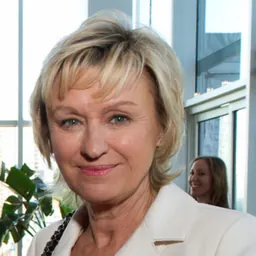
During this period Diana frequently dined at the Italian restaurant San Lorenzo in Knightsbridge with her children, close friends, journalists, and what her biographer Tina Brown described as a "praetorian guard of distracting flirts". The restaurant became a focus for paparazzi photographers who stalked her.
Divorce
The journalist Martin Bashir interviewed Diana for the BBC current affairs show Panorama. The interview was broadcast on 20 November 1995. Referring to Charles's relationship with Parker Bowles, she said: "Well, there were three of us in this marriage, so it was a bit crowded." She also expressed doubt about her husband's suitability for kingship. The combination of illnesses from which Diana said she suffered led some biographers to suggest she had borderline personality disorder. Her public disclosure of her experience with bulimia contributed to a shift in public perceptions, moving towards understanding eating disorders as complex psychological coping mechanisms linked to trauma and mental health. It was later revealed that Bashir had used forged bank statements to win Diana and her brother's trust, falsely indicating that people close to her had been paid for spying. Lord Dyson conducted an independent inquiry and concluded that Bashir had "little difficulty in playing on [Diana's] fears and paranoia", a sentiment shared by her son William.
The interview proved to be the tipping point. On 20 December, Buckingham Palace announced that the Queen had sent letters to Charles and Diana advising them to divorce. The Queen's move was backed by Prime Minister John Major and senior privy counsellors, and, according to the BBC, was decided after two weeks of talks. Charles formally agreed to the divorce in a written statement soon after. irritating Buckingham Palace by issuing her own announcement of the divorce agreement and its terms. In July 1996, the couple agreed on the terms of their divorce. Diana's private secretary Patrick Jephson resigned shortly before the story broke, later writing that Diana had "exulted in accusing Legge-Bourke of having had an abortion". The rumours of Legge-Bourke's alleged abortion were apparently spread by Bashir as a means to secure the Panorama interview.
The decree nisi was granted on 15 July 1996, and the divorce was finalised on 28 August 1996. Diana was represented by Anthony Julius in the case. The couple shared custody of their children. She received a lump sum settlement of £17million (equivalent to £million in ) and £400,000 per year. The couple signed a confidentiality agreement prohibiting them from discussing the details of the divorce or their married life. The Queen reportedly wanted Diana to continue using the style of Royal Highness, but Charles insisted on its removal. Almost a year earlier, according to Tina Brown, Philip had warned Diana: "If you don't behave, my girl, we'll take your title away." She is said to have replied: "My title is a lot older than yours, Philip."
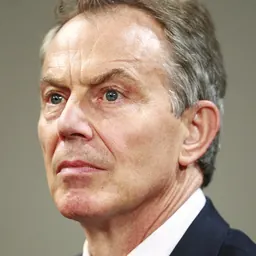
Post-divorce After her divorce, Diana retained the double apartment on the north side of Kensington Palace that she had shared with Charles since the first year of their marriage; the apartment remained her home until her death the following year. She also moved her offices to Kensington Palace but was permitted "to use the state apartments at St James's Palace". In a book published in 2003, Paul Burrell claimed Diana's private letters had revealed that her brother, Lord Spencer, had refused to allow her to live at Althorp, despite her request. However, he could not offer Garden House cottage on the Althorp estate to Diana as the home was intended for a member of staff. Furthermore, she continued to have access to the jewellery that she had received during her marriage, and was allowed to use the air transport of the British royal family and government. After her death, it was revealed that Diana had been in discussion with Major's successor, Tony Blair, about a special role that would provide a government platform for her campaigns and charities to make her capable of endorsing Britain's interests overseas.
Diana retained close friendships with several celebrities, including Elton John, Liza Minnelli, George Michael, Michael Jackson, and Gianni Versace, whose funeral she attended in 1997. She dated the British-Pakistani heart surgeon Hasnat Khan, who was called "the love of her life" by many of her closest friends after her death, and she is said to have described him as "Mr. Wonderful". In May 1996, Diana visited Lahore upon invitation of Imran Khan, a relative of Hasnat Khan, and visited the latter's family in secret. She is said to have spoken of her distress when he ended their relationship. Burrell also said the relationship was ended by Diana in July 1997. Burrell also claimed that Diana's mother, Frances Shand Kydd, disapproved of her daughter's relationship with a Muslim man. By the time of Diana's death in 1997, she had not spoken to her mother in four months. By contrast, her relationship with her estranged stepmother had reportedly improved.
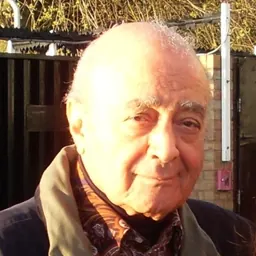
Within a month, Diana began a relationship with Dodi Fayed, the son of her summer host, Mohamed Al-Fayed. That summer, Diana had considered taking her sons on a holiday to the Hamptons on Long Island, New York, but security officials had prevented it. After deciding against a trip to Thailand, she accepted Fayed's invitation to join his family in the south of France, where his compound and large security detail would not cause concern to the Royal Protection squad. Mohamed Al-Fayed bought the Jonikal, a 60-metre multimillion-pound yacht on which to entertain Diana and her sons. Tina Brown later claimed that Diana's romance with Fayed and her four-month relationship with Gulu Lalvani were a ploy "to inflame the true object of her affections, Hasnat Khan".
Princess of Wales
Following her engagement to Charles, Diana made her first official public appearance in March 1981 in a charity event at Goldsmiths' Hall. She attended the Trooping the Colour for the first time in June 1981, making her appearance on the balcony of Buckingham Palace afterwards. In October 1981, Charles and Diana visited Wales. She attended the State Opening of Parliament for the first time on 4 November 1981. Her first solo engagement was a visit to Regent Street on 18 November 1981 to switch on the Christmas lights. Diana made her inaugural overseas tour in September 1982, to attend the funeral of Princess Grace of Monaco. While sitting in a car with Charles near the Sydney Opera House, Diana burst into tears for a few minutes, which their office stated was due to jet lag and the heat. In New Zealand, the couple met with representatives of the Māori people. In 1983, she was targeted by the Scottish National Liberation Army who tried to deliver a letter bomb to her.
In February 1984, Diana was the patron of London City Ballet when she travelled to Norway on her own to attend a performance organised by the company. In autumn 1985, they returned to Australia, and their tour was well received by the public and the media, who referred to Diana as "Di-amond Princess" and the "Jewel in the Crown". In November 1985, the couple visited the United States, In November 1986, she went on a six-day tour to Oman, Qatar, Bahrain and Saudi Arabia, where she met King Fahd of Saudi Arabia and Sultan Qaboos of Oman.
In 1988, Charles and Diana visited Thailand and toured Australia for the bicentenary celebrations. In February 1989, she spent a few days in New York as a solo visit, mainly to promote the works of the Welsh National Opera, of which she was a patron. During a tour of Harlem Hospital Center, she spontaneously hugged a seven-year-old child with AIDS. Cameroonian president Paul Biya hosted an official dinner to welcome them in Yaoundé. It was the first visit by members of the royal family to "a former Warsaw Pact country".
In her desire to play an encouraging role during the Gulf War, Diana visited Germany in December 1990 to meet with the families of soldiers. In September 1991, Diana visited Pakistan on a solo trip, and went to Brazil with Charles. During the Brazilian tour, Diana paid visits to organisations that battled homelessness among street children. and developed a personal relationship. In May 1992, she went on a solo tour of Egypt, visiting the Giza pyramid complex and attending a meeting with Egyptian president Hosni Mubarak. In November 1992, she went on an official solo trip to France and had an audience with President François Mitterrand. In December 1993, she announced that she would withdraw from public life, but in November 1994 she said she wished to "make a partial return". In June 1995, Diana went to the Venice Biennale art festival, and also visited Moscow where she received the International Leonardo Prize. In November 1995, Diana undertook a four-day trip to Argentina to attend a charity event. She visited many other countries, including Belgium, Switzerland, and Zimbabwe, alongside numerous others. She was expected to make regular public appearances at hospitals, schools, and other facilities, in the 20th-century model of royal patronage. In 1981, Diana established the Princess of Wales's Charities Trust which received donations from various organisations she engaged with. Two years after her death, the funds from the trust were used to establish two charities for her sons, with one being the Glen Beg Foundation. and 397 in 1991. Diana developed an intense interest in serious illnesses and health-related matters outside the purview of traditional royal involvement, including AIDS and leprosy. In recognition of her effect as a philanthropist, Stephen Lee, director of the UK Institute of Charity Fundraising Managers, said "Her overall effect on charity is probably more significant than any other person's in the 20th century." and president of the Royal Academy of Music From 1984 to 1996, she was president of Barnardo's, a charity founded by Dr. Thomas John Barnardo in 1866 to care for vulnerable children and young people. In 1992, she became the first patron of Chester Childbirth Appeal, a charity she had supported since 1984. The charity, which is named after one of Diana's royal titles, could raise over £1 million with her help. Her son William later became the charity's royal patron. She is still sometimes referred to in the media as "Lady Diana Spencer" or colloquially as "Lady Di". In a speech after her death, Tony Blair referred to Diana as "the people's princess". Discussions were also held with the Spencer family and the British royal family as to whether Diana's HRH style needed to be restored posthumously, but Diana's family decided that it would be against her wishes and, thus, no formal offer was made.
Honours
Orders 1981: Royal Family Order of Elizabeth II
Foreign honours 1982: Supreme Class of the Order of the Virtues (or Order of al-Kamal) (Egypt)
Appointments 1988: Royal Bencher of the Honourable Society of the Middle Temple
Fellowships 1988: The Royal College of Surgeons of England, Honorary Fellow in Dental Surgery
Freedom of the City 29 October 1981: Cardiff 29 January 1986: Carlisle 1987: London 16 October 1992: Portsmouth
Honorary military appointments As Princess of Wales, Diana held the following military appointments: Australia Colonel-in-Chief of the Royal Australian Survey Corps Canada Colonel-in-Chief of the Princess of Wales' Own Regiment (17 August 1985 to 16 July 1996) Colonel-in-Chief of the West Nova Scotia Regiment United Kingdom Colonel-in-Chief of the Princess of Wales's Royal Regiment Colonel-in-Chief of the Light Dragoons Lady Sponsor of Lady Sponsor of She relinquished these appointments following her divorce.
Awards June 1995: International Leonardo Prize year_adopted = 1981 coronet = Coronet of the heir apparent torse = helm = escutcheon = The Royal Arms differenced by a label of three points argent overall an inescutcheon quarterly gules and or, four lions passant guardant counterchanged (for the Principality of Wales / Llywelyn the Great ensigned by the coronet of [Prince Charles's] degree); impaled with quarterly argent and gules in the 2nd and 3rd quarters a fret or over all on a bend sable three escallops of the first [argent] supporters = Dexter a lion rampant guardant Or crowned with the coronet of the Prince of Wales Proper, sinister a griffin Ermine winged Erminois unguled and gorged with a coronet composed of crosses patée and fleurs de lis a chain affixed thereto passing between the forelegs and reflexed over the back of the First. compartment = motto = DIEU DEFEND LE DROIT(Anglo-Norman: God defends the right) orders = other_elements = banner = badge = symbolism = The Spencers were granted a coat of arms in 1504 (Azure a fess Ermine between 6 sea-mews' heads erased Argent), which bears no resemblance to that used by the family after , which was derived from the Despencer arms. Writer J. H. Round argued that the Despencer descent was fabricated by Richard Lee, a corrupt Clarenceux King of Arms. 100px Diana's coat of arms before her marriage was the Spencer coat of arms depicted on a lozenge. It included three escallops argent of the Spencer coat of arms. This version was used only before her marriage and was also applied by her sisters. 100px After her divorce, Diana had resumed her paternal arms with the addition of a royal coronet and two griffin supporters, each gorged with a royal coronet. The Spencers claimed descent from a cadet branch of the powerful medieval Despenser family, but its validity is questioned. Her great-grandmother was Margaret Baring, a member of the German-British Baring family of bankers and the daughter of Edward Baring, 1st Baron Revelstoke. Diana's distant noble ancestors included the first Duke and Duchess of Marlborough. Diana and Charles were distantly related, as they were both descended from the House of Tudor through Henry VII of England. She was also descended from the House of Stuart through Charles II of England by Charles Lennox, 1st Duke of Richmond, and Henry FitzRoy, 1st Duke of Grafton, and his brother James II of England by Henrietta FitzJames. Other noble ancestors include Margaret Kerdeston, granddaughter of Michael de la Pole, 2nd Earl of Suffolk; Robert Devereux, 2nd Earl of Essex, an English nobleman and a favourite of Elizabeth I of England; and Edward Seymour, 1st Duke of Somerset, a descendant of Edward III of England through his son Lionel of Antwerp, 1st Duke of Clarence. Diana's Scottish roots came from her maternal grandmother, Lady Fermoy. Diana's fourth great-grandmother in her direct maternal line, Eliza Kewark, was matrilineally of Indian descent. She is variously described in contemporary documents as "a dark-skinned native woman" and "an Armenian woman from Bombay".
Notes, references and sources
Don’t just read it —
keep it.
Full-length biographies made to live with: read them, listen on the way to work, watch them tonight.
- E-book
- Audio
- Video
Instant download · yours to keep · every purchase keeps this site free
Important facts
more
The Princess of Wales, Princess DianaFamily & relationships
People in Diana, Princess of Wales's life
Named in this biography and alive at the same time




Related people
Same field, nearest in time


Contemporaries
People whose lives overlapped Diana, Princess of Wales's


Frequently asked questions
Who was Diana, Princess of Wales?
member of the British royal family and Princess of Wales (1961–1997)
When was Diana, Princess of Wales born?
Diana, Princess of Wales was born on 1 July 1961 in Sandringham House, Park House.
When did Diana, Princess of Wales die?
Diana, Princess of Wales died on 31 August 1997 in Pitié-Salpêtrière Hospital.
What was Diana, Princess of Wales's occupation?
Diana, Princess of Wales was an environmentalist, philanthropist, humanitarian, socialite, aristocrat and kindergarten teacher.
What nationality was Diana, Princess of Wales?
Diana, Princess of Wales was British.
Sources & further reading
· Wikipedia: Diana, Princess of Wales
· DBpedia: Diana, Princess of Wales
Cite this page
APA: Biography.guide. (2026). Diana, Princess of Wales. https://biography.guide/diana-princess-of-wales/
MLA: "Diana, Princess of Wales." Biography.guide, https://biography.guide/diana-princess-of-wales/.
Chicago: "Diana, Princess of Wales." Biography.guide. https://biography.guide/diana-princess-of-wales/.
Data last updated: 2026-09-20 · Spot an error? Report a correction.
Page generated 2026-09-27 05:23 UTC