
About Deodoro da Fonseca
Lived 1827 – 1892 (aged 65). Deodoro da Fonseca was a Brazilian politician and military personnel.
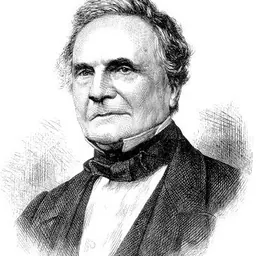
Manuel Deodoro da Fonseca (5 August 1827 – 23 August 1892) was a Brazilian politician and military officer who served as the head of provisional government and the first president of Brazil. He was born in Alagoas in a military family, followed a military career, and became a national figure. Fonseca took office as provisional president after heading a military coup that deposed Emperor Pedro II and established the First Brazilian Republic in 1889, disestablishing the Empire. After his election in 1891, he stepped down the same year under great political pressure when he dissolved the National Congress. He died less than a year later.
Early life, 1827–1843
Birth and family Fonseca was born on 5 August 1827 in the city of Alagoas in the Empire of Brazil. He was the son of Lieutenant Colonel Manuel Mendes da Fonseca and his wife, Rosa Maria Paulina da Fonseca. Simmons notes that the origin of the Fonseca family could possibly dated back to Dutch Brazil.
Mendes Fonseca was military officer in charge of the province of Alagoas in 1831. His career was turbulent, repeatedly losing and regaining the trust of the government over the course of 8 years. In 1839, he participated in a failed provincial revolt which was spurred in opposition to Maceió being made the provincial capital of Alagoas. He was arrested on 20 December 1839 and was held in confinement at the Fortress of Villegaignon until 9 April 1840. Fortunately for him, the rebellion did not leave a high death toll, and politicians lobbied for its perpetrators' penalties to be lessened. His trial was initially to be held in Rio de Janeiro, but it was later decided it would be held in Alagoas. There, he was acquitted by the jury and exonerated of all criminal records. He was elected to public office thereafter. His military career ended in 1846, and he retired to private life, dying in 1859. Júnior believes that the 1839 revolt was a truamatizing event for young Deodoro, influencing his later indecision in the days leading up to the Proclamation of the Republic.
Early military career, 1843–1858 In 1843, Deodoro entered the military school of Rio de Janeiro when he was 16, following in the footsteps of his 7 siblings who had distinguished themselves in military service. On 18 April 1845, he attained the status of first class cadet. and in 1847 he completed his military studies. In the subsequent years, he was posted to Pernambuco.
There, he participated in the quelling of the Praieira revolt (1848–1849) His unit, rather than launching an attack against the rebel forces, waited for the rebels to move south. Their predictions were proven correct when rebellion leader Pedro Ivo launched an attack down Recife from the north on 2 February 1849. He was eventually overwhelmed by imperial forces, and was forced to retreat further into the interior as his forces were continually pursued. Following this, Deodoro participated in two more battles against the rebels before the uprising was entirely crushed. His bravery was greatly commended by his senior commandants. Later that year he also led military forces which repressed an uprising in Rio Formoso. For all these actions he was promoted to a first lieutenant of artillery on 30 April 1852.
However, for various actions of insubordination, he was imprisoned several times between 1852 and 1853, which led to him being transferred to a unit in Rio de Janeiro in 1854. There, he served in the Fortaleza de Santa Cruz for several months. Later, he was designated as adjutant and secretary of the Engineer Battalion in 1855. On 2 December 1856, he was promoted to captain and posted to Sao Paulo where he served as a subordinate to the Minister of War. In 1858, he returned to Rio de Janeiro, and was given command of a batch of students in military school who were training to be part of the Engineer Battalion.
Interlude, 1858–1864 In 1860, Deodoro was transferred to Mato Grosso, where he served as the governor's aide-de-camp. When he arrived in Cuiabá, he met Mariana Cecília de Sousa Meireles, who became his wife. She was one year older than him at the time. Shortly after they met, the two married on 16 April.
In 1862, however, the couple separated as Deodoro had to return to Rio de Janeiro that year. After taking sick leave for a few months in early 1863 due to an enduring case of Bronchitis, Deodoro was appointed as instructor to the national guards of the Fortaleza de Santa Cruz. In 1864, he was assigned to an expeditionary force headed towards Río de la Plata, where Uruguayan local leaders had been causing disturbances on the border.
Paraguayan War, 1864–1870 In 1864, Brazilian troops militarily intervened in the Uruguayan political crisis. Paraguay's dictator, Fransisco Antonio Lopez, was alarmed by this as he perceived it as a sign that Brazil was aiming to resolve border problems through military force. Concerned that his country would be next, he declared war on Brazil.
Later career, 1870–1889 As governor of Rio Grande do Sul, Fonseca was courted by republican intellectuals such as Benjamin Constant and Ruy Barbosa in the café society of São Paulo. In 1886, alerted that the imperial government was ordering the arrest of prominent republicans, Fonseca went to Rio de Janeiro and assumed leadership of the army faction that supported the abolition of slavery in Brazil.
Emperor Pedro II had advocated the abolition of slavery for decades, freeing his own slaves in 1840, but he believed slavery should be done away with slowly to avoid damaging the Brazilian economy. The government, nominally headed by his daughter, Isabel, Princess Imperial of Brazil, abolished slavery entirely in 1888, during her third regency while her father was away from the country. Enraged oligarchs played a role in the subsequent coup d'état. Fonseca's prestige placed him at the head of the military coup that deposed the emperor on 15 November 1889, and he was briefly the head of the provisional government that called a Constituent Congress to draft a new constitution for a republic. Soon, however, he was in conflict with the civilian republican leaders. His election as president on 25 February 1891, by a narrow plurality, was backed with military pressure on Congress.
Presidency, 1889–1891
Internal politics
From 1889–1891, Deodoro led a provisional government. His first cabinet was stuffed with high-ranking republican politicians, who had lofty aspirations but were inexperienced in official service. Some, like Rui Barbosa understood the theoretical workings of the republican system in the United States. Though excluding Quintino Bocaiuva, nobody was acquainted with the practical workings of a republican system in the Americas.
Cognizant of the fact that he lacked administrative skill, Deodoro gave his ministers free reign over their respective ministries within the first month of the republic. This was taken further when a Council of Ministers was created by Deodoro and his contemporaries, which would take on an executive function for the following six months.
A sense of sceptical incertitude remained after the 15 November coup. This was because of long-held fears that a counter revolution would be launched. Deodoro's oldest brother, Hermes Ernesto da Fonseca was believed to be a potential conspirator in the future as he had protested against the coup.
On 17 November, the imperial senate was dissolved through military force, following an aborted meeting held on the previous day where they had discussed rumors of their imprisonment.
The governmental transition went smoothly within its first month. The proclamation of the republic was endorsed by the legislature while many provincial governors ceded control to republican forces. Though many of the empire's politicians were removed, a small number of them thrived under the new regime.
The government became alarmed at the possibility of monarchist conspiracies following a series of minor uprisings. In November, a revolt occurred in Desterro and another took place when sailors disembarked the cruiser Niterói and opened hostilities on land. On December 18, a revolt involving the raising of the imperial flag occurred in Rio de Janeiro, which was quickly repressed by military forces. In the aftermath, ten soldiers were nearly given the death penalty, though their sentence was later commuted to life imprisonment. Additionally, Pedro II had refused a donation of 5000 Reis granted to him by the government, which had been intended to help him acclimate to his new life in Europe. The administration was uneased by this, believing his action could stoke monarchist morale as they could perceive it as a signal that he was still in opposition to the republic. Distressed by these events, the government declared a state of siege in the country. Properties of the royal family were sold and personal enemies of Deodoro were exiled, while Monarchists were arrested on grounds of breeding unrest.
Replacement of national symbols
To demonstrate the permanence of the new establishment, imperial symbols were hastily removed. Banknote images were changed from portraits of Pedro II and of monarchist symbols to those of the young republic. Newborns were named after the founders of the United States. The title of Rio de Janeiro was changed via decree from "The Court" to the "Federal Capital". The title "Pedro II" was banned from being used in any name of a property.
Press censorship
On December 23, martial law was declared. On the same day, executive decrees were put into place which created a military tribunal to judge civilians accused of promoting subversive activities. The law informally ended any discussion of political affairs in the press.
Any newspaper deemed to be spreading “false news and alarming reports” would be ordered to cease its publications. The decision to stifle press freedom garnered Deodoro animosity from Brazil's literate population. The Tribuna Liberal, the single opposition newspaper in Rio de Janeiro was forced to close down. Other influential periodicals continually pushed against these restrictions, leading to the arrests of their editors.
Deodoro believed that press criticism damaged the ability of his government to act unrestricted. The republican Governor of Maranhao, , was arrested after he chastised the government following a session of the Council of Ministers in which Deodoro admonished the Minister of War, Benjamin Constant, for insufficiently dealing with the press and proclaimed the army in an incompetent state. On 31 March 1890, a formal decree on press censorship was instituted by Campos Sales, named the "the corking decree", which aimed to end the criticism the government had been receiving from the press. But denunciation of the administration continued regardless.
Ministerial in-fighting In early 1890, two ministers, Demetrio Ribeiro and Aristides Lobo resigned from Deodoro's ministry, both due to council infighting. The former resigned after Rui Barbosa, Deodoro's Minister of Finance attempted to force the passing of a bill by threatening his resignation if it failed to pass; while the latter later followed suit following a disagreement with Deodoro over some suggested appointees to the cabinet. On February 8, Benjamin Constant proposed to the council that Deodoro assume dictatorial powers and that council members be reassigned as secretaries. His proposition was rebuked.
As the press continued to critise Deodoro and his government, the former became increasingly vexed at his situation. He even offered to resign in a letter sent to Rui Barbosa on 6 May (though Barbosa was able to persuade him otherwise):
Simmons believes that Deodoro perhaps reached a breaking point following a controversy in which his Foreign Affairs Minister, Bocaiuva, threatened to resign. This had came about when Deodoro attempted to crack down on robbery and brawlers, which had been prevalent social issues of the empire. Many of these people had connections with members of prominent military and political groups. The bandit Jose Elysio dos Reis, for example, was the son of Count Mattosinhos, proprietor of the newspaper Paiz. Bocaiuva served as the newspaper's editor, and on the count's request, gave a guarantee that Elysio would not be imprisoned. But Deodoro refused to bestow a special status on Elysio and imprisoned him. As such, Bocaiuva threatened to resign if he was not freed on 10 April, while Campos Sales threatened his resignation if so. Deodoro insisted that the latter continue to serve and that he would give a warning to Elysio's family, but remained firm on not awarding any privileges to the bandit.
Benjamin Constant was sacked as Minister of War (in favour of Floriano Peixoto) and transferred to the Ministry of Public Instructions, Mails, and Telegraph, created mainly as a way to remove Constant from his position. This was because of his disregard for instilling discipline in the army, a product of the military youth's sway on him. He also failed to exert control over the military. It was rumoured that his secretary, Lauro Sodré, was the de facto Minister of War, while Constant was minister in name only. This state of affairs had annoyed both Deodoro and Constant, leading to feelings of hatred between the both of them.
On 27 September 1890, a meeting was held in the Council of Ministers, wherein Deodoro's nomination for treasurer of Rio's de Janeiro's postal system went unaddressed by Benjamin Constant. Constant had assigned someone to the post already, and threatened to resign if he was removed. Constant then charged that Deodoro had made a squabble over the issue. Deodoro became furious and challenged Constant to a duel to resolve the dispute, nearly attacking him. Two ministers intervened and they were brought to separate rooms. Deodoro and Constant both had heart attacks, with the latter being said to have never healed from its consequences. In spite of immense attempts to repress the incident, the press caught wind of it and spread the story quickly, resulting in a dampening of national morale.
A Tribuna incident Emboldened by the popularity of government-critical articles in foreign newspapers, the Tribuna Liberal reopened its publications as A Tribuna on 1 July 1890 as a transcription of the Revista de Portugal, a newspaper which contained anti-government articles written by the monarchist Eduardo Prado. Its staff believed that the resuming of their publications would successfully signal to monarchists that they needed to rally against the government.
Eduardo Prado wrote scathing articles in Revista de Portugal which were then transcribed in A Tribuna; Júnior described him as "knowing no bounds in his irreverence", while Skidmore described that his articles detailing the government's misrule were "easily leading any foreigner to equate Brazil with the worst and most discredited Hispanic American countries." He believed that the founding of the republic via military coup had been a political backtrack.
A particular article titled "Practices and Theories of the Republican Dictatorship of Brazil" in which Prado compared Deodoro and George Washington, aroused the anger of the military. In the article, Prado dimished the achievements of Deodoro, arguing that "Mr. Deodoro, a valiant military man, was nothing more than a battalion commander in Paraguay, and in that capacity, was wounded, as happened to hundreds of other officers. It was a third role. He never commanded Brazilian forces on the field of battle, never directed any combat."
The statement maddened nationalist sectors of the military, and on 28 November 1890, its headquarters were raided by a group of 40 soldiers. Several people were injured, including one who was killed after he could not flee the building in time. Subsequently, the republican ministry threatened resignation if the perpetrators were not apprehended and if promises of civil liberties were not more vigorously enforced, though they retained their positions after Deodoro countered by threatening his resignation.
Decrees of the government The government passed many reforms through executive decree, which drew criticism from both republicans and non-republicans. The first decree, passed on 16 November established federalism as the mode of government. Following this, other decrees were passed which: Expanded the electorate to include all literate males Legalised civil marriage Separated church and state Gave greater power to the government in administrating states Dissolved provincial assemblies Made amendments to the civil code
Known as the "great naturalisation", on 14 December, all foreign nationals were decreed to be given Brazilian citizenship (unless they refused it within six months).
Establishment of the Constituent Assembly Charged with the writing of a new constitution, a constituent assembly was elected on 15 September 1890. The A Tribuna incident heightened civilian fears regarding the security of their civil rights, and they hoped that the new organ would implement civilian rule. The selection process was tightly controlled by the government, leading to many government candidates being nominated, comprising a quarter of the total nominees. Nevertheless, a lengthy campaign spearheaded by César Spindola Zama persuaded the assembly to pass a motion indicting the perpetrators of the La Tribuna attack following its formation.
1891 Constitution
Death He died in Rio de Janeiro on 23 August 1892. He was stricken with perilous bouts of dyspnea, popularly referred to as "shortness of breath", and was buried in a family grave in the Caju Cemetery. However, in 1937, his remains were unearthed and transferred to a monument in Praça Paris, Rio de Janeiro.
Gallery
In popular culture Fonseca has been portrayed twice by Brazilian actor and voice actor in the miniseries Abolição (1988) and República (1989) respectively.
Don’t just read it —
keep it.
Full-length biographies made to live with: read them, listen on the way to work, watch them tonight.
- E-book
- Audio
- Video
Instant download · yours to keep · every purchase keeps this site free
Important facts
People in Deodoro da Fonseca's life
Named in this biography and alive at the same time




Related people
Same field, nearest in time



Contemporaries
People whose lives overlapped Deodoro da Fonseca's


Frequently asked questions
Who was Deodoro da Fonseca?
President of Brazil (1827-1892)
When was Deodoro da Fonseca born?
Deodoro da Fonseca was born on 5 August 1827 in Marechal Deodoro.
When did Deodoro da Fonseca die?
Deodoro da Fonseca died on 23 August 1892 in Barra Mansa.
What was Deodoro da Fonseca's occupation?
Deodoro da Fonseca was a politician and military personnel.
What nationality was Deodoro da Fonseca?
Deodoro da Fonseca was Brazilian.
Sources & further reading
· Wikipedia: Deodoro da Fonseca
Cite this page
APA: Biography.guide. (2026). Deodoro da Fonseca. https://biography.guide/deodoro-da-fonseca/
MLA: "Deodoro da Fonseca." Biography.guide, https://biography.guide/deodoro-da-fonseca/.
Chicago: "Deodoro da Fonseca." Biography.guide. https://biography.guide/deodoro-da-fonseca/.
Data last updated: 2026-09-25 · Spot an error? Report a correction.
Page generated 2026-09-27 05:12 UTC