
Dennis Whitty
British murderer
About Dennis Whitty
Lived 1941 – 1963 (aged 21–22).
The murder of William Rowe was committed in 1963 by Dennis John Whitty (1941 – 17 December 1963) and Russell Pascoe (1940 – 17 December 1963), making them the third-to-last prisoners to be executed by hanging in a British prison. Whitty and Pascoe were convicted for their part in the murder of 64-year-old Cornish farmer William Garfield Rowe on 14 August 1963. When executed, they were 22 and 23 years old respectively. Pascoe was executed at 8.00 am in Bristol's Horfield Prison on Tuesday, 17 December 1963. Pascoe and Whitty had believed that Rowe kept a fortune hidden on his farm, Nanjarrow Farm, Constantine, near Falmouth.
Background
During 1963, Whitty and 23-year-old Pascoe were living with three young women in a caravan at Kenwyn Caravan Park, on the outskirts of Truro, Cornwall. Whitty was working as a labourer at Truro Gas Works. Pascoe had previously worked as a labourer at Nanjarrow Farm, at Ponjeravah, Constantine, near Falmouth, and knew the farmer, William Rowe. Rowe was somewhat reclusive, living in the untidy sitting room of his farmhouse, the four bedrooms unoccupied after his mother and brother had died. Local rumour held that Rowe had a large sum of money concealed on the premises, and he had been the victim of a burglary in 1960, during which £200 and some other items had been stolen.
Murder On the night of Wednesday, 14 August 1963, Whitty and Pascoe travelled to Nanjarrow on Pascoe's motorcycle. They were armed with a starting pistol, a knife and an iron bar. Whitty was wearing dark jeans and a dark, double-breasted blazer with silver buttons. When they knocked on Rowe's door at around 11.00 pm and the old man opened it, Whitty used this uniform-like clothing to support a story that they had crashed a helicopter nearby, and he asked to use Rowe's telephone. They then attacked Rowe; Whitty with the knife and Pascoe with the iron bar, leaving the farmer dead with six or seven wounds to the head, a fractured skull, a broken jaw, a severed finger and five chest wounds, including one knife wound to the heart. They searched the house for the money, but came away with only £4 that Pascoe found in a piano, and Whitty's haul of a watch, two boxes of matches and some keys. They split the money and took £2 each, returning to the caravan at Truro. The girls they lived with later testified that Whitty was "grinning all over his face", and that Pascoe was seen wiping blood from Whitty's face. The following day, Pascoe's girlfriend confronted Whitty with a copy of the evening newspaper, which contained details of Rowe's murder. She asked Whitty, "You went to Constantine. Did you do this?" Whitty replied, "Yes I did." The girl later claimed that Whitty and Pascoe threatened to kill the girls if they told anyone what they knew.
Appeal and execution On 23 November, Whitty and Pascoe's appeals were heard and rejected by the Court of Appeal, and the executions were set for Tuesday, 17 December. Clemency was refused first by Home Secretary Henry Brooke and then by the Queen.
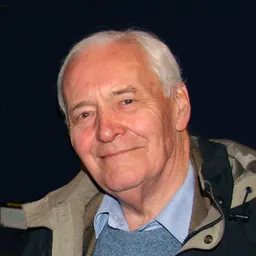
Pascoe was hanged by Harry Allen (assisted by Royston Rickard) on 17 December, at 8.00 am; the same time as Whitty was being hanged at Winchester Prison by Robert Leslie Stewart (assisted by Harry Robinson). A demonstration was held outside Horfield Prison at the time of the hanging; the demonstrators included Tony Benn, the Labour MP for Bristol South East, and the Bishop of Bristol, Oliver Tomkins. Whilst awaiting execution Pascoe was baptised and confirmed by Tomkins. A smaller demonstration was held outside Winchester Prison which was attended by banner-waving protesters, plus Whitty's fiancée, Bridget Hamilton (who collapsed as a clock chimed the execution hour) and a group of Quakers.
Shortly afterwards, both men were buried in unmarked graves within the walls of the prisons where they had been executed, as was the custom.
Only two more prisoners were subsequently executed in Britain, in August 1964: Peter Allen (hanged by Stewart at HMP Walton) and Gwynne Evans (simultaneously hanged by Allen at HMP Strangeways), for the murder of John Alan West.
Legacy The Scottish writer Robert Douglas was then a prison guard assigned to help look after Pascoe in the condemned cell at Horfield Prison during Pascoe's final days, the story of which formed part of the third volume of Douglas's autobiography (entitled At Her Majesty's Pleasure).
Pascoe's last moments were the subject of a BBC documentary in 2012, presented by Gethin Jones.
Don’t just read it —
keep it.
Full-length biographies made to live with: read them, listen on the way to work, watch them tonight.
- E-book
- Audio
- Video
Instant download · yours to keep · every purchase keeps this site free
Important facts
People in Dennis Whitty's life
Named in this biography and alive at the same time






Contemporaries
People whose lives overlapped Dennis Whitty's



Frequently asked questions
Who was Dennis Whitty?
British murderer
When was Dennis Whitty born?
Dennis Whitty was born in 1941.
When did Dennis Whitty die?
Dennis Whitty died on 17 December 1963 in Winchester.
Sources & further reading
· DBpedia: Murder of William Rowe
Cite this page
APA: Biography.guide. (2026). Dennis Whitty. https://biography.guide/dennis-whitty/
MLA: "Dennis Whitty." Biography.guide, https://biography.guide/dennis-whitty/.
Chicago: "Dennis Whitty." Biography.guide. https://biography.guide/dennis-whitty/.
Data last updated: 2026-09-20 · Spot an error? Report a correction.
Page generated 2026-09-27 04:57 UTC