
About Denis Gascoigne Lillie
Lived 1884 – 1963 (aged 78). Denis Gascoigne Lillie was a British zoologist, artist, marine biologist, polar explorer, caricaturist and botanist.
Denis Gascoigne Lillie (27 August 1884 – 13 May 1963) was a British biologist who participated in the Terra Nova Expedition (1910–1913) to the Antarctic. He collected numerous marine animals as well as plants and fossils–many of which were new to science–and published scientific papers on whales, fossils, and medicine. He received the Polar Medal along with other Terra Nova members in 1913. He was also a noted caricaturist who made cartoons of professors, colleagues, and friends: some of his caricatures are collected in the National Portrait Gallery. He worked as a government bacteriologist during World War I and then suffered a severe mental breakdown, spending three years at Bethlem Royal Hospital and never fully recovering. He is commemorated in the names of several marine organisms as well as Lillie Glacier in Antarctica.
Early life and education Lillie was born 27 August 1884 in Kensington to a family from New Zealand. His grandfather John Lillie (1806–1866) was a noted Presbyterian minister in Tasmania who relocated to Christchurch. Lillie attended United Services College in Devon and was educated at the University of Birmingham before entering St John's College, Cambridge, in 1906, where he earned his B.A. in 1909. describing a new species of Sphenopteris. He spent the summer of 1909 studying whales at a whaling station in Ireland's Inishkea Islands.
At Cambridge, Lillie gained a reputation for caricatures of faculty members, including the geneticist William Bateson and the botanists Frederick Blackman and Arthur George Tansley. These drawings caught the attention of Arthur Shipley, who collected some of them which were eventually deposited into the National Portrait Gallery in London. Lillie and the rest of the crew of the Terra Nova sailed from Cardiff, Wales, on 15 June 1910. The destination was Antarctica, where Scott hoped to be the first to reach the South Pole. Described as a "frail-looking 26-year-old whom Scott had doubted at the beginning," On 25 July, the Terra Nova stopped at the island of South Trinidad (now known as Trindade) off the coast of Brazil, and having recovered from the measles, Lillie went ashore to collect plants, of which 13 species turned out to be previously unknown from the island. Wilson wrote: "trawling probably caused more excitement and interest in the ship than anything else... and the instant a catch came in-board Lillie was surrounded by an interested group of men, very anxious to see if any startling novelty had at last been dragged up from the bottom." Lillie gave popular lectures on evolution to the crew, which helped break the monotony. In June 1911 he gave a lecture on whale natural history at the Philosophical Institute of Canterbury, and published his observations after the expedition, describing a new species of dolphin: Lagenorhynchus wilsoni (now regarded as a taxonomic synonym of L. cruciger, the hourglass dolphin).
Lillie was described by Cherry-Garrard's biographer Sara Wheeler as popular yet perhaps the most unconventional person on the expedition, deeply intellectual yet eccentric.
Later years Lillie received his M.A. from Cambridge in 1914. During the First World War he was a conscientious objector and worked as a military bacteriologist, a job he described as "examining military shit for three pounds a week". He published reports on the treatment of Entamoeba histolytica and dysentery. He remained close friends with fellow Terra Nova member Cherry-Garrard. He never recovered from his mental breakdown. In 1913, palaeobotanist E. A. Newell Arber published on fossils Lillie had collected in New Zealand in 1911, and named the fossil plant Linguifolium lillieanum in his honour. The poet A. Y. Campbell mentions Lillie in his 1915 poem "Solus Hyperboreas", subtitled "Ode to a pocket edition of Virgil in the possession of D G Lillie, biologist to the British Antarctic Expedition, 1910". He is also the namesake of Lillie Glacier, a glacier in Antarctica named by members of the Terra Nova expedition.
Works
Don’t just read it —
keep it.
Full-length biographies made to live with: read them, listen on the way to work, watch them tonight.
- E-book
- Audio
- Video
Instant download · yours to keep · every purchase keeps this site free
Important facts
People in Denis Gascoigne Lillie's life
Named in this biography and alive at the same time

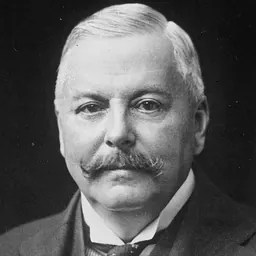




Related people
Same field, nearest in time
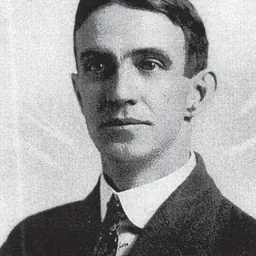

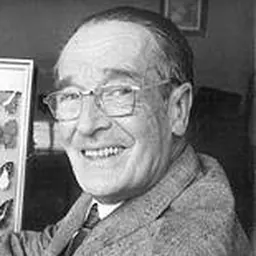

Contemporaries
People whose lives overlapped Denis Gascoigne Lillie's
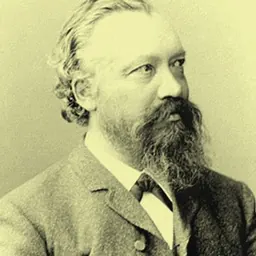
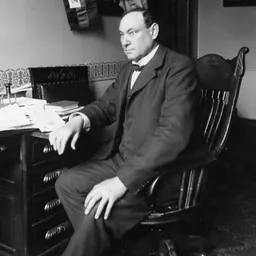
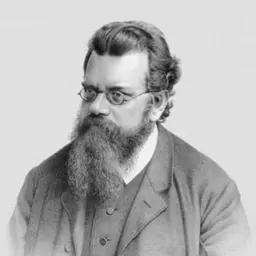

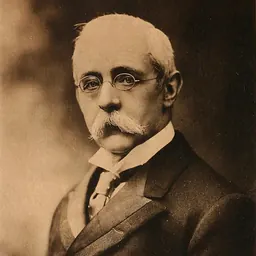
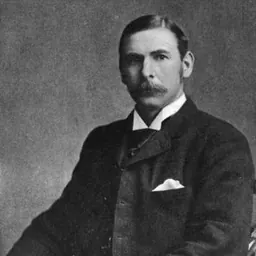
Frequently asked questions
Who was Denis Gascoigne Lillie?
British biologist (1884–1963)
When was Denis Gascoigne Lillie born?
Denis Gascoigne Lillie was born on 27 August 1884 in Kensington.
When did Denis Gascoigne Lillie die?
Denis Gascoigne Lillie died on 13 May 1963 in Redhills Hospital.
What was Denis Gascoigne Lillie's occupation?
Denis Gascoigne Lillie was a zoologist, artist, marine biologist, polar explorer, caricaturist and botanist.
What nationality was Denis Gascoigne Lillie?
Denis Gascoigne Lillie was British.
Sources & further reading
· Wikipedia: Denis Gascoigne Lillie
Cite this page
APA: Biography.guide. (2026). Denis Gascoigne Lillie. https://biography.guide/denis-gascoigne-lillie/
MLA: "Denis Gascoigne Lillie." Biography.guide, https://biography.guide/denis-gascoigne-lillie/.
Chicago: "Denis Gascoigne Lillie." Biography.guide. https://biography.guide/denis-gascoigne-lillie/.
Data last updated: 2026-09-26 · Spot an error? Report a correction.
Page generated 2026-09-27 05:13 UTC