
Denis Avey
British Army soldier during World War II
About Denis Avey
Lived 1919 – 2015 (aged 96). Denis Avey was a British autobiographer, military personnel, engineer and soldier.
Denis Avey (11 January 1919 – 16 July 2015) was a British veteran of the Second World War who was held as a prisoner of war at E715, a subcamp of Auschwitz concentration camp. While there he saved the life of a Jewish prisoner, Ernst Lobethal, by smuggling cigarettes to him. For that he was made a British Hero of the Holocaust in 2010.
Avey claimed that he exchanged uniforms with a Jewish prisoner and smuggled himself into Auschwitz to witness the treatment of Jewish inmates, whose camp was separate from but adjoined that of British POWs. His claim has been challenged. His memoir The Man who Broke into Auschwitz, written with Rob Broomby, was published in 2011.
Life (until retirement) Avey was born in Essex, England, in 1919. As a boy he learned boxing, was head boy at school and studied at Leyton technical college. He joined the army in 1939 at the age of 20, and fought in the Western Desert campaign of North Africa in the 7th Armoured Division, (the "Desert Rats"). He was captured by the Germans while attacking Erwin Rommel's forces near Tobruk, Libya, and saw his best friend killed next to him.
After being retaken prisoner, Avey was placed in the E715 prison camp for British prisoners of war (POWs), next to the Auschwitz concentration camp where Jews were imprisoned. He was there from 1943 until January 1945. While there he befriended a Jewish inmate of Auschwitz, Ernst Lobethal, from the adjoining Jewish section. He obtained cigarettes from Ernst's sister, who had escaped from Germany to Britain on a Kindertransport before the war. He secretly passed the cigarettes to Ernst who used them as currency to help him survive.
Avey said that he twice exchanged uniforms with a Jewish inmate to smuggle himself into the inmate's camp in order to witness for himself the treatment of Jews, which he could see was completely different from the treatment of British POWs. While British POWs were forced to work six days a week, they could use their free time to play football and basketball.
Avey explained to The Daily Telegraph that he was the type that needed to see things for himself:
My mates didn't want me to do it but they agreed because they realised I was going to do it, and that was that. I had watched people being murdered literally every day and I knew someone would have to answer for it. I wanted to get in and identify the people responsible.
He was aware that he was taking "a hell of a chance", and states: "When you think about it in today's environment it is ludicrous, absolutely ludicrous. You wouldn't think anyone would think or do that, but that is how I was. I had red hair and a temperament to match. Nothing would stop me."
Avey escaped during the "death marches" in April 1945 which followed the Nazis' evacuation of Auschwitz. Although suffering from tuberculosis he caught in the camp, he broke away undetected, then made his way through Silesia, Czechoslovakia and Germany.
Besides tuberculosis, Avey suffered from posttraumatic stress disorder (PTSD) before it was recognised as a medical illness, a condition few people were aware of.
When war crime prosecutors later sought Avey's testimony for the Nuremberg Trials, they were unable to locate him.
He first began disclosing these events when invited to appear on the BBC to talk about war pensions. His memories began tumbling out, shocking the television hosts who were unable to believe what they were hearing. As a result, the BBC began production of a documentary, discovering the name of the young Jewish prisoner Avey had befriended in Auschwitz, Ernst Lobethal. When asked why he risked his life to infiltrate the Jewish sections of the concentration camp, he states that he needed to see for himself "the unspeakable things being done to the Jews at Auschwitz". At the age of 91, he reflected back on this episode:
quote|You know the word "conjecture"? It's never been in my vocabulary. I wanted to know exactly what was happening inside there. ... I knew there had to be eventually a reckoning to all this. ... I don't feel like a hero. I'm embarrassed... I had certain ideals that I grew up with.
Avey married twice and pursued a career in engineering, which culminated in him building a factory near Newcastle. He retired to Bradwell, Derbyshire.
Recognition After retirement he became active amongst ex-POWs seeking compensation for wartime imprisonment and began to talk about these experiences. In 2001 he described these in an interview with the Imperial War Museum, London, where he stated that he had obtained cigarettes for Ernst and also gave the name of Ernst's sister Susanne. He also stated that he had exchanged uniforms with a bunkmate of Ernst and entered Birkenau in the company of Ernst.
Avey got details about events inside Birkenau which he sent home to his mother and sister in code. His mother sent two letters regarding this to the War Office but never received a reply.
quote=I knew in my gut that these swine would eventually be held to account. Evidence would be vital. Of course, sneaking into the Jewish camp was a ludicrous idea. It was like breaking into Hell. But that's the sort of chap I was. Reckless. — — Denis Avey and in 2010 he was named a British Hero of the Holocaust by the British Government for having saved Ernst's life.
The following week Avey signed a book contract with Hodder and Stoughton to write his story. The book appeared in April 2011 with a foreword by Sir Martin Gilbert. The book, The Man who Broke into Auschwitz, went on to be a best-seller and has been translated into a number of languages.
Reactions by others Brian Bishop, a British POW interviewed by Walters, while he did not claim to know Avey, stated "I can't understand how he did it. To do something like that you need to have several people helping on both sides — our side and the Jewish side." Similar doubt about the feat was expressed by Ron Jones, another British POW, who also found it hard to believe that Avey, a tall, fit, strong Englishman, could have passed himself off alongside "starving six-stone Jews".
Nevertheless, British historian Lyn Smith, who interviewed Avey for the Imperial War Museum in 2001, Avey's publisher accepted that in his interview with Smith, Avey's recollections could be confused, but this was understandable given the stress suffered and that he was only then beginning to unburden himself after so many decades of silence.
Yad Vashem considered Avey for the honour Righteous among the Nations, but said it was unable to grant the award because it was unable to substantiate his account of the prisoner swap. In November 2014 Avey was reported as too ill to respond to further enquiries. He died on 16 July 2015 at Newholme Hospital in Bakewell, Derbyshire.
Don’t just read it —
keep it.
Full-length biographies made to live with: read them, listen on the way to work, watch them tonight.
- E-book
- Audio
- Video
Instant download · yours to keep · every purchase keeps this site free
Important facts
People in Denis Avey's life
Named in this biography and alive at the same time
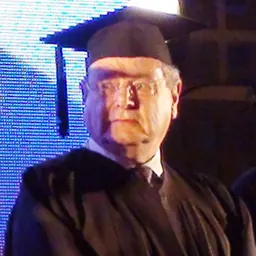
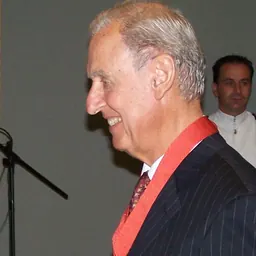
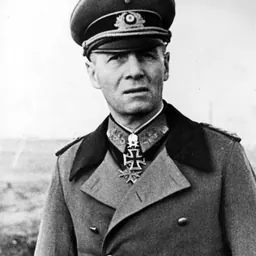
Related people
Same field, nearest in time
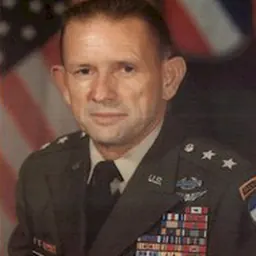

Contemporaries
People whose lives overlapped Denis Avey's



Frequently asked questions
Who was Denis Avey?
British Army soldier during World War II (1919–2015)
When was Denis Avey born?
Denis Avey was born on 11 January 1919 in Essex.
When did Denis Avey die?
Denis Avey died on 20 July 2015 in Bakewell.
What was Denis Avey's occupation?
Denis Avey was an autobiographer, military personnel, engineer and soldier.
What nationality was Denis Avey?
Denis Avey was British.
Sources & further reading
Cite this page
APA: Biography.guide. (2026). Denis Avey. https://biography.guide/denis-avey/
MLA: "Denis Avey." Biography.guide, https://biography.guide/denis-avey/.
Chicago: "Denis Avey." Biography.guide. https://biography.guide/denis-avey/.
Data last updated: 2026-09-20 · Spot an error? Report a correction.
Page generated 2026-09-27 04:58 UTC