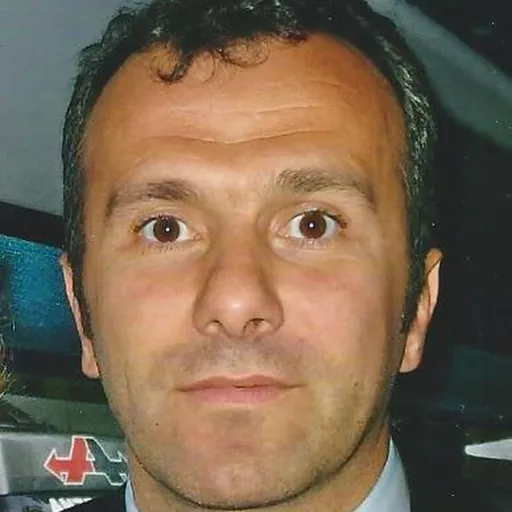
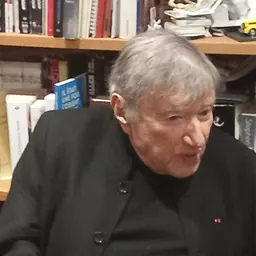
Dejan Savićević
Montenegrin footballer
About Dejan Savićević
Born 1966. Dejan Savićević is a Montenegrin association football player, association football coach and football player.
Dejan Savićević (, ; born 15 September 1966) is a Montenegrin former professional footballer who played as an attacking midfielder. Since 2001, he has been the president of the Montenegrin Football Association (FSCG), currently in his fifth term at the post.
Savićević was considered one of the best players in the world during the 1990s, and is regarded as one of the greatest Yugoslav footballers of all time. During his time in AC Milan, he was nicknamed Il Genio (The Genius) by the Italian sports press.
After beginning his professional career with hometown side Budućnost in Yugoslavia, Savićević moved to the more established Yugoslav First League club Red Star Belgrade in 1988 where he became prominent part of the team that won the 1990–91 European Cup—coming second in the 1991 Ballon d’Or voting—before making a big money transfer to Italian champions AC Milan in 1992. With Milan, he won three Serie A titles and the 1993–94 UEFA Champions League, among other trophies. He later returned to Red Star for half a season in 1999, before ending his career with Rapid Wien in 2001.
At the international level, he represented Yugoslavia at the 1990 and 1998 FIFA World Cups and, after retiring from playing, coached the Serbia and Montenegro national team from 2001 until 2003.
Following a professional playing career of 18 seasons, and a short unsuccessful head coaching stint during the early 2000's, Savićević became the president of the Montenegrin Football Association during the Summer of 2001.
Early life Born to father Vladimir Savićević, an employee of the state-owned Titograd railway transport company, and mother Vojislava "Vojka" Đurović, an administrative clerk in the same company,
From early adolescence, he took up street football as an activity with neighbourhood friends—playing on outdoor surfaces in the vicinity of his apartment building, mostly on a nearby field called Đečevića Livada.
Futsal and youth football Savićević's first attempt at playing structured association football took place at age 13 in the fall of 1979 within Budućnost's youth system under coach Dragan Šaković. Barely a teenager, Savićević arrived there on recommendation from lower league FK Grafičar Titograd goalkeeper Čedo Šaković, cousin of Budućnost's youth coach.
In the summer of 1981, following a two-year period (1979–1981) during which he only played street football and futsal, teenager Savićević's involvement with structured association football began in earnest in the youth teams of OFK Titograd under youth team coach Vaso Ivanović. Almost fifteen years of age at the time of joining OFK Titograd—considered fairly late to be starting out by professional football standards—Savićević continued playing street football in parallel with OFK.
After a year and a half at OFK Titograd's youth setup, in January 1983, sixteen-year-old Savićević was attached to the club's full squad struggling near the bottom of the Yugoslav Second League East Division. Within weeks of joining the full squad, as part of the winter break training, he played at a friendly tournament in Nikšić against the SR Montenegro-based Second League competitors Sutjeska Nikšić and Lovćen as well as top-tier league club Budućnost. Knowing that the appearance against Budućnost would be a good showcase for him but already running high fever following his appearance against Sutjeska in wintry conditions at the first match in the friendly tournament, teenage Savićević so desperately wanted to play that he kept silent about his health to his OFK Titograd coach. Despite lasting only a half against Budućnost, Savićević still did enough to get Budućnost head coach Milutin Folić's attention. Zečević reportedly determined that in order to transfer to Red Star at this time, despite not being under a professional contract with Budućnost, Savićević would still require Budućnost's permission, which the Titograd club was unlikely to give. Another option was for Red Star to financially compensate Budućnost in order to let the player go, however, the Belgrade club was not sufficiently interested in Savićević at this particular time to do that. As a parting bit of career advice on this occasion, Džajić reportedly counseled Savićević not to sign a professional contract with Budućnost at all and then come to Red Star two years later in 1987 on a free transfer once his stipend agreement expires.
Wanting the security of a professional contract, Savićević continued pursuing it, going straight to Nikšić the same summer and getting a verbal commitment from FK Sutjeska that seemed ready to pay a large sum to Budućnost in order to have the talented youngster. However, the move soon fell through and Savićević was back home in Titograd where Budućnost offered him a four-year professional contract, which he decided to accept thus putting his stipend agreement with the club out of effect.
Discovering the young player's outspoken nature, as well as absence of qualms about openly discussing details of his personal life and professional career, Yugoslav print media began giving colourful Savićević a lot of attention, with numerous print interviews and electronic media appearances, with space not just in sports outlets, but lifestyle ones as well. Savićević thus underscored his desire not to leave Titograd just for the sake of leaving without a clear plan for what happens after he joins the bigger club, mentioning Titograd and Yugoslavia as his "natural setting" before considering transferring abroad. Also signing with Red Star on the same day was striker Darko Pančev from Vardar Skopje. The midfielder and striker duo joined the squad led by twenty-three-year-old Dragan Stojković. The club additionally had nineteen-year-old midfielder Robert Prosinečki.
1988–89 season: in the army and the sporting company Barely a few days after signing with Red Star Belgrade, twenty-one-year-old Savićević promptly was called in to serve the mandatory Yugoslav People's Army (JNA) stint that would keep him out of action for the entire 1988–89 league season. The other new high-profile acquisition Pančev also got called up to the army right after signing. Many, including Savićević himself who stated so directly, speculated that the timing of the call-ups was FK Partizan's (Yugoslav army club with many ties to top military authorities) revenge on both players for signing with their biggest rivals. and Marjan tournament in Split during spring 1989.
Describing his time in the JNA's sporting company, Savićević said: "The players all served in Belgrade, which in and of itself was a perk since it meant we weren't in some godforsaken remote location. Furthermore, we only spent time in the barracks in the morning while in the afternoon we'd be at the stadium training. We were certainly privileged compared to other JNA soldiers". or DM30 million (≈ £9.4 million) ahead of the 1992–93 season as part of the £34 million worth of transfer fees club owner Silvio Berlusconi injected into the team that summer. The player had reportedly been on the club's radar for more than a season, with Milan's sporting director Ariedo Braida coming to Belgrade in April 1991 to personally assess him at the European Cup semi-final return leg versus Bayern. Furthermore, sports agent Predrag Naletilić was the main operational liaison involved in the transfer. Not taken with the Montenegrin's superior technical abilities, though recognizing his talents, Capello's assessment of Savićević was that he played "a Yugoslav style—he was the star and the others had to run for him".
Furthermore, from the start of the Champions League competition in September 1992, Savićević was completely omitted from the squads selected for the European matches. Savićević and Capello quickly developed an antagonistic relationship with the former frustrated at being regularly dropped from the first team, and the latter unwilling to change the winning formula that had the team on an undefeated run in the league dating back to May 1991 (the streak would eventually end after 58 matches in March 1993 versus Parma). In November 1992, when asked how he copes with leaving out world class players such as Savićević or Papin, Capello responded:
It wouldn't be until week 7 in early October 1993 that Savićević reappeared with a home start and full ninety minutes versus Lazio. Although still not a regular, he finally began to establish himself in the club with confident displays when given a chance though Capello still wasn't convinced enough to play the Montenegrin in bigger matches, notably dropping him from the squad versus fellow title contenders Juventus in week 9 and city rivals Inter in week 11.
The player's tense relations with Capello soon inflamed again. First, as the Champions League group phase began in late November 1993, Capello named Savićević to the reserves for the opening match away at Anderlecht, which the player protested by refusing to travel to Brussels with the team. Then, in mid-December 1993, the row deepened when Capello dropped him from the squad altogether for the 1993 Intercontinental Cup in Tokyo versus Telê Santana's São Paulo, choosing Papin, freshly arrived Marcel Desailly, and Răducioiu as the three matchday foreigners. The omission sparked another round of antagonism between the player and the head coach through the Italian press. Years later, Capello admitted in hindsight that Savićević's big match quality probably would've swung the match in Milan's favour but that, at the time, he wanted to stick with Răducioiu in the lineup since the Romanian was among the group of players Capello had been preparing the Cup final with in the days leading up to the contest.
The playing setup Capello employed throughout this season was an extremely defensive 4–4–2 that resulted in the entire squad scoring only 36 goals in 34 league matches while letting in only 15, as they won their third consecutive Serie A title. Further solidifying the defensive focus was the November 1993 arrival of Desailly who became a regular right away. Still, for the Montenegrin's inspirational and creative play, Milan-based journalist Germano Bovolenta of La Gazzetta dello Sport hailed Savićević as Il Genio (The Genius), a nickname that initially drew snickers and even occasional ridicule from other Italian journalists—especially those writing for the Turin-based Tuttosport and Rome-based Corriere dello Sport—but would eventually gain wider acceptance in the country after Savićević's performance in the 1994 Champions League Final. For the time being, as of late 1993, his footballing talents had continually been admired by club president Berlusconi whom Savićević developed great rapport with, as it was basically Berlusconi's personal support that kept Savićević from leaving the club during various low points of the player's relationship with Capello.
Still, the season would end on a high note for Savićević. His performance in the 1994 UEFA Champions League Final at Athens' Olympic Stadium on 18 May was remarkable, scoring one goal and distracting his opponents in a 4-0 victory against Barcelona. He had displayed improved form and confidence in the second part of the Champions League season, scoring twice during March 1994 right after the winter break in consecutive home-and-away matches versus Werder Bremen. Still, despite finishing top of the group and winning the one-match semifinal, Milan was in disarray heading into the final as both central defenders Franco Baresi and Alessandro Costacurta, the core of Capello's tactical defensive setup, were suspended. Considering that the opponent was the high-flying Barcelona "dream team" which consisted of Romário, Hristo Stoichkov, Ronald Koeman, José Mari Bakero, Pep Guardiola, among others, Capello made a decision to fight fire with fire by sending out an offense-minded formation. With this changed approach, Savićević created the opening goal for Daniele Massaro and then scored a 35-yard half volley for 3–0 to put the game beyond Barcelona's reach.
1994–95 season As a result of his much publicized Champions League final outstanding performance, Savićević's stock at Milan was raised to the point of club chairman and CEO Adriano Galliani contacting him during the summer 1994 offseason to seek input regarding the club's intent of acquiring David Ginola from Paris Saint-Germain and Faustino Asprilla from Parma. Speaking to Galiani from a vacation, Savićević was reportedly vehemently against both proposed moves due to increasing the number of squad foreigners to five or six thus limiting his playing opportunities, even telling Galliani that if Ginola and Asprilla are brought in he would not show up for training camp and would be seeking to be transferred out of the club. versus Bari at Stadio San Nicola, the site of his European Cup triumph with Red Star. In the second leg of the 1994 UEFA Super Cup Final against Arsenal in Milan, he set up Daniele Massaro's goal to give Milan a 2–0 aggregate victory.
Despite the team's mid-table Serie A form in 1995, Savićević continually played well for the rossoneri in the Champions League en route to their third successive final that, for him, culminated in a spectacular semi-final versus Paris Saint-Germain, where he scored twice in the return leg at San Siro. Two weeks prior in the first leg at the Parc des Princes, Savićević set up Boban in injury time for the only goal of the match. Despite his brilliant performance against PSG and his statistical importance to the team in 1995, he was not part of the team Capello took to Vienna for the 1995 Champions League Final due to 'injury', even though Savićević insisted he was fit. In the final, a very negative and defense-minded Milan side created few opportunities and ultimately lost 1–0 to Louis van Gaal's young Ajax side.
1995–96 season New foreign arrivals Paulo Futre and George Weah as well as the signing of Roberto Baggio increased the competition in both midfield and attack, but 29-year-old Savićević managed to turn in a successful season with 23 league appearances and six league goals as Milan managed to recapture the league title. His brightest moments occurred in the Derby della Madonnina as he finally scored a goal versus the cross-town rivals Inter. On more than one occasion Savićević displayed his amazing technical skills and ball control such as when he dribbled and danced around Parma defenders Fernando Couto and Luigi Apolloni to set up Baggio for the opening goal against Parma at San Siro, before scoring one of his own in the eventual 3–0 win.
Later seasons Savićević's final seasons at Milan were less successful. The 1996–97 season saw the arrival of several new players, as well as manager Óscar Tabárez; Milan started the season with a 2–1 loss in the 1996 Supercoppa Italiana to Fiorentina, with Savićević scoring Milan's only goal of the match. A series of disappointing results in the league saw Milan's former coach Arrigo Sacchi return to the club as a replacement. Milan failed to retain their league title, finishing the season in a disappointing eleventh place,
The following season saw Fabio Capello recalled to the Milan bench and several more arrivals. Milan once again failed to qualify for Europe, placing tenth in Serie A, although they managed to reach the final of the Coppa Italia; Savićević's final goal for Milan came in the first leg of the quarter-finals of the tournament, on 8 January 1998, a 5–0 win against cross-city rivals Inter. Savićević was released by Milan during the summer 1998 transfer window.
In his total time at the San Siro, he won seven trophies, including three scudetti (Serie A championships) – 1992–93, 1993–94, 1995–96 - one European Cup – 1993–94 - and one European Super Cup, totalling 144 appearances and 34 goals between 1992 and 1998. In spite of his skill and success with Milan, he was also criticized in the Italian media during his time with the club for his poor work rate and lack of consistency, in particular for not always running or trying against smaller teams, and his performances regularly blew hot and cold.
Return to Red Star In January 1999, following six months away from playing competitive football, thirty-two-year-old Savićević returned to his former club Red Star Belgrade under head coach Vojin Lazarević. Coming back to Marakana, the site of his great career successes, the club was third in the league at the winter break, behind Partizan and reigning league champions FK Obilić. Featuring a solid young team core of Goran Drulić, Goran Bunjevčević and Branko Bošković, the club had just sold its best young prospect Perica Ognjenović to Real Madrid, while simultaneously bringing in Mihajlo Pjanović from OFK Beograd.
Veteran Savićević—who was immediately given the captain's armband—made his debut as the league restarted following the winter break. His most notable outing took place on 20 March 1999 against cross-town rivals Partizan where he earned the man of the match performance. with conservative Osim often distrustful of Savićević's talents, preferring players he considered to be more mature and reliable for the forward and attacking midfield positions such as Zlatko Vujović, Mehmed Baždarević, Dragan Stojković, and even veteran Safet Sušić.
Under Santrač, Savićević was an automatic regular, but due to the UN embargo imposed on FR Yugoslavia and resulting sporting sanctions, he missed two and a half years of national team football altogether. Also, since Yugoslavia did not resume playing competitive matches until mid-1996, it meant Savićević was prevented from playing any competitive national team matches from the time he was 25 until almost turning 30.
Euro 88 qualifying Twenty-year-old Budućnost midfielder Savićević made his national team debut on 29 October 1986 in a Euro 88 qualifier versus Turkey in Split. Head coach Ivica Osim—himself only in his fourth match overall coaching the national team (and his first doing it alone as he previously shared the coaching duties with Ivan Toplak)—put the talented twenty-year-old in as a 53rd-minute substitute for Haris Škoro with Yugoslavia up 2–0 through Zlatko Vujović's first-half brace. Debutante Savićević wasted no time in making a mark, scoring the 3–0 goal in the 73rd minute before Vujović completed a hat-trick for a 4–0 final scoreline. However, despite getting a goal on his debut, Savićević's thunder was somewhat stolen by another debutante—twenty-two-year-old sub Semir Tuce whose confident midfield display on the left wing grabbed all the headlines. Two weeks later, Osim did not call up Savićević for the important qualifier away at Wembley versus England while Tuce was called up, making a second-half substitute appearance. Yugoslavia lost 0–2.
Within months, furious over lack of playing time and overall status in the national team, young Savićević began viciously criticizing Osim in the Yugoslav press, questioning the coach's expertise and even professional integrity. In a February 1987 interview for the Duga magazine, twenty-year-old FK Budućnost attacking midfielder Savićević launched a blistering broadside at the Yugoslavia head coach: Had I been playing my club football at Željezničar, I'd be a national team regular right now. Osim doesn't appreciate my skills and even declares so publicly. Well, I'm not gonna sit here and take that—I've got no respect for him as a coach, neither on the club nor the national team level. And it's not because he's not giving me national team call-ups, but because he completely privatized the national team head coaching post. None of the Yugoslav football officials have the guts to talk about this, but I do because I've got nothing to lose. Osim is giving unjustified opportunities to Željezničar players in the national team at the expense of the more deserving players from other clubs. And in that process, he's not only causing damage to those omitted players' careers but even more so to the national team itself. At the 10-day training camp in Topolšica ahead of the Turkey qualifier, Osim's favourite player Haris Škoro didn't even train once; he was constantly rehabbing his injury. But then he got the starting assignment against Turkey. Not only him but Radmilo Mihajlović, another Željo player, too. Then, once the team started playing badly, not result-wise obviously, but the overall play, Osim decided to take both Škoro and Mihajlović off with Yugoslavia up 2-0, a move that implied their supposed injuries thereby giving them a reprieve for both having poor outings. And afterwards, I'm the one who gets criticized even after scoring a goal after being on the pitch for 20 minutes. Osim also left Štef Deverić on for the entire match despite him having such a horrible performance that even his own father would have subbed him at the half. Osim did that, of course, because the match was being played in Split in front of Deverić's club fans..... And then finally the whole Wembley debacle. Don't even get me started on that. Before the England qualifier, I got a call-up notice without specifying if it was for the full squad or the under-21 one. So upon my club's insistence to clarify, the FA president Miljan Miljanić sent a follow-up telex that I've in fact been called up for the full squad and that I'll definitely be playing at Wembley. However, as we boarded the plane for England I got told I'll be playing for the u-21s, supposedly, as it was put to me because it's in 'the national team's best interest'. I was furious. I was the one promised a start at Wembley ahead of Škoro. But no, Osim gave him the start again and then took him off again supposedly because of injury while half of the Željo squad, a team that's near the bottom of our league, got to play at Wembley. Osim is not only making a mistake in loading the national team with so many Željo players since not all of them are on form, but he's also making a huge error for tinkering with their customary playing positions. He's forcing his former club's players to play positions in the national team that they never play in their club. Everyone can see that Škoro, and even Mirsad Baljić, play target forward positions at Željo while in the national team, Osim is overnight trying to make Baljić into a full back and Škoro into a midfielder. A magician wouldn't have been able to pull that off, let alone Osim, because the habits a player picks up in his club are too set to be changed in the national team..... Yes, Osim called me up for winter training in January, but he only did it to supposedly prove to me, and to some other players, that we have no place in the national team's full squad. We played a training match versus FK Velež' club side in Mostar and lost. It was embarrassing. He put Škoro, Piksi Stojković, Radmilo Mihajlović, myself, and Semir Tuce in midfield and upfront – all attractive names for the crowd, but players that can never make a good team. We're stars in our respective clubs where we have teammates that run for us. This time there was nobody who would run and it was a disaster. We all wanted to be the main guy, and the setup didn't work. But this isn't just the problem for the five of us, almost everyone Osim calls up has this issue. The national team can't be an All-Star squad, but a new entity. Osim still doesn't get that.
Savićević's great performance against France put him in Osim's good books, for the time being at least, as he got a chance to start the next qualifier at home versus Cyprus in December 1988. Dejan, still officially in his army service, returned the favour, scoring a hat-trick as Yugoslavia won 4–0 at Marakana. The following qualifier in late April 1989 was a crucial one away at France and Osim decided not to play Savićević, choosing instead to continue with his older regulars up front such as Zlatko Vujović, Sušić, and Baždarević as Yugoslavia eked out a hard-fought scoreless draw at the Parc des Princes.
Savićević would also not play in the next qualifier away at Norway, returning only as a second-half sub for Dragan Jakovljević in September 1989 at Maksimir in Zagreb versus Scotland. With the 3–1 win over Scotland, Yugoslavia overtook the Scots at the top of the table. So, with two matches remaining, Yugoslavia were now leading the pack with ten points (four wins and two draws), followed by Scotland with ten, and France and Norway with five. In such circumstances, conservative Osim certainly was not about to tinker with the team, which meant that Savićević only got his chance in friendlies. The match point for Yugoslavia took place at Koševo in Sarajevo versus Norway in October 1989, and not surprisingly Savićević again did not get a single minute of play. The team won 1–0, and combined with the fact that Scotland got beaten by France 0–3 in Paris, Yugoslavia clinched the top spot in the group, qualifying for the World Cup in Italy. The last qualifier was a meaningless affair away at Cyprus (the match was actually played in Athens since Cyprus were penalized for the riots during their match versus Scotland), and Savićević got a chance to start along with a slew of other young and up-and-coming players from the domestic league that Osim normally shied away from using in competitive matches such as Darko Pančev, Robert Prosinečki, Branko Brnović, and Slobodan Marović.
1990 World Cup Heading into the World Cup, Savićević's chances of playing a larger national team role looked to have received a bit of a boost as Mehmed Baždarević, one of his competitors for an attacking midfield spot, was suspended by FIFA for spitting at the Turkish referee Yusuf Namoğlu during the crucial qualifier versus Norway. However, Savićević did not get a single minute in the first two friendlies – in March 1990 at Poland and in May 1990 at home versus Spain – leading to conclusions that he would again be looking from the outside in. But then in early June, only seven days before the opening World Cup match, he got to play the full 90 minutes at the "dress rehearsal" at Maksimir in Zagreb versus Holland where he put in an inspired performance. The game itself, however, took a back seat to the controversy caused by nationalist Croatian fans who booed the Yugoslav national anthem and thoroughly insulted the players.
Savićević chose the number 19 jersey for the tournament "out of admiration for his childhood idol Vahid Halilhodžić" who wore the number for Yugoslavia at the 1982 FIFA World Cup.
At the San Siro on 10 June 1990, the same starting eleven that faced Holland in the final friendly also started versus West Germany, including Savićević. Playing in front of almost 75,000 fans (the largest crowd of the entire 1990 FIFA World Cup), the team was picked apart by the speed and strength of the German players as Lothar Matthäus and Jürgen Klinsmann had the Elf 2–0 up before halftime. Shortly after the break Davor Jozić pulled one back for Yugoslavia, which was a signal for head coach Osim to make changes in hopes of sparking a comeback. One minute later he took off Savićević who was mostly invisible, having a game to forget much like most of the Yugoslav team, and put Dragoljub Brnović on as part of the double midfield substitution that also saw Prosinečki replace Sušić. The move did not do much, though, as Matthäus rampaged through Yugoslav defense before unleashing a powerful shot for another score. The fourth German goal came as the final insult as goalkeeper Ivković made a mess of Brehme's easy shot.
Getting nothing from the West Germany match pretty much meant that the next group contest versus Colombia was a must-win. Osim made three changes in the starting lineup, and one of them was Savićević who got benched in favour of Brnović. Yugoslavia made tough work of the plucky Colombians but got a 1–0 victory in the end with Savićević not getting a single minute of action. More or less the same lineup faced minnows the United Arab Emirates in the final group match, which meant that Savićević was again surplus to Osim's requirements as Yugoslavia won easily 4–1.
In the knockout stages, Savićević was again on the bench for the start of the match against Spain in the excruciating late afternoon heat of Verona, but got his chance early into the second half with the score still tied at 0–0, coming on for largely ineffective club teammate Darko Pančev. Substituting a striker for a midfielder meant that Osim changed his formation from 3–5–2 to a bit more defensive 3–6–1 with only Zlatko Vujović upfront. The match was soon taken over by Dragan Stojković who scored a beautiful goal in the 78th minute, but the score at the end of 90 minutes was 1–1, with Savićević putting in a confident performance. In the extra time, Stojković scored his second of the match on a masterfully placed free-kick. Incidentally, the free-kick came after a foul on Savićević during one of his surging runs across the midfield from right to left.
Despite his satisfactory showing against the Spaniards, Savićević was benched again for the quarterfinal clash against reigning world champions Argentina four days later. Starting the match in a 4–5–1 formation, Osim had Zoran Vulić back in the lineup as part of the four-man defensive unit, and youngster Prosinečki replacing injured Katanec in midfield while Vujović was now alone in attack from the very start. Riding behind midfield playmaker Stojković, Yugoslavia looked very good throughout the match even when reduced to ten men following the 31st-minute expulsion of Refik Šabanadžović. Somewhat surprisingly, Osim did not make any substitutions after the sending-off, deciding to wait until 15 minutes into the second half to put on Savićević instead of Sušić. Savićević's fresh legs gave the team a much-needed infusion of energy and another target in the middle for Stojković to pass to after his surging runs, however, Savićević was not able to convert on any of them. The most glaring miss came early on in the extra time as Stojković masterfully got free on the right side before providing a perfect pass to Savićević who was unmarked 5–6 meters from the goal line. Alone in front of keeper Sergio Goycochea and with a goal at his mercy, Savićević somehow put the ball over the bar. It was one of the best chances created by either team throughout the entire match.
Euro 92 Savićević was called by Yugoslavia national football team to UEFA Euro 1992, but the nation would be suspended due to the Yugoslav Wars.
1998 World Cup Savićević was picked as a part of Yugoslavia's national squad for the 1998 FIFA World Cup. He appeared in two games, the first one being a group-stage game against the United States and the second one against the Netherlands.
Savićević missed out on Euro 2000 due to straining a thigh muscle in a match against Sturm Graz.
Player profile Playing style
Considered by many in the sport to be the best footballer that Montenegro has ever produced, Savićević was a classic number 10 who preferred functioning in a free role as a playmaker; throughout his career, he was usually deployed in an attacking midfield role, either in a central position behind the striker(s), or out wide on the wings, on either flank, due to his ability to provide crosses to teammates in the area from the left wing, or cut into the centre onto his stronger left foot from the right. He was also often deployed as a supporting forward, and occasionally in a central midfield role as a deep-lying playmaker in midfield, or, with even less frequency, along the front line as a main striker. A quick, technically gifted, and agile player, with an athletic physique, he was known in particular for his outstanding pace and acceleration on the ball, as well as his excellent dribbling ability, and close control, which allowed him to beat opposing players with ease; he was also highly regarded for his vision, tactical knowledge, and passing accuracy, which made him a highly effective assist provider, although he was also capable of scoring goals himself as well as creating them, due to his powerful and accurate shot on the run with either foot, as well as his precision from penalties. His talent, unpredictability and exploits during his time at Milan earned him the nickname "Il Genio" ("the genius", in Italian).
In addition to numerous accolades for his skill, technique, flair, class and creativity,
Reception Savićević is widely regarded by pundits as the greatest Montenegrin player of all time,
Fabio Capello, who coached Savićević at Milan for four seasons, during which their relationship featured no shortage of confrontation and antagonism, said: "Without question, Savićević is the player with whom I had the most rows. He hardly trained, he hardly worked. And, when he was on the pitch, everybody else had to work twice as hard to make up for him. But he was an exceptional talent. And we turned him into a superstar".
Ivica Osim coached Savićević from 1986 until 1992 in the Yugoslav national team and butted heads with him regularly over playing time. In 2014, the retired coach said: "Yes, I had issues with him. He was a fiery character who felt he had to play. But what was I supposed to do, get rid of Zlatko Vujović who was every coach's dream and put in Savićević who was perhaps the better player, but with whom you never knew what he's going to give you on the pitch in a given match. Savićević is one of the best players I ever coached, but he also fell victim to some bad advice at that time. Today we've got decent relations, we talked it all out.... Back during the time of those frosty relations with Savićević, for me personally, it got to the point where I lost the will to coach. I got sick of going to training sessions knowing I'll be looking at Savićević, that we'll be staring each other down, and that he'll be unhappy for not playing.... I was unhappy about that too".
Talking in October 2015 about Savićević's playing days, the 1985–2001 Red Star Belgrade general-secretary Vladimir Cvetković said: "He really was a genius. When he felt like playing, that is. The problem is he frequently didn't feel like playing. But the things he did and the moves he pulled off [for us], for example in Munich and Manchester, are a thing of beauty—truly unbelievable stuff. Kind of like what Messi is doing today, only with even more flair and style. Yes, Savićević had more flair and style than Messi does today".
Red Star goalkeeper Stevan Stojanović, Savićević's teammate from 1988 until 1991, talked about the midfielder's quality and lack of application in training during a May 2021 interview: "He hated morning training sessions... When he felt like playing, he was virtually unstoppable. He was at his best when he's irritated".
A highly technical and skilful player, Savićević is considered to be one of the greatest dribblers all-time by several pundits, such as Allan Jiang and Sam Tighe of Bleacher Report, who included him in their list of the 50 greatest dribblers of all time in 2012 and 2013 respectively.
Coaching career Savićević's two-year spell as head coach of the national side was a polar opposite of his distinguished playing career.
Immediately after retiring from playing in May 2001, the thirty-four-year-old was named the FR Yugoslavia national team head coach, in succession to the short, tempestuous, and hugely disappointing 3-month tenure of Milovan Đorić. Despite Savićević's complete lack of any relevant coaching experience and the side's already faint chances of qualifying for the 2002 World Cup, the announcement was generally well received by the Yugoslav public. His appointment came as part of the general changing of the guard in the Yugoslav FA (FSJ) with Savićević's close friend Dragan Stojković taking over as FSJ president.
2002 World Cup qualifying At first, Savićević was part of a 3-man coaching commission with the experienced Vujadin Boškov and Ivan Ćurković by his side. At the time of their arrival to the bench, Yugoslavia was sitting in fourth place of the qualifying group with only 5 points from 4 matches, behind Russia (13 points), Switzerland (8), and Slovenia (7). However, Yugoslavia had a game in hand and with a win in Moscow had a chance to overtake Slovenia and join the Swiss tied on points in the second spot. On the other hand, a loss to Russia in Moscow would probably mean losing any hope of finishing in the top two.
Savićević thus faced a make-it-or-break-it prospect right on his coaching debut. Despite the fact that the national team was officially headed by the three-man commission, Savićević was the only one of the trio present on the sidelines during matches and was the only one available to the press. The team fielded on 2 June 2001 at Luzhniki Stadium was substantially the same as Đorić's, both in names called up and playing formation. Other than two debutants—goalkeeper Radovan Radaković and defensive midfielder Boban Dmitrović—the gist of the starting squad was still made up of old guard: players like Predrag Mijatović, Siniša Mihajlović, and Miroslav Đukić, all of whom were well over thirty, as well as longtime defensive mainstays such as Zoran Mirković and Goran Đorović. With a defensive approach and mostly unimaginative play with very little created through midfield, Yugoslavia never looked capable of winning. The match ended 1–1 as Russians went ahead following Radaković's poor reaction and Yugoslavia tied some fifteen minutes later on Mijatović's scrambled goal that he managed to put away after Savo Milošević's header hit the post. The press reaction was not overly negative as the tied score still had the team on course for a second-place finish.
After the next two qualifiers, home and away against Faroe Islands, in which Yugoslavia recorded easy wins, came the decision time – facing Switzerland in a must-win situation away on Saturday, 1 September 2001. Cheered on by a large expatriate crowd in Basel, Yugoslavia ended up winning 1–2 in what was easily the team's best showing under Savićević to date, setting up the deciding match at home versus Slovenia four days later.
Playing on a difficult surface as the Partizan Stadium pitch was soaked from the heavy rain that had been pouring throughout the match day, Yugoslavia went behind early and only managed to tie the score by the end, which was not enough for the second place. Despite dominating proceedings through veteran Mijatović who was the offensive focal point, the second goal proved elusive. The chance still existed in theory if the Faroe Islands managed to win or draw at Slovenia in the final match, however, such unlikely scenario did not happen. After the Slovenia game, Savićević bemoaned the bad luck, citing playing in the rain on a soaked surface without injured regulars Mirković and Vladimir Jugović as the main reasons why his team failed to beat Slovenia.
Savićević was handed the coaching duties all by himself in late December 2001. At the time, he claimed to have taken the solo job on a temporary basis only, since Dušan Bajević rejected it. Savićević also intimated the new permanent coach would take over by the summer of 2002. However, that did not happen and he remained in post until June 2003.
Euro 2004 qualifying Savićević began the Euro 2004 qualifying campaign on 12 October 2002 against Italy. Savićević used a 3–5–2 formation as the match ended 1–1 with Nemanja Vidić making his debut.
Throughout his reign, he failed to achieve a settled team, and his personal disputes with Mateja Kežman precipitated the striker to temporarily retire from international football. Savićević finally resigned on 20 June 2003, after a humiliating 1–2 defeat to Azerbaijan in a Euro 2004 qualifier, which was also the team's fifth defeat in a row. His overall managerial record was 4 wins, 11 losses, and 2 draws, in addition to 4 wins, 2 losses, and 2 ties as part of the commission.
Career statistics Club
International Note: Yugoslavia was banned from international football in 1993, since 1994 FR Yugoslavia became the successor of SFR Yugoslavia national team.
Managerial statistics
Honours Red Star Belgrade SFR Yugoslavia Champions: 1989–90, 1990–91, 1991–92 Yugoslav Cup: 1989–90 European Cup: 1990–91 Intercontinental Cup: 1991
AC Milan Serie A: 1992–93, 1993–94, 1995–96 Supercoppa Italiana: 1993, 1994 UEFA Champions League: 1993–94 European Super Cup: 1994
Yugoslavia 1990 UEFA European Under-21 Football Championship (runners-up)
Individual Ballon d'Or second place: 1991 AC Milan Hall of Fame The Sixth Star of Red Star (Šesta Zvezdina zvezda), as part of the 1991 Red Star team
Administrative and political career Savićević is active in the political life of Montenegro where he has been a member and public supporter of the Democratic Party of Socialists (DPS), a political organization that ruled Montenegro continually from 1990 until 2020. During the fall of 1996, while an active player with AC Milan, Savićević appeared in the DPS television campaign ads ahead of the 1996 parliamentary election in Montenegro. In 1997, during a split in the party leadership between Momir Bulatović and Milo Đukanović, Savićević came out in support of Đukanović who eventually ended up prevailing in the inter-party showdown thus cementing his hold on power in Montenegro. On 11 July 2013, he got re-elected one more time, again as the only candidate. On 5 July 2017, he got re-elected for his fifth term until 2021, again as the only candidate.
With the DPS losing power in Montenegro after thirty years following the 2020 parliamentary election, reports appeared about Savićević's DPS-sponsored twenty-year FSCG reign also being challenged for the first time. During spring 2021, ahead of the late June 2021 FSCG presidential vote, it became clear Savićević would have a candidate running against him for the first time since he became the FSCG president.
As the FSCG president, Savićević has so far presided over eight national team qualifying cycles—2010 World Cup (with Zoran Filipović as head coach), Euro 2012 (Zlatko Kranjčar as head coach), 2014 World Cup (Branko Brnović as head coach), Euro 2016 (Brnović again as head coach), 2018 World Cup (Ljubiša Tumbaković as head coach), Euro 2020 (Tumbaković followed by Faruk Hadžibegić in the head coaching post), 2022 World Cup (Miodrag Radulović as head coach), and Euro 2024 (Radulović as head coach again)—with Montenegro failing to qualify each time; the best result coming in Euro 2012 qualifying when they managed to get to the two-leg play-offs, losing 0–3 on aggregate to Czech Republic. As of 2022, Montenegro remains among nineteen UEFA national teams—alongside Andorra, Armenia, Azerbaijan, Belarus, Cyprus, Estonia, Faroe Islands, Georgia, Gibraltar, Kazakhstan, Kosovo, Israel, Lichtenstein, Lithuania, Luxembourg, Malta, Moldova and San Marino – never to have qualified for a FIFA World Cup or UEFA Euro.
Additionally, the Montenegrin under-21 national team has participated in nine European U-21 Championship qualifying campaigns during Savićević's presidency—2009, 2011, 2013, 2015, 2017, 2019, 2021, 2023, and 2025—failing to make the final tournament each time.
Furthermore, Savićević's time on the job has been marked by frequent public feuding and controversy.
2004–2005 media campaign against Milorad Kosanović On 17 November 2004, the Serbia and Montenegro national under-21 team lost 0–4 against Belgium in a 2006 European Under-21 Championship qualifier played in Lokeren. In the wake of the disappointing result, FSCG president Savićević publicly came out against the U-21 head coach Milorad Kosanović, calling on the coach to resign over the loss and specifically taking issue with Kosanović not calling up any players from the Montenegro-based clubs for the Belgium match. In support of his claims, Savićević added that "twenty-one-year-old Miroslav Vujadinović from Budućnost Podgorica wasn't even called up for the under-21 squad despite being the best young goalkeeper in Europe" before concluding that such action constitutes "discrimination of Montenegro".
Over the coming months, Savićević exerted continuous pressure within the FSSCG ranks for Kosanović to be fired, In late 2004, in an effort to ease the tense internal FSSCG standoff, FSSCG president Dragan Stojković (Savićević's close personal friend and longtime Red Star and Yugoslavia teammate during their playing days) reportedly asked Kosanović to resign, which the coach vehemently refused. As a result of the episode, all four Serbia (FSS)-delegated members of the FSSCG expert council – Dušan Savić, Jovica Škoro, Milovan Đorić, and Miroslav Tanjga – resigned in protest, with Savić stating he "wants no part in this dirty political game" while criticizing Savićević and FSCG for interfering in the under-21 head coach's job. Kosanović eventually gave in, resigning some four months later on 8 March 2005.
Montenegrin independence referendum Savićević then publicly came out in favour of Montenegrin independence, becoming an important part of the pro-independence campaign organized by the Movement for Independent Montenegro. He attended and spoke at rallies alongside Montenegrin Prime Minister Milo Đukanović. Savićević's face also appeared on billboards urging the citizens of Montenegro to vote 'Yes' at the referendum.
In the spring of 2006, while interviewed for Montenegrin local station NTV Montena, Savićević admitted to playing "in a couple of fixed matches" while with Budućnost in the old Yugoslav First League during the 1980s. He also claimed on the same occasion that most of the matches in that season's (2005–06) Serbia-Montenegro Superliga are fixed, but declined to elaborate or provide evidence, saying: "I don't want to be killed because of football like Branko Bulatović". Such controversial claims caused a lot of reaction. Serbia-Montenegro FA (FSSCG) announced a formal investigation, arranging a hearing for Savićević to provide details and evidence of his claims. Others, like FK Partizan vice-president Ratomir Babić, accused Savićević of "scoring political points for his mentors in the separatist-oriented Montenegrin regime by intentionally spreading explosive false rumours in order to bring the union's league into disrepute". Following a round of internal FSSCG investigations amid continual sniping in the press, the match was registered with a 3-0 administrative scoreline for Zeta and Budućnost was docked 3 points as punishment.
Initially, the row between the two leading FSCG executives culminated on 12 May 2006 during an FSSCG executive board meeting in Belgrade where Savićević and Božović participated as representatives of the provincial Montenegrin FA (FSCG) sub-association. At the said meeting, Savićević reportedly abruptly left the premises following a vicious two-minute shouting match with Božović that started after Božović introduced a motion for an FSSCG investigation of Savićević's media claims about match-fixing as well his mentions of FK Zeta in this regard.
Since Montenegro became independent some ten days later on 21 May 2006, the FSCG became the newly created country's top footballing body, responsible for organizing its football league as well as for assembling its national team. Savićević's FSCG presidential term continued with Božović as his vice president.
Several months later, during late summer 2006, the vicious public rift between the top two FSCG administrators was reignited following the cancellation of the FK Zeta versus Budućnost Montenegrin First League fixture that had been scheduled for 4 September 2006 but ended up not getting played due to threats of fan violence and incidents outside of Zeta's Trešnjica ground in the Podgorica suburb of Golubovci. As scuffles broke out between members of the two clubs' respective managements after Božović refused to let the rivals enter the stadium, Božović subsequently publicly accused Savićević of favouring his old club Budućnost, working against Zeta, and tampering with the Montenegrin First League referee selection process.
An element of the public feuding between two men—both with deep ties within Montenegro's ruling political party, the Democratic Party of Socialists (DPS)—also had a political background over a protracted contentious issue of the redrawing of Podgorica municipal borders and status of Golubovci within the potentially new boundaries. As different internal DPS factions pursued their own interests regarding the municipal borders issue, press outlets portrayed Savićević as closely aligned with the DPS' so-called 'Podgorica lobby' (centred around Podgorica mayor, high-ranking DPS member, and FK Budućnost's financial benefactor Miomir Mugoša as well as the city service manager and FK Budućnost club president Vladan Vučelić) while Božović was being mentioned as a protege of the powerful security state operative, presidential security advisor, and former DPS cabinet minister who had been pushing the so-called 'Zeta lobby' within DPS with the help of the Montenegrin government cabinet minister Migo Stijepović. One day after the incident in Golubovci, Savićević responded by publicly calling on the Montenegrin government and ruling political party, the DPS, to "get involved and solve the issues within the FSCG".
In mid-October 2006, FSCG held an assembly meeting, convened by its president Savićević, during which the majority of delegates supported his motion to remove Božović, deciding by a 37–5 vote to relieve Božović of his FSCG vice-presidential duties as well as his seat on the FSCG executive committee. As stated in the match delegate Hazbo Mustajbašić's report based on Kaluđerović's claims, Božović verbally threatened Kaluđerović, allegedly saying "we have to win today" and "I'll take your head off" upon entering the referee's dressing room, all of which Božović denied while announcing intention of pressing charges against Kaluđerović for slander. Within weeks, based on the match delegate report, the Savićević-led FSCG's disciplinary commission punished Božović with a lifetime ban on performing football-related functions in competitions administered by the FSCG in addition to docking one point from FK Zeta.
Over the following decade, save for two prominent instances of Božović's ban being enforced by the Savićević-led FSCG—both occurring during the 2016–17 Montenegrin First League season, the antagonism between two men seemingly simmered down, with Božović even publicly praising Savićević as "brave, honourable, proud, and dignified" in a 2017 interview and later revealing that the two have supposedly settled their differences "in the manner of old Montenegrins" during an encounter at a party in Nikšić organized by and attended by Montenegrin president Milo Đukanović and other "very important people from the system".
2006–2011 feud with Dan newspaper Also in 2006, simultaneous to publicly feuding with his own FSCG vice-president Božović, Savićević began rowing with Podgorica's Dan daily newspaper, a protracted issue that continued off-and-on throughout the following five years.
Irritated by the paper's criticism of his work as FSCG's boss, his pro-independence political engagement during the 2006 referendum campaign, as well as his ties with the regime of Milo Đukanović, Savićević verbally abused, shouted at, and generally menaced Dan journalists during FSCG press conferences. Savićević's ban on Dan journalists continued for the rest of 2007 and into 2008 as the paper's editor-in-chief Mladen Milutinović wrote appeals to various international bodies about the situation, including the International Sports Press Association (AIPS). During late April and early May 2009, the issue was discussed at the AIPS congress in Milan. Under pressure from AIPS, two-and-a-half years after initially issuing the ban, Savićević relented, allowing matchday accreditation for Dan journalists ahead of Montenegro's home friendly versus Wales in August 2009. Savićević even returned to his old ways on 7 October 2011, for the Montenegro vs. England Euro 2012 qualifier, refusing to issue accreditation for Dan. Because of this, a protest against Savićević was published in their pages.
Then, a month later in November 2011, for the deciding 2nd leg playoff qualifier at home against Czech Republic, Savićević again did the same thing, which led to more critical coverage by the paper. On 17 November 2011, in the wake of the playoff loss to the Czechs, Savićević appeared on TV Vijesti's talk show Načisto where he was asked by the host Petar Komnenić about his problems with Dan. Savićević's response was that Dan is an "unimportant media outlet" and that he prefers giving accreditation to "objective outlets". Dan responded with more pointed criticism of Savićević through sarcasm and ridicule, which led to Savićević scheduling a press conference on Saturday, 19 November 2011 where he delivered more verbal vitriol towards the paper including a bizarre offer of subjecting himself to a drug test and paying out €2 million to Dan if the test results come in positive while asking for €500,000 from the paper if the test result is negative. Dan responded in the paper's next day issue with more veiled ridicule of Savićević.
Personal life Marriage, relationships, and children
In the late 1980s, Savićević married Valentina "Vanja" Brajović. The couple had met and began dating a few years earlier in Titograd while Savićević played for FK Budućnost and teenage Vanja attended the local streamlined touristic high school. and being capped for the Montenegrin U19 team.
Since the mid-2010s, FSCG president Savićević has been in a relationship with Jelena Babić from Podgorica.
In November 2019, Savićević's daughter Tamara married professional footballer Aleksandar Kapisoda, three months after giving birth to their daughter, Savićević's grandchild.
Savićević has some Romani ancestry.
Traffic infractions 2004 speeding incident Following a night out in Trebinje on Saturday, 18 September 2004, Savićević was involved in an incident with Podgorica police on his way home, at around 2:30 am Sunday morning. After driving his Audi TT at a high speed through Podgorica streets and running a red light, he was stopped by a police patrol. According to the police, when stopped, Savićević insulted the policeman with a series of obscenities, including a statement: "I'm God, laws don't apply to me".
A misdemeanor investigation request (prekršajna prijava) was filed against Savićević by the police. The thirty-nine-year-old FSCG president fractured both arms and a pelvic bone after crashing his Yamaha motorcycle into the rear end of a moving Volkswagen Golf Mk4 vehicle (driven by thirty-four-year-old Podgorica resident Ljubiša Golubović), becoming airborne, and landing hard on the pavement.
The same night, Savićević underwent a two-and-a-half-hour surgery at Podgorica's Kliničko-bolnički centar to contain the effects of his three fractures before being placed in intensive care. His subsequent rehabilitation took about six months.
2025 speeding incident and police detention On Saturday night, 5 July 2025, Savićević was stopped by a police patrol in Herceg Novi for speeding and illegal overtaking. The 58-year-old FSCG president and FIFA Council member Savićević reportedly refused the breathalyzer test
In popular culture In 1998, Serbian comedy rock band The Kuguars recorded the song "Dejo" (a cover of Harry Belafonte song "Day-O"), dedicating it to Savićević.
1999 heckler viral video
Savićević is the protagonist of a widely circulated viral video from the 2000 Dutch documentary Het laatste Joegoslavische elftal (The Last Yugoslav Football Team) by Vuk Janić about the 1987 FIFA World Youth Championship winning SFR Yugoslavia under-20 team.
Conceptualized as a "what might've been" sentimental homage of sorts, ostensibly to SFR Yugoslavia's up-and-coming late 1980s football generation that never got a chance to play together on the sport's biggest stage but also to the disintegrated country, the documentary interviews different members of the 1987 youth side—such as Robert Prosinečki, Predrag Mijatović, and Zvonimir Boban—who were by 1999 split between the senior national teams of FR Yugoslavia and Croatia. Other individuals—including Savićević, who was winding down his playing career at Rapid Vienna and thirty-year-old SS Lazio star Siniša Mihajlović as well as fifty-eight-year-old coach Ivica Osim coaching Sturm Graz at the time—are featured prominently in the documentary film despite not being members of the 1987 youth team. In Savićević's case, the filmmaking crew had behind-the-scenes access to him at his home in Vienna as well as his club side's Austrian Bundesliga matches and FR Yugoslavia national team qualifying fixtures.
Some of the film's footage was shot in October 1999 against the backdrop of the FR Yugoslavia and Croatia national teams playing the deciding Euro 2000 qualifier in Zagreb. The particular part of the film that went viral shows thirty-three-year-old Savićević being interviewed the day before Croatia versus Yugoslavia match in front of the hotel where the Yugoslav team was staying. He is wearing Yugoslavia training gear and as such is easily spotted and recognized by people strolling by. As Dejan is answering a question, a man on the street, presumably a Croatian fan, is heard shouting off-camera: "You're a piece of shit!".
Savićević looks to the side and responds to the heckler by berating him with an obscenity-laced tirade of his own. After insulting him sufficiently, Savićević returns his attention to the interview and continues answering the question right where he left off without missing a beat.
In subsequent interviews after the video went viral, Savićević has claimed that the film's director Janić broke their verbal agreement that the swearing part would not be included in the final version of the film.
Don’t just read it —
keep it.
Full-length biographies made to live with: read them, listen on the way to work, watch them tonight.
- E-book
- Audio
- Video
Instant download · yours to keep · every purchase keeps this site free
Important facts
People in Dejan Savićević's life
Named in this biography and alive at the same time




Related people
Same field, nearest in time




Contemporaries
People whose lives overlapped Dejan Savićević's

Frequently asked questions
Who is Dejan Savićević?
Montenegrin footballer
When was Dejan Savićević born?
Dejan Savićević was born on 15 September 1966 in Podgorica.
What is Dejan Savićević's occupation?
Dejan Savićević is an association football player, association football coach and football player.
What nationality is Dejan Savićević?
Dejan Savićević is Montenegrin.
Sources & further reading
Cite this page
APA: Biography.guide. (2026). Dejan Savićević. https://biography.guide/dejan-savicevic/
MLA: "Dejan Savićević." Biography.guide, https://biography.guide/dejan-savicevic/.
Chicago: "Dejan Savićević." Biography.guide. https://biography.guide/dejan-savicevic/.
Data last updated: 2026-09-22 · Spot an error? Report a correction.
Portrait: Wikimedia Commons · author & licence
Page generated 2026-09-27 05:01 UTC