
About Deepak Pandya
Lived 1932 – 2020 (aged 87). Deepak Pandya was an American and Indian scientist and neurologist.
Deepak Narmadashankar Pandya (6 December 1932 – 4 October 2020 ) was an Indian American neuroanatomist who is best known for his contributions to the understanding of cortical and subcortical brain connectivity in the macaque using tract-tracing methods. He is the father of NASA astronaut Sunita Williams.
Early life and career Deepak Narmadashankar Pandya was born on 6 December 1932, in Jhulasan, then part of Baroda State, in India. He was orphaned and completed his I.S. in 1953 from Gujarat University. After obtaining his M.D. degree from Gujarat University in 1957 (and interning in V.S. Hospital in Junagadh till 1958), he went to the United States and did his internship and residency training in Medicine in Cleveland, Ohio.
In 1964, Pandya joined the Department of Anatomy at Case Western Reserve University, as a postdoctoral fellow. He moved to Boston in 1966 and joined the Aphasia Research Center at the Boston Veterans Administration Medical Center, and the Departments of Anatomy and Neurology at Boston University School of Medicine as an Assistant Professor. During his postdoctoral fellowship and subsequent period in Boston, Pandya focused his research investigations on cortico-cortical connections. In 1969 his laboratory moved to Boston City Hospital. During this time he was appointed a lecturer in Experimental Neuropathology at Harvard Medical School, and he participated in teaching the Neuroscience course at both schools. In 1973, Pandya joined the Veterans Administration Medical Center in Bedford, Massachusetts, as a staff internist. He practised clinical medicine while continuing his research studies and teaching, until his retirement in 1995. After this, Pandya moved his office to the Department of Anatomy & Neurobiology at Boston University School of Medicine.
Contributions and research Pandya, along with many colleagues, made significant contributions in the field of connectivity of cerebral cortex. Several postdoctoral and Ph.D. students received training under Pandya. His research works have been internationally recognised and he presented his work at conferences in North America and Europe. Prior to his death, he had continued his research studies on comparative brain architectonics in monkeys and humans, as well as connectional studies in monkeys.
Personal life He married Slovene American Ursuline Bonnie Zalokar, who resides in Falmouth, Massachusetts. They are the parents of NASA astronaut Sunita Williams. He is a relative of Haren Pandya.
Don’t just read it —
keep it.
Full-length biographies made to live with: read them, listen on the way to work, watch them tonight.
- E-book
- Audio
- Video
Instant download · yours to keep · every purchase keeps this site free
Important facts
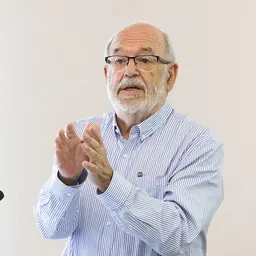
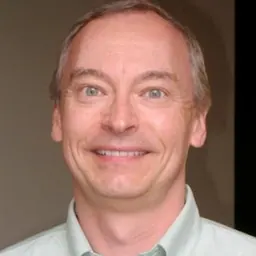
People in Deepak Pandya's life
Named in this biography and alive at the same time



Related people
Same field, nearest in time


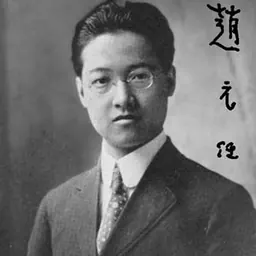
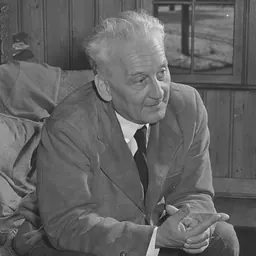
Contemporaries
People whose lives overlapped Deepak Pandya's


Frequently asked questions
Who was Deepak Pandya?
Indian-American neuroanatomist (1932-2020)
When was Deepak Pandya born?
Deepak Pandya was born on 6 December 1932.
When did Deepak Pandya die?
Deepak Pandya died on 4 October 2020 in United States.
What was Deepak Pandya's occupation?
Deepak Pandya was a scientist and neurologist.
What nationality was Deepak Pandya?
Deepak Pandya was American and Indian.
Sources & further reading
Cite this page
APA: Biography.guide. (2026). Deepak Pandya. https://biography.guide/deepak-pandya/
MLA: "Deepak Pandya." Biography.guide, https://biography.guide/deepak-pandya/.
Chicago: "Deepak Pandya." Biography.guide. https://biography.guide/deepak-pandya/.
Data last updated: 2026-09-20 · Spot an error? Report a correction.
Page generated 2026-09-27 05:27 UTC