
Décio Villares
Brasilianischer Maler, Bildhauer, Karikaturist und Zeichner
About Décio Villares
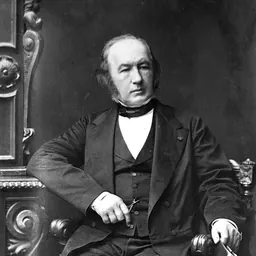
Lived 1851 – 1931 (aged 79). Décio Villares was a Brazilian painter, sculptor, draftsperson and vexillographer.
Décio Rodrigues Villares (1 December 1851 – 21 June 1931) was a Brazilian painter, sculptor, caricaturist, and graphic designer. He is best known for helping to design the blue disc on the flag of Brazil and his designs for the monument honoring Júlio de Castilhos.
Biography His father, José Rodrigues Villares, was a Lieutenant Colonel, a member of the Nova Iguaçu city council, and a participant in the Liberal rebellions of 1842. Although his family was not wealthy, they were politically connected (his uncle, Manoel Rodrigues Villares (1804-1878), served as a Minister of the Supreme Federal Court), so he was able to gain entrance to the Colégio Pedro II and the Academia Imperial de Belas Artes. There, he studied with Victor Meirelles and Pedro Américo.
In 1870, he began providing caricatures for the satirical magazine, Comédia Social, published by Américo and his younger brother, , who was also a student there at that time. For unknown reasons, he was frequently absent from his classes, did not participate in exhibitions and did not compete for the travel scholarship. Eventually, he dropped out. For the next nine years, he travelled, initially (1872) to Paris.
There, he studied in the workshops of Alexandre Cabanel. In 1874, he was awarded a gold medal at the Salon for his painting of Paolo Malatesta and Francesca da Rimini, which was praised by the notoriously difficult-to-please art critic. During that period, he was first exposed to the positivist philosophy of Auguste Comte and abandoned Catholicism. This would result in his being rejected for a teaching position at the Académie des Beaux-Arts. In 1887, he and Almeida Júnior were chosen to replace Victor Meirelles in the history painting department at the Academia Imperial, but they never did. Three years later, he and De Figueiredo were part of a group that presented a proposal for a new method of teaching that would emphasize the master/apprentice relationship and abolish the Academia. When he died, in 1931, she burned down his studio.
Much of his work was funded by the Positivist Church; including a medallion, to be placed on the grave of Dante Alighieri in Ravenna, and a monument to Benjamin Constant. Although he has often received little credit, he participated in the creation of the Brazilian flag, conceived by Raimundo Teixeira Mendes (a member of the Positivist Church); helping to design the blue disc and the placement of the words "Ordem e Progresso". He also painted the prototype that was used by the seamstresses who made the first flags. The painting was stolen in 2010 and has not been recovered.
He may have served as the inspiration for Julião Vilela, a character in Mocidade Morta, a novel by the art critic, Gonzaga Duque, who felt that Villares made poor aesthetic choices and never lived up to his potential.
Don’t just read it —
keep it.
Full-length biographies made to live with: read them, listen on the way to work, watch them tonight.
- E-book
- Audio
- Video
Instant download · yours to keep · every purchase keeps this site free
Important facts
People in Décio Villares's life
Named in this biography and alive at the same time

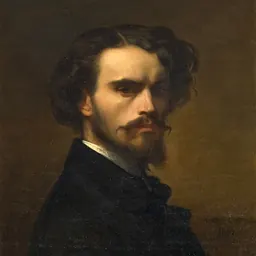
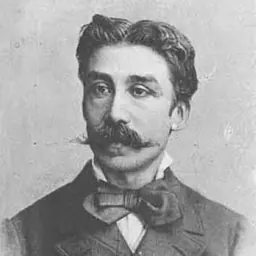


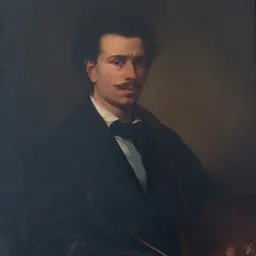
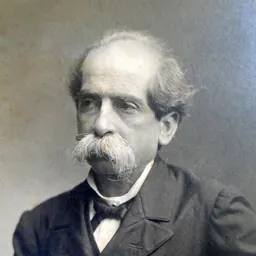
Related people
Same field, nearest in time
Contemporaries
People whose lives overlapped Décio Villares's



Frequently asked questions
Who was Décio Villares?
brasilianischer Maler, Bildhauer, Karikaturist und Zeichner (1851-1931)
When was Décio Villares born?
Décio Villares was born on 1 December 1851 in Rio de Janeiro.
When did Décio Villares die?
Décio Villares died on 21 June 1931 in Rio de Janeiro.
What was Décio Villares's occupation?
Décio Villares was a painter, sculptor, draftsperson and vexillographer.
What nationality was Décio Villares?
Décio Villares was Brazilian.
Sources & further reading
Cite this page
APA: Biography.guide. (2026). Décio Villares. https://biography.guide/decio-villares/
MLA: "Décio Villares." Biography.guide, https://biography.guide/decio-villares/.
Chicago: "Décio Villares." Biography.guide. https://biography.guide/decio-villares/.
Data last updated: 2026-09-20 · Spot an error? Report a correction.
Page generated 2026-09-27 05:17 UTC