
About Deborah P. Dixon
Born 1965. Deborah P. Dixon is a geographer.
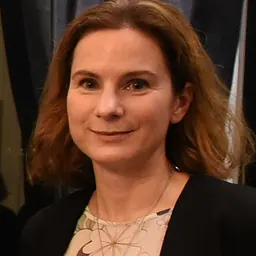
Deborah P. Dixon is a British geographer and professor of geography at the University of Glasgow. She is recognized for her contributions to feminist geopolitics. Dixon serves as the deputy head of school at the School of Geographical and Earth Sciences at Glasgow University.
Career Dixon began her academic career at East Carolina University, where she researched rural geographies of marginal economies and the experiences of migrant women. In 2012, she moved to the University of Glasgow as professor of geography in the School of Geographical and Earth Sciences.
Research Dixon's research spans several interconnected areas including feminist geopolitics, geohumanities, environmental issues, and art-science collaborations.
Feminist geopolitics Dixon is an internationally recognized scholar in feminist geopolitics. Her book Feminist Geopolitics: Material States (2016) explores how feminist imaginaries of Self, Other, and Earth reconfigure understandings of geopolitics. The book examines four objects of analysis: flesh, bone, touch, and abhorrence, grounded through globally diverse case studies. Her article "The way of the flesh: Life, geopolitics and the weight of the future" (2014) further develops her feminist geopolitical framework.
Geohumanities Dixon's work in geohumanities explores the intersections between geography and humanities disciplines, fostering new scholarly interactions and approaches to understanding place, space, and environmental relationships.
Environmental research Dixon's environmental research has addressed aesthetic, technological, political, and cultural responses to environmental issues, including toxic landscapes, biodiversity loss, and climate change impacts, in Europe, the United States, sub-Saharan Africa, Australia, and Japan. More recently, her research has focused on geoengineering efforts to address climate change, examining the geopolitics, governance, and aesthetics associated with manipulations of the Earth's climate system.
Her environmental research initiatives include:
Collaborative dialogues on citizen science, humanitarian technologies, and ethics within state and NGO networks in Malawi. Working with geoscientists, engineers, and artists on practical and conceptual aspects of geology in the Anthropocene, particularly in relation to geoenergy and communities in Scotland. Collaboration on addressing challenges facing UK coastal communities and ecosystems, developing inclusive policy responses. Research on stresses facing peatland communities and ecosystems amid climate change and Net Zero transition efforts.
Art-science collaborations Dixon has conducted extensive work on art-science collaborations, examining the conceptual and methodological possibilities afforded by poststructuralist and feminist theories in this context. She has undertaken research projects with colleagues at various institutions, including a residency with SymbioticA, an artistic laboratory at the University of Western Australia, where she studied the aesthetics and politics of bio-art creation.
Selected publications
Books Dixon, D.P. (2016). Feminist Geopolitics: Material States. Routledge. ISBN 9781472480200. Jones, M., Jones, R., Woods, M., Whitehead, M., Dixon, D., & Hannah, M. (2014). An Introduction to Political Geography: Space, Place and Politics (2nd ed.). Routledge. Smith, K., Fearnley, C.J., Dixon, D., Bird, D.K., & Kelman, I. (2023). Environmental Hazards: Assessing Risk and Reducing Disaster. Routledge. Cresswell, T., & Dixon, D. (2002). Engaging Film: Geographies of Mobility and Identity. Rowman & Littlefield.
Selected journal articles Dixon, D.P., & Jones, J.P. (2015). The tactile topologies of Contagion. Transactions of the Institute of British Geographers, 40(2), 223-234. Dixon, D.P., Hawkins, H., & Straughan, E.R. (2013). Wonder-full geomorphology: Sublime aesthetics and the place of art. Progress in Physical Geography, 37(2), 227-247. Dixon, D.P., Hawkins, H., & Straughan, E.R. (2012). Of human birds and living rocks: Remaking aesthetics for post-human worlds. Dialogues in Human Geography, 2(3), 249-270. Dixon, D., & Marston, S.A. (2011). Introduction: Feminist engagements with geopolitics. Gender, Place & Culture, 18(4), 445-453. Nicholson, P.J., Dixon, D., Pullanikkatil, D., Moyo, B., Long, H., & Barrett, B. (2019). Malawi stories: mapping an art-science collaborative process. Journal of Maps, 15(3), 39-47. Lavery, C., Dixon, D.P., & Hassall, L. (2014). The future of ruins: the baroque melancholy of Hashima. Environment and Planning A, 46(11), 2569-2584. Dixon, D.P. (2019). From becoming-geology to geology-becoming: Hashima as geopolitics. In: Bobbette, Adam and Donovan, Amy (eds.) Political Geology: Active Stratigraphies and the Making of Life. Palgrave Macmillan: Cham, pp. 147-165.
Don’t just read it —
keep it.
Full-length biographies made to live with: read them, listen on the way to work, watch them tonight.
- E-book
- Audio
- Video
Instant download · yours to keep · every purchase keeps this site free
Important facts
People in Deborah P. Dixon's life
Named in this biography and alive at the same time

Related people
Same field, nearest in time


Contemporaries
People whose lives overlapped Deborah P. Dixon's


Frequently asked questions
Who is Deborah P. Dixon?
British geographer
When was Deborah P. Dixon born?
Deborah P. Dixon was born on 29 October 1965.
What is Deborah P. Dixon's occupation?
Deborah P. Dixon is a geographer.
Sources & further reading
Cite this page
APA: Biography.guide. (2026). Deborah P. Dixon. https://biography.guide/deborah-p-dixon/
MLA: "Deborah P. Dixon." Biography.guide, https://biography.guide/deborah-p-dixon/.
Chicago: "Deborah P. Dixon." Biography.guide. https://biography.guide/deborah-p-dixon/.
Data last updated: 2026-09-20 · Spot an error? Report a correction.
Page generated 2026-09-27 05:03 UTC