
About David William Bacon
Lived 1813 – 1874 (aged 61). David William Bacon was an American catholic priest and catholic bishop.
David William Bacon (September 15, 1813 – November 5, 1874) was an American Catholic prelate who served as the first Bishop of Portland from 1855 until his death in 1874.
Early life and education David William Bacon was born on September 15, 1813, in Brooklyn, New York. He was the eldest child of William and Elizabeth (née Redmond) Bacon. His parents were Irish immigrants who were married by Father Benedict Joseph Fenwick at St. Peter's Church in 1812. His father, a sea captain, was lost at sea when David was a young child and while his mother was pregnant with a daughter, Jane. In addition to being a student, he served on the faculty of Mount St. Mary's (1834–1837).
Priesthood While in Maryland, Bacon was ordained a priest on December 13, 1838, by Archbishop Samuel Eccleston. He became pastor of St. Mary's Church in Ogdensburg in October 1839, assistant to Father Andrew Byrne at St. James Church in Manhattan in December 1840, and pastor of St. Peter's Church in Belleville, New Jersey, in January 1841. Given the growth of the parish, he helped create the new parish of St. Mary Star of the Sea in Brooklyn, while remaining at Assumption.
Bishop of Portland In July 1853, Pope Pius IX erected the Diocese of Portland, covering the entire states of Maine and New Hampshire. For its first bishop, the pope initially appointed Father Henry B. Coskery, vicar general of the Archdiocese of Baltimore. However, Coskery refused to accept and Rome waited over a year to name another. At the beginning of his tenure as bishop, the diocese contained 24 churches and 10 priests, including Fathers John Bapst and Anthony F. Ciampi, to serve a Catholic population of at least 40,000. By the end of his tenure in 1874, the diocese would contain 63 churches, 52 priests, 23 parochial schools (more than the dioceses of Boston, Burlington, or Providence ), and approximately 80,000 Catholics. That same year, a Catholic church was burned in Bath. At first, a chapel with seating for 600 was constructed by December 1856. Work on the main building was delayed for several years, especially by the Civil War. The work resumed in earnest in 1866, with Bacon laying the cornerstone on May 31 of that year. However, the Great Fire of Portland on the following July 4 destroyed around 1,800 buildings, including the unfinished cathedral, the chapel, the bishop's residence, a parochial school, and a convent.
A new chapel and school were erected within six months of the fire. Shortly before his departure to Rome for the First Vatican Council, Bacon dedicated the Cathedral of the Immaculate Conception on September 8, 1869. Later that day, however, a storm knocked down the new cathedral's steeple; it was repaired by late October.
First Vatican Council Bacon attended the First Vatican Council (1869–1870), where the main topic of discussion was the definition of papal infallibility. At the opening session of the Council in January 1870, Bacon joined eighteen other American bishops who signed an unsuccessful petition requesting Pope Pius IX to withdraw the proposal. While some had theological reservations, others thought the proposal was inopportune, especially given anti-Catholic opinion in the United States. However, at both the preliminary vote on July 13 and the final vote on July 18, Bacon voted in favor of the proposal.
Death In the summer of 1874, Bacon sailed with Archbishop John McCloskey for a visit to Rome. As soon as their ship reached New York on November 4, Bacon was taken to St. Vincent's Hospital, where he died the following day at the age of 61.
Bacon's body was then taken by train to Portland, and a Requiem Mass was celebrated on November 10 at the Cathedral of the Immaculate Conception by Bishop John Joseph Williams, with Archbishop McCloskey delivering the eulogy. He was initially buried in the crypt of the cathedral, next to his mother, sister, and aunts. 151 years later, in November 2025, Bacon's remains were transferred to a new sarcophagus located within the main cathedral.
Don’t just read it —
keep it.
Full-length biographies made to live with: read them, listen on the way to work, watch them tonight.
- E-book
- Audio
- Video
Instant download · yours to keep · every purchase keeps this site free
Important facts
People in David William Bacon's life
Named in this biography and alive at the same time

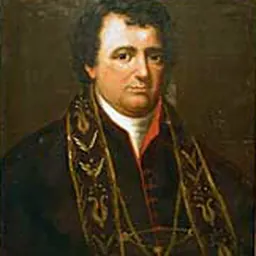
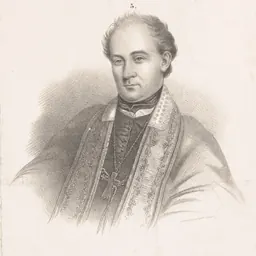

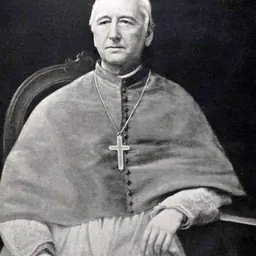
Related people
Same field, nearest in time

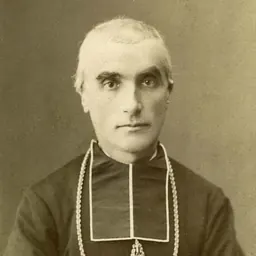
Contemporaries
People whose lives overlapped David William Bacon's




Frequently asked questions
Who was David William Bacon?
Roman Catholic bishop
When was David William Bacon born?
David William Bacon was born on 15 September 1813 in New York City.
When did David William Bacon die?
David William Bacon died on 5 November 1874 in St. Vincent's Hospital.
What was David William Bacon's occupation?
David William Bacon was a catholic priest and catholic bishop.
What nationality was David William Bacon?
David William Bacon was American.
Sources & further reading
· Wikipedia: David William Bacon
· DBpedia: David William Bacon
Cite this page
APA: Biography.guide. (2026). David William Bacon. https://biography.guide/david-william-bacon/
MLA: "David William Bacon." Biography.guide, https://biography.guide/david-william-bacon/.
Chicago: "David William Bacon." Biography.guide. https://biography.guide/david-william-bacon/.
Data last updated: 2026-09-20 · Spot an error? Report a correction.
Page generated 2026-09-27 05:22 UTC