
About David Thompson
Lived 1770 – 1857 (aged 86). David Thompson was a Canadian explorer, map maker, canoeist, cartographer and cartography.
David Thompson (30 April 1770 – 10 February 1857) was a British fur trader, surveyor, and cartographer, known to some native people as "Koo-Koo-Sint" or "the Stargazer". Over Thompson's career, he travelled across North America, mapping of the continent along the way. For this historic feat, Thompson has been described as the "greatest practical land geographer that the world has produced".
Early life Grey Coat Hospital, front entrance, taken in 1880 David Thompson was born in Westminster, Middlesex, to recent Welsh migrants from Radnorshire David and Ann Thompson. They changed their family name from ap Thomas to Thompson. When Thompson was two, his father died. Due to his widowed mother not having financial resources, she placed Thompson, 29 April 1777, the day before his seventh birthday, and his older brother in the Grey Coat Hospital, a school for the disadvantaged of Westminster. Thompson graduated to the Grey Coat mathematical school, well known for teaching navigation and surveying.
He received an education for the Royal Navy: including mathematics of trigonometry and geometry, practical navigation including using of nautical instruments, finding latitudes and longitudes and making navigational calculations from observing the sun, moon and tide, and drawing maps and charts, taking land measurements, and sketching landscapes. He later built on these skills to make his career. In 1784, when Thompson was 14, the Grey Coat treasurer paid the Hudson's Bay Company the sum of five pounds, upon which the youth became an apprentice employee of the company, contracted for a period of seven years to be trained as a clerk. In fact, two students had been selected for apprenticeships, but the other child was so scared of moving to the wilderness that he ran away, leaving just Thompson to take the position.
He set sail on a ship to North America on 28 May of that year, leaving England.
Hudson's Bay Company (HBC) On 2 September 1784, The next year he was transferred to nearby York Factory, and over the next few years spent time as a secretary at Cumberland House, and South Branch House of the Hudson's Bay Company before being transferred to Manchester House in 1787. During those years he learned to keep accounts and other records, calculate values of furs (it was noted that he also had several expensive beaver pelts at that time even when a secretary's job would not pay terribly well), track supplies and other duties.
In addition to clerical duties, Thompson began seeking out field missions. In 1786, he joined a group of traders heading south and west on the Hayes River, crossed Lake Winnipeg, went up the Saskatchewan River, and made it to the foothills of the Rocky Mountains. He returned to the Rockies on a trade mission the following year to meet with the Piegan Blackfeet Indians. Thompson wintered with the tribe, learned their language, and established lifelong friendships.
While sitting alone one winter day in front of a chequerboard, Thompson wrote in his diary that the devil showed up and took the seat opposite him, and the two played numerous games, all of which the devil lost. Then, all at once, he was alone again. Whether it was a dream or a hallucination, he didn't say, but David Thompson became a staunch Christian after the experience and remained so for the rest of his life. The mean error of the 34 observations was about 15′ of longitude. Broughton (2009) notes that the precision of the type of sextant used by Thompson was 15″ of arc, corresponding to 7.5′ of longitude giving an absolute limit to the precision of an individual observation. The error in Thompson's mean was several times less than this. The time he took on these observations, about 3 hours of calculation each, indicates that he understood the power of averages. Thompson spent the next few seasons trading based in Fort George (now in Alberta), and during this time led several expeditions into the Rocky Mountains.
On 10 July 1804, at the annual meeting of the North West Company in Kaministiquia, Thompson was made a full partner of the company. He became a 'wintering partner', who was based in the field rather than Montreal, and was granted two of the 92 NWC's shares worth more than £4,000. He spent the next few seasons based there managing the fur trading operations, but still finding time to expand his surveys of the waterways around Lake Superior. At the 1806 company meeting, officers decided to send Thompson back into the interior. Concern over the United States-backed expedition of Lewis and Clark prompted the North West Company to charge Thompson with the task of finding a route to the Pacific to open up the lucrative trading territories of the Pacific Northwest.
Columbia River travels David Thompson navigated the entire length of the Columbia River in 1811. This map of the Columbia and its tributaries shows modern political boundaries.
After the general meeting in 1806, Thompson travelled to Rocky Mountain House and prepared for an expedition to follow the Columbia River to the Pacific Ocean. In June 1807 Thompson crossed the Rocky Mountains and spent the summer surveying the Columbia basin; he continued to survey the area over the next few seasons. Thompson mapped and established trading posts in Northwestern Montana, Idaho, Washington, and Western Canada. Trading posts he founded included Kootenae House, Kullyspell House and Saleesh House; the latter two were the first trading posts west of the Rockies in Idaho and Montana, respectively. The North West Company established its post of Fort Nez Percés near the Snake River confluence several years later. Continuing down the Columbia, Thompson passed over the Celilo Falls, almost losing the canoe on the rocks, and portaged around the rapids of The Dalles and the Cascades Rapids. On 14 July 1811, Thompson reached the partially constructed Fort Astoria at the mouth of the Columbia, arriving two months after the Pacific Fur Company's ship, the Tonquin.
Before returning upriver and across the mountains, Thompson hired Naukane, a Native Hawaiian Takane labourer brought to Fort Astoria by the Pacific Fur Company's ship Tonquin. Naukane, known as Coxe to Thompson, accompanied Thompson across the continent to Lake Superior before journeying on to England.
Thompson wintered at Saleesh House before beginning his final journey in 1812 back to Montreal, where the North West Company was based.
In his published journals, Thompson recorded seeing large footprints (“which measured fourteen inches in length by eight inches in breadth”) near what is now Jasper, Alberta, in 1811. It has been suggested that these prints were similar to what has since been called the sasquatch. However, Thompson noted that these tracks showed "a small Nail at the end of each [toe]", which led him to surmise it was a bear, but he had doubts, saying, "I held it to be the track of a large old grizzled bear; yet the shortness of the nails, the ball of the foot, and its great size was not that of a Bear".
The years 1807–1812 are the most carefully scrutinized in his career and comprise his most enduring historical legacy, due to his development of the commercial routes across the Rockies, and his mapping of the lands they traverse.
Appearance and personality
In 1820, the English geologist, John Jeremiah Bigsby, attended a dinner party given by The Hon. William McGillivray at his home, Chateau St. Antoine, one of the early estates in Montreal's Golden Square Mile. He describes the party and some of the guests in his entertaining book The Shoe and Canoe, giving an excellent description of David Thompson:
I afterwards travelled much with him, and have now only to speak of him with great respect, or, I ought to say, with admiration... No living person possesses a tithe of his information respecting the Hudson's Bay countries... Never mind his Bunyan-like face and cropped hair; he has a very powerful mind, and a singular faculty of picture-making. He can create a wilderness and people it with warring savages, or climb the Rocky Mountains with you in a snow-storm, so clearly and palpably, that only shut your eyes and you hear the crack of the rifle, or feel the snow-flakes melt on your cheeks as he talks. Their marriage was formalised thirteen years later at the Scotch Presbyterian Church in Montreal on 30 October 1812. He and Charlotte had 13 children together; five of them were born before he left the fur trade. The family did not adjust easily to life in Eastern Canada; they lived in Montreal while he was travelling. Two of the children, John (aged 5) and Emma (aged 7), died of round worms, a common parasite.
In 1815, Thompson moved his family to Williamstown, Upper Canada, and a few years later was employed to survey the newly established borders with the United States from Lake of the Woods to the Eastern Townships of Quebec, established by Treaty of Ghent after the War of 1812. In 1843 Thompson completed his atlas of the region from Hudson Bay to the Pacific Ocean.
Afterwards, Thompson returned to a life as a land owner, but soon financial misfortune would ruin him. By 1831 he was so deeply in debt he was forced to take up a position as a surveyor for the British American Land Company to provide for his family. His luck continued to worsen and he was forced to move in with his daughter and son-in-law in 1845. He began work on a manuscript chronicling his life exploring the continent, but this project was left unfinished when his sight failed him completely in 1851.
Death and afterward
The land mass mapped by Thompson amounted to of wilderness (one-fifth of the continent). His contemporary, the great explorer Alexander Mackenzie, remarked that Thompson did more in ten months than he would have thought possible in two years.
Despite these significant achievements, Thompson died in Montreal in near obscurity on 10 February 1857, his accomplishments almost unrecognised. He never finished the book of his 28 years in the fur trade, based on his 77 field notebooks, before he died. In the 1890s geologist J.B. Tyrrell resurrected Thompson's notes and in 1916 published them as David Thompson's Narrative, as part of the General Series of the Champlain Society.
David Thompson and two First Nations guides on the shore of Lac la Biche, where he landed on 4 October 1798. Thompson's body was interred in Montreal's Mount Royal Cemetery in an unmarked grave. It was not until 1926 that efforts by J.B. Tyrrell and the Canadian Historical Society resulted in the placing of a tombstone to mark his grave. The next year, Thompson was named a National Historic Person by the federal government, one of the earliest such designations. A federal plaque reflecting that status is at Jasper National Park, Alberta. Meantime, Thompson's achievements are central reasons for other national historic designations: David Thompson on the Columbia River National Historic Event, marked at Castlegar, BC Athabasca Pass National Historic Site (NHS), at Jasper National Park Boat Encampment NHS, BC Howse Pass NHS, Banff National Park, Alberta Kootenae House NHS, BC Rocky Mountain House NHS, Alberta
In 1957, one hundred years after his death, Canada's post office department honoured him with his image on a postage stamp. The David Thompson Highway in Alberta was named in his honour, along with David Thompson High School on the side of the highway near Leslieville, Alberta. There are also two David Thompson Secondary Schools, one in Vancouver, BC, and one in Invermere, BC.
His prowess as a geographer is now well-recognized. He has been called "the greatest land geographer that the world has produced." Thompson Falls, Montana, and British Columbia's Thompson River and Thompson Falls on the Blaeberry River are also named after the explorer.
There is a statue commemorating David Thompson in downtown Sandpoint, Idaho, near the intersection of Second Avenue and Main Street.
The year 2007 marked the 150th year of Thompson's death and the 200th anniversary of his first crossing of the Rocky Mountains. Commemorative events and exhibits were planned across Canada and the United States from 2007 to 2011 as a celebration of his accomplishments.
In 2007, a commemorative plaque was placed on a wall at the Grey Coat Hospital, the school for the disadvantaged of Westminster David Thompson attended as a boy, by English author and TV presenter Ray Mears. as well as the BBC2 programme Ray Mears' Northern Wilderness (Episode 5), broadcast in November 2009. He's also the subject of 2010 KSPS-TV film Uncharted Territory: David Thompson on the Columbia Plateau.
He is referenced in the 1981 folk song "Northwest Passage" by Stan Rogers.
The national park service, Parks Canada, announced in 2018 that it had named its new research vessel , to be used for underwater archaeology, including sea floor mapping, and for marine science in the Pacific, Atlantic, Arctic Oceans, and the Great Lakes. It will be the main platform for research on the Wrecks of HMS Erebus and HMS Terror National Historic Site.
The David Thompson Astronomical Observatory at Fort William Historical Park was named to commemorate David Thompson and his discoveries.
Don’t just read it —
keep it.
Full-length biographies made to live with: read them, listen on the way to work, watch them tonight.
- E-book
- Audio
- Video
Instant download · yours to keep · every purchase keeps this site free
Important facts
Family & relationships
People in David Thompson's life
Named in this biography and alive at the same time


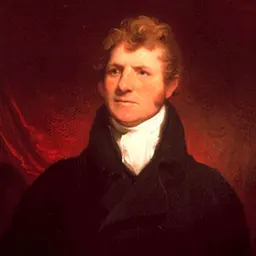
Related people
Same field, nearest in time


Contemporaries
People whose lives overlapped David Thompson's





Frequently asked questions
Who was David Thompson?
British-Canadian fur trader, surveyor, and map-maker (1770-1857)
When was David Thompson born?
David Thompson was born on 30 April 1770 in Westminster.
When did David Thompson die?
David Thompson died on 10 February 1857 in Longueuil.
What was David Thompson's occupation?
David Thompson was an explorer, map maker, canoeist, cartographer and cartography.
What nationality was David Thompson?
David Thompson was Canadian.
Sources & further reading
· DBpedia: David Thompson (explorer)
Cite this page
APA: Biography.guide. (2026). David Thompson. https://biography.guide/david-thompson-explorer/
MLA: "David Thompson." Biography.guide, https://biography.guide/david-thompson-explorer/.
Chicago: "David Thompson." Biography.guide. https://biography.guide/david-thompson-explorer/.
Data last updated: 2026-09-22 · Spot an error? Report a correction.
Page generated 2026-09-27 05:24 UTC