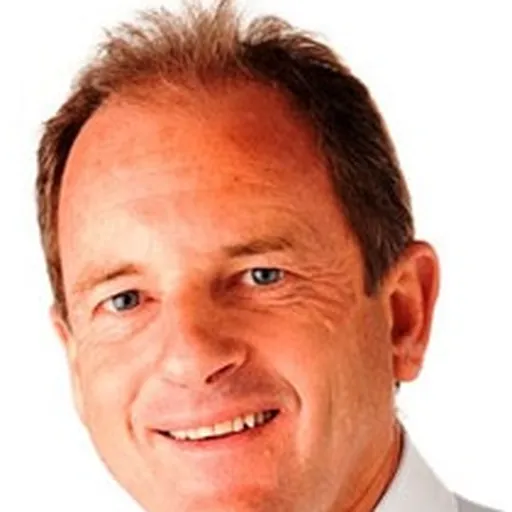
About David Shearer
Born 1957. David Shearer is a New Zealand politician.
David James Shearer (born 28 July 1957) is a New Zealand United Nations worker and politician. He was a member of the New Zealand Parliament for the Labour Party from 2009 to 2016, serving as Leader of the Opposition from 2011 to 2013.
Shearer spent nearly 20 years working for the UN, managing the provision of aid to countries including Somalia, Rwanda, Liberia, Kosovo, Afghanistan, Lebanon and Iraq. In 1992, Shearer was (together with his wife) named as New Zealander of the Year by The New Zealand Herald. In January 2021, he was succeeded in the role by Nicholas Haysom.
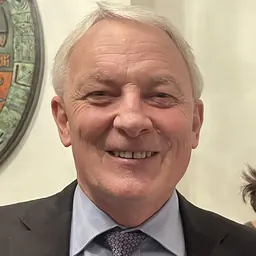
Early life Shearer was born and brought up in the Auckland suburb of Papatoetoe. He was the eldest of three children in a family of schoolteachers. His father being a Presbyterian elder, he was a church-goer in his youth. He attended Papatoetoe High School, where he was head boy and Phil Goff was a friend. From 1983 to 1987 he was a teacher at Massey High School and Onehunga High School.
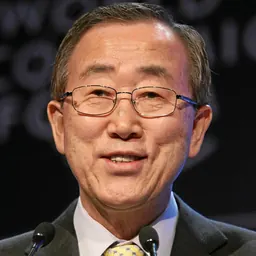
In 2007 Shearer was appointed by the United Nations Secretary-General Ban Ki-moon as his Deputy Special Representative (Humanitarian, Reconstruction and Development) for Iraq. While in Iraq, Shearer also served as the United Nations Resident Coordinator and the Humanitarian Coordinator. In this role he was responsible for managing over $2 billion in aid for developmental projects for 16 different UN agencies.
Member of Parliament, 2009–2016
Before his election as a Member of Parliament Shearer had twice previously stood for the Labour party: in 1999 he stood as a list-only candidate and in 2002 he unsuccessfully contested the Whangārei electorate. He then won the 2009 Mt Albert by-election on 13 June 2009 with 13,260 votes, a majority of 9,718 over National's Melissa Lee. Shearer extended his majority over Lee to 10,021 in the 2011 general election. In the 2014 general election, Shearer further extended his majority over Lee to 10,656.
Labour Party leadership election, 2011
In December 2011, following the resignation of Phil Goff, Shearer contested for leadership of the Labour Party. His opponents were David Cunliffe and David Parker. Shearer was viewed as unlikely to win the election; Claire Trevett of The New Zealand Herald originally expected that only Cunliffe and Parker would run for the leader's role, and The Dominion Post Vernon Small wrote that "Mr Shearer's bid is seen as a way to lift his profile". On 9 December, Horizon Research released a demographically weighted survey which found that 35.4% of adult New Zealanders supported Shearer's bid for the leadership, and 19.9% backed Cunliffe.
On 13 December, Shearer was elected by the Labour caucus. Both One News Espiner and 3 News reported that Shearer received about twenty-two of the thirty-four votes for the leadership position; however, Party President Moira Coatsworth stipulated that the election was secret and that she was the only person who had access to the ballot papers, which were destroyed.
Grant Robertson won election as Shearer's deputy.
Leader of the Opposition, 2011–2013
Political commentators opined that Shearer was moving the Labour Party towards the centre. Polls suggested that his performance as leader was rated unfavourably with the public, and he had poor name recognition. He was described as "the invisible man of New Zealand politics".
In November 2012 during a Labour Party conference, media speculation suggested that Cunliffe, who was then economic development spokesperson, would launch a challenge against Shearer for leadership of the party. On the morning of 19 November, Cunliffe confirmed he was not challenging Shearer, and would indeed back him if a vote was taken. However, he also said he would not commit to supporting Shearer when he faces a formal confidence vote in February 2013. Media speculation about Cunliffe's intentions marred Shearer's first 12 months as leader. Labour MPs unanimously endorsed leader Shearer at the annual conference, and Shearer subsequently demoted Cunliffe from the front bench.
During Shearer's leadership the Labour Party floated a controversial proposed policy of not considering males for candidate selection. Dubbed the "man ban", the policy was to ensure that 50% of Labour MPs were female by 2017 and allowed local electorate committees to hold all-women shortlists to reach this goal. The policy received backlash with many Labour members (including women) being opposed thinking it discriminatory. After initially remaining silent on the policy, Shearer publicly stated his opposition to the "man ban", noting he was supportive of more women in parliament but the policy was not the right mechanism for it. The policy was subsequently discarded. He announced his resignation as Labour leader on 22 August 2013, stating that: "My sense is I no longer have the full confidence of many of my caucus colleagues". Following a party-wide leadership election, Cunliffe was elected Shearer's successor over Deputy Leader Robertson.
Cunliffe appointed Shearer to his Shadow Cabinet as spokesperson for Foreign Affairs and also Energy and Resources.
Resignation from Parliament Labour lost the 2014 general election and Cunliffe was replaced as leader by Andrew Little, who reappointed Shearer as Labour's foreign affairs spokesperson. On 8 December 2016 Shearer announced he would resign from Parliament after being chosen to head the United Nations Mission in South Sudan by United Nations secretary general Ban Ki-moon, replacing Dane Ellen Margrethe Løj. His resignation forced a by-election in the electorate, which was won by list MP Jacinda Ardern, who would go on to lead Labour to victory at the 2017 general election.
Honours and awards In 1992, Shearer, and his wife Anuschka Meyer, were named the New Zealanders of the Year by The New Zealand Herald after running one of the biggest aid camps in Somalia.
In the 1993 New Year Honours, Shearer was appointed a Member of the Order of the British Empire, for welfare services to children in Somalia. In 1994, he was awarded Save the Children's international Award for Gallantry for service in areas of conflict. In 2023, Shearer was conferred an honorary Doctor of Commerce degree by Lincoln University.
Don’t just read it —
keep it.
Full-length biographies made to live with: read them, listen on the way to work, watch them tonight.
- E-book
- Audio
- Video
Instant download · yours to keep · every purchase keeps this site free
Important facts
People in David Shearer's life
Named in this biography and alive at the same time


Related people
Same field, nearest in time




Contemporaries
People whose lives overlapped David Shearer's

Frequently asked questions
Who is David Shearer?
New Zealand politician
When was David Shearer born?
David Shearer was born on 28 July 1957 in Auckland.
What is David Shearer's occupation?
David Shearer is a politician.
What nationality is David Shearer?
David Shearer is New Zealand.
Sources & further reading
Cite this page
APA: Biography.guide. (2026). David Shearer. https://biography.guide/david-shearer-politician/
MLA: "David Shearer." Biography.guide, https://biography.guide/david-shearer-politician/.
Chicago: "David Shearer." Biography.guide. https://biography.guide/david-shearer-politician/.
Data last updated: 2026-09-22 · Spot an error? Report a correction.
Portrait: Wikimedia Commons · author & licence
Page generated 2026-09-27 05:03 UTC