
About David Price
Born 1956. David Price is a British geophysicist.
Geoffrey David Price (born January 12, 1956 ) is a British earth scientist. He has been Vice-Provost (Research) of UCL (University College London) since 2007 and Professor of Mineral Physics in the UCL Department of Earth Sciences since 1991. Price has been responsible for promoting, supporting and facilitating UCL research, including securing the highest-quality research outputs across UCL, and leading the development and implementation of the UCL Research Strategy.
As a scientist, Price was one of the first to establish the now major field of computational mineral physics, and has published more than 250 research papers/chapters. His work has attracted over 13,000 citations, and has “Hirsch Index” of 66.
Education and early career Price is the son of the geologist, Neville J. Price. In 1974, prior to going to university, Price was an Assistant Scientific Officer at the National Physical Laboratory, Teddington, UK, researching dispersive Fourier transform spectroscopy. At the University of Cambridge, Price read Natural Sciences and graduated with a 1st Class Honours Bachelor of Arts from Clare College in 1977.
From 1977 to 1980, he was a Natural Environment Research Council Research Student at the University of Cambridge, and received a PhD in 1981; his doctoral thesis was entitled Aspects of Transformation Behavior in Olivine, Pyroxenes and Titanomagnetites. From 1980 to 1981, Price was a Fulbright-Hayes Scholar and Research Associate at the University of Chicago’s Department of the Geophysical Sciences, and, from 1981 to 1983, a Research Fellow at Clare College, University of Cambridge and Natural Environment Research Council Research Fellow, University of Cambridge Department of Earth Sciences.
In 1983, Price became a Royal Society University Research Fellow at UCL, where he has since held a variety of academic and management positions. He discovered the mineral Wadsleyite, which is believed to make up part of the transition zone of the Earth’s mantle, from a depth of 400 km to 550 km.
As UCL Vice-Provost (Research)
As UCL Vice-Provost (Research), Price is responsible to the UCL President and Provost for: promoting, supporting and facilitating UCL's research performance; leading the implementation of UCL's research strategy; leading UCL's preparation for future research assessment exercises; and the implementation of full economic costing for research and subsequently teaching.
Other current appointments Price's other current appointments include:
Chair of Research Excellence Framework Panel B Chair of the League of European Research Universities' Research Policy Committee Member of the Advisory Group to the Stern Review of the Research Excellence Framework
Honours Price was appointed Officer of the Order of the British Empire (OBE) in the 2023 New Year Honours for services to science and research.
Price has been elected to: Fellowship, American Geophysical Union (2005) Membership, Academia Europaea (2000) Fellowship, Mineralogical Society of America (1997), in recognition of significant contributions to the fields of mineralogy, petrology and crystallography Fellowship, Geological Society of London (1994) Named one of the Top 10 British Geologists (2003) Murchison Medal, Geological Society of London (2002) Schlumberger Medal, Mineralogical Society of Great Britain & Ireland (1999) MacRoberts Lecturer, the Royal Institution (1990).
The strategy's basis was that the collective expertise of the whole of UCL is greater than the sum of its subject-specific parts. By collaborating across disciplines, therefore, the university could address major problems most effectively.
2011 After publication of the 2011 version of the UCL Research Strategy, Times Higher Education described Price as asserting that, "since the Thatcher era, universities had adopted the prevailing political view of them as "the engines of the knowledge economy," leading them to neglect wisdom, which he defined as "the judicious application of knowledge for the good of humanity". He cited the huge increase in maize prices prompted by the staple food crop's use as a source of biofuel as a "classic case of the application of very clever knowledge without developing a wise way of introducing it". The problem, he said, was that few universities possessed the breadth of top researchers necessary to generate wisdom, which required the "synthesizing and contrasting of the knowledge, perspectives and methodologies of different disciplines"."
The Times Higher Education article noted: "Another key concept in the research strategy is "leadership", which Professor Price distinguished from excellence on the grounds that it was active rather than passive. As well as being eminent researchers, their leadership obligations would also require senior UCL academics to "be putting back into their discipline by doing professional service, and into the institution by managing and developing strategic areas in their own departments and leading career development of younger colleagues". Younger academics, for their part, should be "developing their leading position in their subject and nurturing students". The Times Higher Education article stated: "Cross-disciplinary collaboration did not necessarily happen "naturally", and this was where Professor Price's office justified its existence - by organizing symposia, offering seed funding and even establishing cross-disciplinary institutes. "Some universities believe that just having excellence and enough people together [means] it will all happen. I believe excellence is a key thing, but you need also to give people a framework...to refer back to," he said. He said his approach was not "dirigisme", but that he hoped to create an ethos of collegiality in which collaboration became the norm. … "I am very happy to leave excellent people to get on alone, but we are providing them with an opportunity to do more." This was an opportunity that increasing numbers of UCL academics were taking up". He further enhanced UCL's cross-disciplinary capability by facilitating the foundation of thematic centres and networks, each bringing together a variety subject-specific expertise in order to address major problems with more sophistication. These included the UCL Computational Life & Medical Sciences Network, the UCL Centre for Digital Humanities, the UCL Energy Institute, the UCL Environment Institute, the UCL European Institute, the UCL Genetics Institute, the UCL Institute for Global Health, the UCL Institute of Origins, the UCL Institute for Risk & Disaster Reduction, UCL Systems Biology and the UCL Urban Laboratory.
Price also conceived the UCL Grand Challenges – Global Health, Sustainable Cities, Intercultural Interaction and Human Wellbeing – through which concentrations of specialist expertise are brought together to address aspects of the world's key problems. The following were flagship UCL Grand Challenges initiatives: in Global Health – Population Footprints, the 2011 UCL–Lever Hulme Trust symposium on human population growth and global carrying capacity; and briefings to Commonwealth Ministers of Health and the World Health Organization following publication of the UCL–Lancet Commission on Managing the Health Effects of Climate Change Sustainable Cities – publication of Sustainability and the Megalopolis: Facing the urban reality of the 21st century, the synthesis of a seminar series addressing topics such as climate change, transport, energy and water infrastructure, sustainability, health, security, resilience, society, culture, economics, planning and governance Intercultural Interaction – inauguration of the UCL Global Migration Symposia Series and UCL Migration Week; and foundation of the UCL Centre for Early Modern Exchanges, 1450–1800, the UCL Institute for Human Rights and the UCL European Institute Human Wellbeing – international conferences on The Future of Healthcare in Europe and Literature, Welfare and Wellbeing: The poetics of the Scandinavian welfare state.
2019 In the foreword to the 2019 UCL Research Strategy, Price wrote: “Regrettably, the key question for our generation of researchers has become: ‘How will society survive to the 22nd century?’ By survival, we do not mean simply the continued existence of the human race, but also of the environments, institutions, structures and values that underpin and enhance society and enable humanity to thrive. We also recognize the profound imperative to tackle the persistent injustices and inequalities in society today, and to help to deliver a more equitable future for all of humanity. … UCL is well-positioned to make major contributions to help humanity survive and prosper. This is due not least to our distinctive ability to sustain a breadth, depth and diversity of expertise and research across disciplines and methods. The purpose of this strategy is to enable UCL’s individual researchers and our research community as a whole to maximize their contribution to public good. I believe this also requires us to consider: how our research environment supports our researchers, both as individuals and collectively; the cultural and structural barriers we may need to overcome to achieve our ambitions; and how we can redefine traditional concepts of leadership, collaboration and research impact to reflect, enable and drive the vision, aims and objectives set out in this strategy."
The strategy sets out a number of objectives in support of an overall aspiration: "We want to stimulate disruptive thinking across and beyond our university to transform knowledge and understanding, and to tackle complex societal problems. We wish to help to enable society not only to survive to the next century – an urgent challenge requiring unprecedented collective action and partnership – but also to thrive, so that the lives of future generations are worth living: prosperous, secure, engaged, empowered, fair, healthy, stimulating and fulfilling. As a community of scholars and those who support them, we must each focus our efforts, based on our founding values and driven by our intellectual curiosity, to be a force for positive social change. … This strategy seeks to enable and empower all our researchers to thrive as research leaders, providing opportunities for engagement and impact, while ensuring that they retain the freedom to steer their own course, experiment and develop in unique ways. We see this as crucial in order to maintain the richness and diversity of research at UCL." greater collaboration between institutions, and in particular between research-intensive ‘hubs’ and smaller ‘islands of excellence’ in other institutions funding of research that is internationally competitive in institutions that are able to compete and leverage their UK funding by collaborating on the global stage a rejection of defining the value of higher education in narrow cost-benefit terms greater amounts of research funded by block grants on the basis of performance, rather than through the grant application ‘treadmill’.
Don’t just read it —
keep it.
Full-length biographies made to live with: read them, listen on the way to work, watch them tonight.
- E-book
- Audio
- Video
Instant download · yours to keep · every purchase keeps this site free
Important facts
Related people
Same field, nearest in time

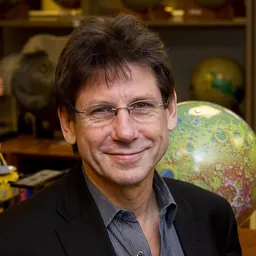




Contemporaries
People whose lives overlapped David Price's
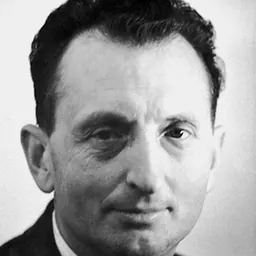

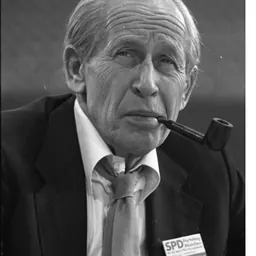
Frequently asked questions
Who is David Price?
Vice-Provost at University College London
When was David Price born?
David Price was born on 12 January 1956.
What is David Price's occupation?
David Price is a geophysicist.
What nationality is David Price?
David Price is British.
Sources & further reading
· DBpedia: David Price (mineral physicist)
Cite this page
APA: Biography.guide. (2026). David Price. https://biography.guide/david-price-geophysicist/
MLA: "David Price." Biography.guide, https://biography.guide/david-price-geophysicist/.
Chicago: "David Price." Biography.guide. https://biography.guide/david-price-geophysicist/.
Data last updated: 2026-09-20 · Spot an error? Report a correction.
Page generated 2026-09-27 05:22 UTC