
About David P. Billington
Lived 1927 – 2018 (aged 90). David P. Billington was an American civil engineer and university teacher.
David Perkins Billington (June 1, 1927 – March 25, 2018) was an American structural engineer and educator. He was the Gordon Y.S. Wu Professor of Engineering at Princeton University, where he taught for 50 years. Billington is best known for pioneering the discipline of structural art, a concept establishing that engineering design is a creative discipline distinct from architecture, defined by the integration of efficiency, economy, and elegance.
Early life and education Billington was born in Bryn Mawr, Pennsylvania, on June 1, 1927, to Nelson and Jane Coolbaugh Billington. He served as a radar technician in the United States Navy from 1945 to 1946.
He attended Princeton University, where he studied basic engineering, a curriculum that allowed him to take courses in the humanities alongside mechanical, electrical, chemical, and aeronautical engineering. He graduated with a Bachelor of Science in Engineering (B.S.E.) in 1950.
Following graduation, Billington received a Fulbright Scholarship to study structural engineering in Belgium from 1950 to 1952. During his fellowship at the University of Louvain and the University of Ghent, he studied bridge construction and prestressed concrete under Gustave Magnel. While in Belgium, he met Phyllis Bergquist, a fellow Fulbright Scholar studying piano at the Royal Conservatory of Brussels; they married in Chicago in 1951.
Career Structural design In 1952, Billington joined the Roberts and Schaefer Company in New York City as a structural engineer. Mentored by Anton Tedesko, he spent eight years designing bridges, aircraft hangars, and thin-shell structures. His notable projects during this period included the structure for the St. Louis Lambert International Airport terminal, a hangar for Hill Air Force Base in Utah (which had the longest-span prestressed concrete roof in the United States at the time), Pier 40 in New York, and Launch Complex 36 at Cape Canaveral.
Academic career Billington began lecturing part-time at Princeton University in 1958 and joined the faculty full-time as an associate professor of Civil Engineering in 1960. He was promoted to Professor in 1964 and was named the Gordon Y.S. Wu Professor of Engineering in 1996. Between 1990 and 2008, Billington served as the director of the Program on Architecture and Engineering. He transferred to emeritus status in 2010.
At Princeton, Billington developed "Humanistic Studies in Engineering," an approach that integrated the study of engineering works with their social and historical contexts. He created two popular courses that bridged engineering and the liberal arts: "Structures and the Urban Environment" (begun in 1974) and "Engineering in the Modern World" (begun in 1985). By the time of his retirement, it was estimated that one in four Princeton undergraduates had taken one of his courses.
Structural Art
Billington coined the term structural art to describe works of engineering that transcend pure utility to become objects of beauty. He argued that structural art is a discipline parallel to, but independent of, architecture; while architects control space, structural engineers control forces.
According to Billington, a work of structural art must satisfy the "three E's": Efficiency: The scientific use of minimum materials to support loads (Scientific). Economy: The management of costs to benefit society (Social). Elegance: The expressive form chosen by the engineer (Symbolic).
His scholarship focused on "structural artists" who exemplified these ideals, such as Thomas Telford, Gustave Eiffel, John A. Roebling, Robert Maillart, Félix Candela, Christian Menn, Fazlur Khan, and Heinz Isler. In 1973, he founded the Maillart Archive at Princeton to document the work of the Swiss engineer Robert Maillart, whose bridges Billington regarded as primary examples of structural art.
Awards and honors Billington received numerous awards for his contributions to engineering education and history: Dexter Prize from the Society for the History of Technology (1979) for Robert Maillart's Bridges. Election to the National Academy of Engineering (1986). History and Heritage Award from the American Society of Civil Engineers (ASCE) (1986). Charles A. Dana Award for Pioneering Achievement in Education (1990). New Jersey Professor of the Year by the Carnegie Foundation for the Advancement of Teaching (1995). Fellow of the American Academy of Arts and Sciences (1998). Distinguished Teaching Scholar Award from the National Science Foundation (2003). Honorary Degree from Princeton University (2015).
In 1999, Engineering News-Record named him one of the top five educators in civil engineering since 1874.
Personal life Billington was the brother of James H. Billington, the Librarian of Congress. He was married to Phyllis Bergquist for 66 years until his death. They had six children and eleven grandchildren. Billington died in Los Angeles on March 25, 2018, at the age of 90.
Selected publications
Don’t just read it —
keep it.
Full-length biographies made to live with: read them, listen on the way to work, watch them tonight.
- E-book
- Audio
- Video
Instant download · yours to keep · every purchase keeps this site free
Important facts
People in David P. Billington's life
Named in this biography and alive at the same time
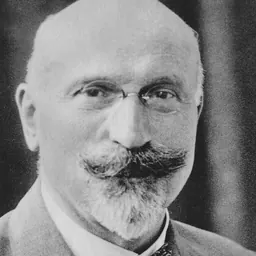





Related people
Same field, nearest in time

Contemporaries
People whose lives overlapped David P. Billington's


Frequently asked questions
Who was David P. Billington?
American civil engineer
When was David P. Billington born?
David P. Billington was born on 1 June 1927 in Bryn Mawr.
When did David P. Billington die?
David P. Billington died on 25 March 2018 in Los Angeles.
What was David P. Billington's occupation?
David P. Billington was a civil engineer and university teacher.
What nationality was David P. Billington?
David P. Billington was American.
Sources & further reading
· Wikipedia: David P. Billington
· DBpedia: David P. Billington
Cite this page
APA: Biography.guide. (2026). David P. Billington. https://biography.guide/david-p-billington/
MLA: "David P. Billington." Biography.guide, https://biography.guide/david-p-billington/.
Chicago: "David P. Billington." Biography.guide. https://biography.guide/david-p-billington/.
Data last updated: 2026-09-20 · Spot an error? Report a correction.
Page generated 2026-09-27 05:15 UTC