
Christian Menn
Swiss structural engineer and bridge designer
About Christian Menn
Lived 1927 – 2018 (aged 91). Christian Menn was a Swiss civil engineer, structural engineer, bridge engineer, university teacher and engineer.
Christian Menn (March 3, 1927 – July 16, 2018) was a renowned Swiss civil engineer and bridge designer. He was involved in the construction of around 100 bridges worldwide, but the focus of his work was in eastern Switzerland, especially in canton Graubünden. He continued the tradition of and had a decisive influence on Swiss bridge building. The technical and aesthetic possibilities of prestressed concrete were most fully realized with his bridges in Switzerland.
Menn led his own engineering company in Chur from 1957 to 1971. From 1971 until his retirement in 1992, he was a professor of structural engineering at ETH Zurich, specializing in bridge design. In his retirement years, he continued to be a consulting engineer in private practice.
Leonard P. Zakim Bunker Hill Memorial Bridge (2003), Boston, USA
Education and practical training Born in Meiringen, Canton of Bern, Menn graduated from high school (Kantonsschule Chur) in 1946, followed by structural engineering studies at ETH Zurich. He received a diploma as Bauingenieur (civil engineer) in 1950. From 1950 through 1953 he worked for construction engineering companies. Then, he returned to ETH Zurich to become assistant to Pierre Lardy, a well-known professor of structural engineering, and was awarded a PhD degree in 1956. He gained practical experience working for companies in Paris and Bern before starting his own consulting company in 1957.
But with the revolutionary new material — prestressed concrete — Menn saw that prestressing could actually replace the arch itself. The prestressed deck of his arch bridge could become the main supporting member without the arch. His Felsenau Viaduct (1974) at Bern did exactly that — the roadway was carried solely by a curved hollow-box beam that has been prestressed. The effect is a structure of exceptional lightness that satisfies all three of Menn's main criteria for design: efficiency, economy, and aesthetics. It is the longest viaduct of the A1 highway and the world's first single-cell box girder bridge built with the cantilever method, a pioneer work in prestressed concrete design and construction.
Later, with prestressing, Menn was able to design bridges that combined appropriately a prestressed cantilever girder bridge deck with a cable-stayed bridge form, introducing new forms as exemplified by his Ganter bridge (1980).
Swiss tourism The important role of tourism in the Swiss economy had a strong influence on the types of bridges that were constructed. When choosing a bridge design, Swiss leaders prioritized the aesthetic characteristics of a bridge more highly than a country that is less tourism-driven. The need for visually appealing bridges afforded bridge designer Menn with a great opportunity. His use of pre-stressed concrete and the implementation of cable-stayed bridge decks gave his designs great aesthetic appeal.
For example, when the winner was announced for Ganter bridge, the seven design entries were put on display at a museum in Bern. The jury had considered many details including overall concept, performance, aesthetics, cost, and the method of construction. The report released by the jury praised Menn's design as “...well balanced and convincing. The scale of the design fits well into the landscape."
Professional organizations Christian Menn was a member of the Swiss Society of Engineers and Architects (SIA), the Swiss Trade Group for Bridge and Building Engineering, International Association for Bridge and Structural Engineering (IABSE), and Swiss Code-Committee for Reinforced and Prestressed Concrete Structures. Before retirement, he was a member of the ETH research committee.
Menn’s numerous bridge structures, such as the Ganter Bridge and the Sunniberg Bridge in Switzerland, or the Leonard P. Zakim Bunker Hill Bridge in Boston, USA, as well as many others, are renowned worldwide for their structural beauty, economic efficiency, technical innovation, and for simply being structural engineering oeuvres of art.
Menn worked with a young Miguel Rosales on the Leonard P. Zakim Bunker Hill Memorial Bridge, completed in 2003, as part of the massive "Big Dig" project in Boston. This highly visible structure has become an iconic landmark in the Boston skyline, and helped launch Rosales' career as a bridge designer, carrying the older designer's philosophy into the next generation of structural designers.
Don’t just read it —
keep it.
Full-length biographies made to live with: read them, listen on the way to work, watch them tonight.
- E-book
- Audio
- Video
Instant download · yours to keep · every purchase keeps this site free
Important facts
People in Christian Menn's life
Named in this biography and alive at the same time



Related people
Same field, nearest in time
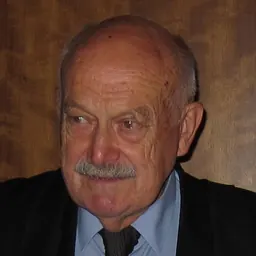


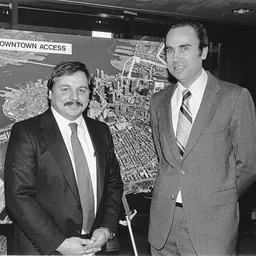
Contemporaries
People whose lives overlapped Christian Menn's


Frequently asked questions
Who was Christian Menn?
Swiss structural engineer and bridge designer (1927-2018)
When was Christian Menn born?
Christian Menn was born on 3 March 1927 in Meiringen, Bern.
When did Christian Menn die?
Christian Menn died on 16 July 2018 in Chur.
What was Christian Menn's occupation?
Christian Menn was a civil engineer, structural engineer, bridge engineer, university teacher and engineer.
What nationality was Christian Menn?
Christian Menn was Swiss.
Sources & further reading
Cite this page
APA: Biography.guide. (2026). Christian Menn. https://biography.guide/christian-menn/
MLA: "Christian Menn." Biography.guide, https://biography.guide/christian-menn/.
Chicago: "Christian Menn." Biography.guide. https://biography.guide/christian-menn/.
Data last updated: 2026-09-20 · Spot an error? Report a correction.
Page generated 2026-09-27 05:27 UTC