
David Neagle
United States law enforcement officer
About David Neagle
Lived 1847 – 1925 (aged 78). David Neagle was an American, known for David S. Terry and In re Neagle.
David Butler Neagle (October 10, 1847—November 28, 1925) was a Deputy U.S. Marshal who, while guarding Associate Supreme Court Justice Stephen J. Field, killed former California Chief Justice David S. Terry when he assaulted Field. Neagle was arrested by the county sheriff and charged with murder. Insisting he was acting within his capacity as a federal marshal, his case went to the U.S. Supreme Court, which in In re Neagle affirmed the executive branch's right to protect judges and the supremacy of federal law over state law.
He met Bertha Blanch in 1870. They had two daughters, Louisa and Emma, who died before their sixth birthday. They were married in 1874 and later had Winifred Mary and Albert Victor. In 1852 his parents took him and his sister Mary to San Francisco. His mother Bridget died soon after their arrival, and his father placed Mary in the Female Orphan Asylum. At age 10 David began attending the Roman Catholic School at Santa Clara, which later became Santa Clara College. San Francisco was the financial center through which the wealth of the California Gold Rush and the Comstock Lode passed. At age 15 in 1862 Neagle left for Florence, Idaho Territory, where gold had been discovered the prior year. He returned to San Francisco in 1863 and resumed his schooling, but soon left to join the miners in Virginia City, Treasure City, and later Pioche, Nevada.
Leavy collected the $5,000 and developed a reputation as a gunfighter, leading to his death in Tucson, Arizona Territory in 1882.
In 1874 Neagle learned of a promising silver and copper find in Panamint, California, near Death Valley, and was one of the first to arrive in the newly founded boom town. He opened a saloon named the Oriental with boards across two barrels in front of a tent. It grew into an elaborate frame building with a black walnut bar, fixtures valued at $10,000, a billiard table, paintings of nude women, and two gambling rooms. He bought an entire town block and subdivided it. To protect customers from stray bullets in the untamed town, he reinforced the walls of his saloon with sheets of corrugated iron. caused investor confidence to fail, and by November 1875 Panamint was virtually abandoned. Neagle may have left with about $20,000 (or about $ today). He reported a murder in Darwin City, Nevada on August 5, 1875, to the state capital in Carson City. On July 24, 1876, a flash flood roared down the canyon and washed out most of the town.
Neagle returned to Virginia City, where his sister Mary lived with her husband Jim Kelley and son Tom, and opened a saloon named The Capital. After about six months he took his family and was soon employed as a mine foreman while working a gold claim of his own near Prescott, Arizona Territory. In 1877, he hurt his leg badly in a fall, and for the next year he struggled to get well, so he returned to San Francisco. He later worked mines in Utah, Idaho, Wyoming, Arizona, and Sonora, Mexico. He was in Tucson on June 28, 1880, and soon moved to the silver-mining boom town of Tombstone, Arizona Territory. He hired dozens of men to fulfill the contract. He also built the flume to transport the lumber to the mill site. When his partner Maginnis absconded with their employees' wages, Neagle went after him. On March 1, 1884, he confronted Maginnis and demanded he return the money. One account states that Mcginnis attacked Neagle with a knife, while another reports he shot Mcginnis in the back. The local paper of Deer Lodge Montana reported "the ball entered the breast." Neagle shot Mcginnis, though he survived. Cleared at a hearing, Neagle was viewed as a hero by his employees.
Career as marshal
Attorney and former Chief Justice of the California Supreme Court David S. Terry. In 1859 Stephen J. Field had replaced the former Chief Justice of the California Supreme Court, David S. Terry, after Terry killed California United States Senator David Colbreth Broderick in a duel. Terry was charged with a crime, but was acquitted while the witnesses were en route and left the state. Thirty years after the two men first met, Field had another encounter with Terry in a volatile public scandal. Terry was a big man, known for his physical strength and for his skill with the Bowie knife he routinely carried in a sheath under his coat.
Sarah Althea Hill was a 30-year-old mentally unstable woman with a history of violent behavior. She carried a small-caliber Colt revolver in her purse and did not hesitate to threaten all who crossed her. She attracted the attention of 60-year-old widower and millionaire William Sharon, president of the Bank of California and owner of the Palace Hotel and of other properties. He gave her $500 (about $ today) per month and a room in the San Francisco Grand Hotel, adjoining the Palace Hotel where he lived, for the pleasure of her companionship. After just over a year, he tried to end the relationship, but she would not agree. He finally evicted her from the room by having the carpets ripped up and the door hinges removed, along with a $7,500 (around $) payment.
When he began a relationship with another woman, she claimed to be his wife and sued him for adultery. One of her attorneys was David Terry. Sharon countersued, claiming that the marriage contract she produced was fraudulent. When Terry and his wife saw Sawyer on the train, the newspapers reported:
Her husband watched her actions and smilingly approved. He hit Frank, knocking out a tooth, and the marshals drew their handguns. Spectators subdued Terry and led him out of the courtroom, where he pulled his Bowie knife again, threatening all around him. David Neagle was among the spectators present and put his pistol in Terry's face. Both Terrys were subdued and placed under arrest. Justice Field had them returned to the courtroom and sentenced both to jail for contempt of court. David Terry got six months in jail, and Sarah Terry got one month.
While being transported to jail and while serving their sentences, Terry and his wife repeatedly threatened Field. The Terrys suffered several more setbacks. Both David and Althea were indicted by a federal grand jury on criminal charges arising out of their behavior in the courtroom before Justice Field. In May 1889, the U.S. Supreme Court refused to review the order that invalidated Althea Terry's marriage contract with Senator Sharon. Then, in July, with only one of the four judges who had earlier ruled in their favor, the California Supreme Court reversed itself. It ruled that because Althea Terry and Sharon had kept their alleged marriage a secret, they were never legally married. While in jail or shortly afterward, pregnant Althea suffered a miscarriage.
Attack expected
The newspapers followed the case and repeatedly speculated about the likelihood of an attack on Field. In 1886 and 1888, Franks had appointed Neagle a special deputy to supervise congressional election returns in a rough precinct of San Francisco. When Field returned to California as judge of the 9th Circuit Court in 1889, U.S. Attorney General William Miller instructed Franks to appoint Neagle as a deputy marshal with responsibility for protecting Field.
Terry killed
When David and Althea Terry were released from jail, they returned to Fresno. On August 14, 1889, they boarded a train in Fresno on which, unbeknownst to them, Field and Neagle were returning from Los Angeles. Field soon learned of Terry's presence. At 7:10 am, the train stopped at Lathrop, California for breakfast. Neagle encouraged Judge Field to remain aboard the train, but he refused. All of the passengers disembarked to eat breakfast in the railroad station dining room. Neagle told the conductor to send for the local constable and request that he come at once, but the constable could not be immediately located. Neagle rose from his chair and said, "Stop that! I am an officer."
Neagle arrested
Neagle and Field reboarded the train and locked themselves in their cabin. Althea attempted to enter their car, saying she wished to slap Field. Neagle insisted that she be kept out or he would kill her too. A few minutes later Constable Walker of Lathrop and Stanislaus County Sheriff Purvis arrived. Neagle provided a document issued by the U.S. Attorney General appointing him as a special Marshal to protect Field. Field telegraphed the Marshal's office in Stockton, who relayed the information to the U.S. Attorney General. The United States Attorney in San Francisco filed a writ of habeas corpus for Neagle's release. The circuit court held a hearing and issued the writ. Sheriff Cunningham, with the aid of the State of California, appealed to the United States Supreme Court. Cunningham's appeal was based on whether Neagle acted in pursuance of the law when he shot Terry. Neagle's defense was based on the letter from Miller to Marshal Franks.
Neagle later described the shooting.
Sarah Terry, widowed by her husband's death, gradually went insane. She wandered the streets of San Francisco aimlessly, ignoring her appearance. She constantly talked to "spirits," especially that of her husband. She was diagnosed with "dementia praecox," an early term for schizophrenia. On March 2, 1892, she was found insane and committed at age 41 to the California Asylum at Stockton, where she lived for 45 years until her death. Justice Field remained on the bench another decade before retiring.
Supreme Court precedent
In a 6–2 decision (Justice Field abstained), the Supreme Court ruled on April 14, 1890, that Neagle "was acting under the authority of the law of the United States, and was justified in so doing; and that he is not liable to answer in the courts of California on account of his part in that transaction." Defending judges is a duty of an officer of the court and does not require a specific statute.
Later life
After his defense of Justice Field, Neagle found himself in demand as a bodyguard for high officials, including H. E. Huntington of the Southern Pacific. In early August, 1896, while protecting Huntington, he prevented a former employee named A. J. Collins from talking with Huntington. According to James H. Barry, the editor of the San Francisco Star, Neagle grabbed Collins "from behind, seized him by the throat and threw him into the street." Barry had previously attacked Neagle for his "cold-blooded murder" of Terry. He wrote, "That infernal miscreant Neagle, who murdered Judge Terry at Judge Field's instance, and who should long since have dangled on the gallows, is now, it appears, employed as hired villain by the Southern Pacific." The newspaper depicted Neagle's confrontation with Collins in large type on its front page, titled Murderer Neagle Still On Deck. Neagle confronted Barry on Montgomery Street in San Francisco, spitting at him, withdrawing a pistol from this pocket, and twirling it at his side, apparently intending to provoke Barry. Barry, forewarned, did nothing.
Neagle also guarded Patrick Calhoun of the United Railroad. Senator William Stewart hired him as a bodyguard during his 1887 campaign for reelection in Nevada. Neagle also worked as a special investigator for prominent criminal lawyer Earl Rogers. However, his interest in mining activity never lagged. As late as 1912, when he was 65 years old, he held a job as mine superintendent in California's Tuolumne County.
He died on November 28, 1925, at age 78 in Oakland, California.
Don’t just read it —
keep it.
Full-length biographies made to live with: read them, listen on the way to work, watch them tonight.
- E-book
- Audio
- Video
Instant download · yours to keep · every purchase keeps this site free
Important facts
People in David Neagle's life
Named in this biography and alive at the same time

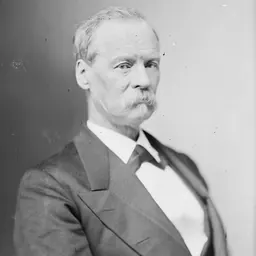
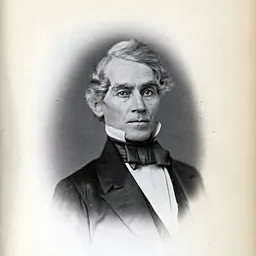
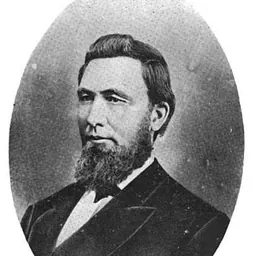
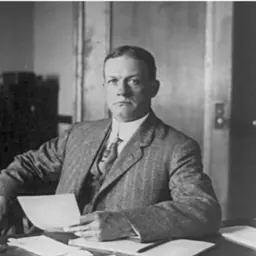

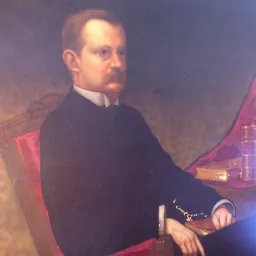
Contemporaries
People whose lives overlapped David Neagle's

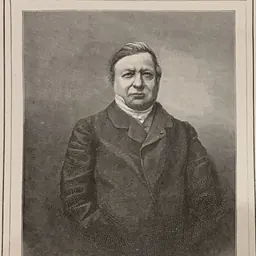




Frequently asked questions
Who was David Neagle?
United States law enforcement officer (1847–1925)
When was David Neagle born?
David Neagle was born on 10 October 1847 in Boston.
When did David Neagle die?
David Neagle died on 28 November 1925 in Oakland.
What was David Neagle known for?
David Neagle was known for David S. Terry and In re Neagle.
What nationality was David Neagle?
David Neagle was American.
Sources & further reading
Cite this page
APA: Biography.guide. (2026). David Neagle. https://biography.guide/david-neagle/
MLA: "David Neagle." Biography.guide, https://biography.guide/david-neagle/.
Chicago: "David Neagle." Biography.guide. https://biography.guide/david-neagle/.
Data last updated: 2026-09-22 · Spot an error? Report a correction.
Page generated 2026-09-27 05:21 UTC