
About David N. Johnson
Lived 1922 – 1987 (aged 65). David N. Johnson was an American composer.
David N. Johnson (June 28, 1922 – August 2, 1987) was an American organist, composer, educator, choral clinician, and lecturer.
Biography Johnson was born in San Antonio, Texas in 1922. He studied organ and composition at Curtis Institute of Music (1940–1942). Between 1942 and 1946 he served in the U.S. Army Signal Corps/Air Corps in India, Burma, and China, receiving a Meritorious Service Award and campaign ribbons. He continued his music studies at Trinity University (Texas) (BMus 1950) and Syracuse University (MMus 1951, PhD 1956). He also held the associate certificate from the American Guild of Organists (AAGO).
He was a lecturer at Syracuse University (1951). From 1960–1967, he was college organist and organ instructor at St Olaf College, Northfield, Minnesota. He was named music department chair at St Olaf in 1965. In 1967, he succeeded Arthur Poister as professor of music and university organist at Syracuse University. He moved to Arizona in 1969, where he taught at Arizona State University, Tempe. He died in Tempe on August 2, 1987. He was married to Margaret S. Teal, and was the father of six children.
Works
Johnson published well over 300 compositions, most of them for church use, and was author of an Instruction Book for Beginning Organists (1964) and an Organ Teacher's Guide (1971).
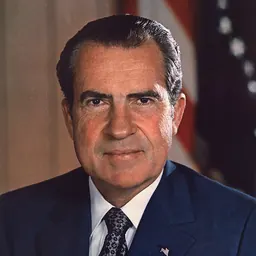
Johnson's Trumpet Tune in D (1962) is the opening and closing theme for the weekly radio show With Heart and Voice, with host Peter DuBois. Johnson's Trumpet Tune in D was also the first of two processionals used for the 1971 wedding of Richard Nixon's Daughter, Tricia, who was married in the White House Rose Garden with music provided by a string orchestra. Since this work was originally composed for organ, it was transcribed for string orchestra for its performance at the wedding.
Several of Johnson's Trumpet Tunes have been recorded by Christopher Herrick in his Organ Fireworks series on the Hyperion record label.
Johnson's best known vocal/choral work is "The Lone, Wild Bird." Inspired, in part, by his seeing a solitary white bird while en route by ship (in the early 1940s) from Los Angeles to Bombay, India, hundreds of miles from the nearest land in the middle of the South Pacific. Haunted by the image of that bird, Johnson later paired an American folk tune, "Prospect" from "The Sacred Harp" (1844), with a 1925 poem by the Rev. Richard McFayden (also McFadyen), entitled "The Lone, Wild Fowl", also taking some poetic license with the title. It first appeared in "Twelve Folksongs and Spirituals" (1968), compiled and arranged by Johnson. The pairing is so natural that many assume it is the tune's original text, and vice versa.
Don’t just read it —
keep it.
Full-length biographies made to live with: read them, listen on the way to work, watch them tonight.
- E-book
- Audio
- Video
Instant download · yours to keep · every purchase keeps this site free
Important facts
People in David N. Johnson's life
Named in this biography and alive at the same time
Related people
Same field, nearest in time



Contemporaries
People whose lives overlapped David N. Johnson's

Frequently asked questions
Who was David N. Johnson?
American composer
When was David N. Johnson born?
David N. Johnson was born on 28 June 1922.
When did David N. Johnson die?
David N. Johnson died on 2 August 1987.
What was David N. Johnson's occupation?
David N. Johnson was a composer.
What nationality was David N. Johnson?
David N. Johnson was American.
Sources & further reading
Cite this page
APA: Biography.guide. (2026). David N. Johnson. https://biography.guide/david-n-johnson/
MLA: "David N. Johnson." Biography.guide, https://biography.guide/david-n-johnson/.
Chicago: "David N. Johnson." Biography.guide. https://biography.guide/david-n-johnson/.
Data last updated: 2026-09-20 · Spot an error? Report a correction.
Page generated 2026-09-27 05:05 UTC