
About David Mushet
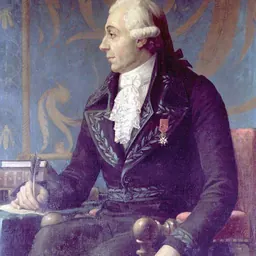
Lived 1772 – 1847 (aged 74). David Mushet was a British engineer, metallurgist and metallurgy.
David Mushet (2 October 1772 – 7 June 1847) was a Scottish engineer and assayer, known for his inventions in the field of metallurgy. Mushet was an early advocate of animal rights.
Early life Mushet was born on 2 October 1772 in Dalkeith near Edinburgh, the youngest son of Margaret Cochran and William Mushet. He was educated at Dalkeith Grammar School.
When Mushet was a boy, his father (a weaver by trade) established a foundry at Croft Street in Dalkeith. He would sometimes accompany him at the ironworks and it was on these visits that the first seeds of his lifelong obsession with iron-making were sown.
Career in Scotland Mushet left school at the age of 19, but did not go to work at his father's foundry. Instead, being good at mathematics, he began work as an accountant at the Clyde Iron Works near Glasgow. Alongside his bookkeeping duties, he read extensively on the subject of iron making and, after a staff reduction was made in 1793, he began a series of experimental researches.
At first, these were encouraged by his employers, and he even taught assaying to the manager's son; but later, and without reason given, he was prohibited from experimenting during work hours. Forced to continue his experiments outside office hours, he frequently worked until the early hours of the morning and in just a few years he became an established authority on the manufacture of iron.
In 1800, he patented a process to make cast steel from wrought iron, which he then sold to a Sheffield firm for £3,000. His employers, becoming jealous of him, dismissed him from the Clyde Iron Works in the same year.
The following year, with the help of partners including William Dixon (1753–1824), he bought and rebuilt the Calder Iron Works, where he continued his experiments. It was here he made his second great discovery; in 1801, he demonstrated that 'Black-band Ironstone', which he discovered while crossing the North Calder Water, and typically found with a thin seam of inferior 'wild Coal', could be used to economically produce iron. Previously, this abundant resource had been viewed as a useless form of coal, and while the discovery brought little financial reward to Mushet personally, the use of Black-band Ironstone that was to lead to a remarkable expansion of the Scottish iron industry and eventually brought millions of pounds profit to Scottish industrialists.
From the time he had arrived in the Forest of Dean, Mushet had been shrewd in making investments in local industries, predominantly coal, and it seems that for several years he was able to live off the proceeds from these investments. During this time he carried out experiments in a stone barn, in a field adjoining his house. In 1815, he discovered a way to produce refined iron directly from the blast furnace, without the use of a separate refinery, and took out a patent on the process. Some of the iron produced was in fact steel, and for ten years he shaved using a pair of razors made at this time.
By the late 1820s he had built up a considerable empire, which included both iron and coal mines, and shares in the tramroads which connected them. He was also on the committee of the Severn and Wye Railway and Canal Company and used his position to stifle the expansion of steam railways into the Forest; which threatened the monopoly of his tramroads.
David Mushet died at Monmouth on 7 June 1847, Mushet's son Robert then joined in, attacking David in a letter to the same publication, writing that, had David attended his father's funeral, he might have "learnt more accurately how matters really stood with their widowed mother".
Mushet's wife, Agnes, died in 1854 and they are buried together in Staunton churchyard, in the Forest of Dean.
Animal rights
Mushet was an early advocate of animal rights and opponent of vivisection but was not a vegetarian. He authored an essay which was entered into a writing competition sponsored by the Society for the Prevention of Cruelty to Animals. His essay condemned animal cruelties such as hunting, overworking of stagecoach horses and the use of dogs as draught-animals. It was published as The Wrongs of the Animal World, in 1839.
Selected publications
The Wrongs of the Animal World (1839) Papers on Iron and Steel, Practical and Experimental (1840)
Don’t just read it —
keep it.
Full-length biographies made to live with: read them, listen on the way to work, watch them tonight.
- E-book
- Audio
- Video
Instant download · yours to keep · every purchase keeps this site free
Important facts
People in David Mushet's life
Named in this biography and alive at the same time

Related people
Same field, nearest in time

Contemporaries
People whose lives overlapped David Mushet's




Frequently asked questions
Who was David Mushet?
Scottish metallurgist
When was David Mushet born?
David Mushet was born on 2 October 1772 in Dalkeith.
When did David Mushet die?
David Mushet died on 7 June 1847 in Monmouth.
What was David Mushet's occupation?
David Mushet was an engineer, metallurgist and metallurgy.
What nationality was David Mushet?
David Mushet was British.
Sources & further reading
Cite this page
APA: Biography.guide. (2026). David Mushet. https://biography.guide/david-mushet/
MLA: "David Mushet." Biography.guide, https://biography.guide/david-mushet/.
Chicago: "David Mushet." Biography.guide. https://biography.guide/david-mushet/.
Data last updated: 2026-09-22 · Spot an error? Report a correction.
Page generated 2026-09-27 05:18 UTC