
David McLeod Craik
British Royal Engineers officer and architect
About David McLeod Craik
Lived 1873 – 1938 (aged 64–65). David McLeod Craik was an architect and military personnel.
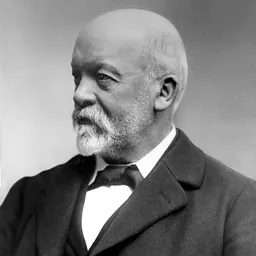
David McLeod Craik (1873–1 August 1938) was a Royal Engineers officer and architect noted for his works in the Straits Settlements. He was the oldest practising architect in the colony at the time of his death.
Early life David McLeod Craik was born in 1873 at Neath, Glamorganshire, the second son of Robert Craik, a Scottish travelling draper and his Welsh wife Kate McLeod. He spent the early part of his childhood in the Stewartry and later removed with his parents to Swansea where he received his education.
Architectural career
United Kingdom After leaving school at the age of 16, Craik was articled to Bucknall & Jennings of Swansea between 1889 and 1893. Afterwards, he served as assistant to Clarke & Bell and Thomas Lennox Watson in Glasgow and to William Hamilton Beattie in Edinburgh from 1894 until 1896, when he passed his examination as Student RIBA. After that he moved to the office of Robert Graeme Watt and Frederick Henry Tullock in Belfast from which he found employment with John McKean Brydon in 1898, working on the Government Offices Great George Street at Whitehall. Craik remained with him until March 1900, when he passed the qualifying exam and was admitted ARIBA, his proposers being Brydon, Watson and Cole Alfred Adams. Thereafter he became a senior assistant with Edward Augustus Grunning until 1902.
Straits Settlements Craik obtained a post in 1902 as first architectural assistant to the Singapore municipality in the Straits Settlements. During his time as municipal architect he designed the Jinrikisha Station at Kreta Ayer and the entrance lodge, gate and chapel of the Bidadari Cemetery. He remained in the post for about five years, when he resigned and started his own practice in 1907. In the same year, he had secured the largest job of the period as designer of Alkaff Arcade at Collyer Quay for Alkaff & Co.. Other major buildings by him at that period were the Wesley Methodist Episcopal Church, St. Joseph's Cathedral and the Masonic Hall in Coleman Street. On 12 January 1914 he was admitted FRIBA, then at 26 May of the same year, he took his first ever home leave, but arrived in the UK just a month before World War I was declared. He served in the war as a Royal Engineers officer until he was demobilised in August 1919. On the death of Philip Charles Russell, the firm's partner, the name of the Penang branch was changed to Swan, Maclaren & Craik. His notable works while in the partnership were Eu Villa in Singapore, Loke Villa and George Town Dispensary in Penang, and the HSBC building in Sungai Petani. Craik & Leicester took up office at the George Town Chambers, which is a part of the George Town Dispensary building. Works during this period were all in Penang, including The Cenotaph, Lim Lean Teng Mansions and The Windsor. The firm included an assistant architect, Sidney Iverson Knowles, but his services were terminated during the building slump. He was found shot dead on 13 April 1932 and an inquest by a state coroner concluded that Knowles had committed suicide. He left behind three letters, one of them addressed to Craik
Due to the recession, the partnership of Craik & Leicester ceased by 1932, Craik then went solo under the style of Craik, D. McLeod, Chartered Architect, meanwhile Leicester returned to London where he started a private practice. Craik passed away while still in practice in 1938, making him the longest practicing architect in the Straits Settlements before World War II.
Personal life
Family Craik married Grace Black, a nurse and veteran of the South African War, at St. George's Church on 12 December 1908. She was memorialised by a stained glass depicting St. Catherine of Alexandria at St. Joseph's Cathedral.
On 20 May 1938 Grace died after a long illness at a nursing home in London. Their only son, Donald McLeod , was killed in action during World War II on 24 March 1942.
Death Before his death, Craik had not been in the best of his health for about a month. Some days later he developed a chill and then was admitted to the General Hospital. He died at the hospital on 1 August 1938, at the age of 65. His funeral and burial was commenced at the Western Road Cemetery in Penang.
Works Craik worked on the following buildings: + Name Location Date constructed Status
Don’t just read it —
keep it.
Full-length biographies made to live with: read them, listen on the way to work, watch them tonight.
- E-book
- Audio
- Video
Instant download · yours to keep · every purchase keeps this site free
Important facts
People in David McLeod Craik's life
Named in this biography and alive at the same time






Related people
Same field, nearest in time



Contemporaries
People whose lives overlapped David McLeod Craik's


Frequently asked questions
Who was David McLeod Craik?
British Royal Engineers officer and architect
When was David McLeod Craik born?
David McLeod Craik was born in 1873.
When did David McLeod Craik die?
David McLeod Craik died on 1 August 1938.
What was David McLeod Craik's occupation?
David McLeod Craik was an architect and military personnel.
Sources & further reading
· Wikipedia: David McLeod Craik
Cite this page
APA: Biography.guide. (2026). David McLeod Craik. https://biography.guide/david-mcleod-craik/
MLA: "David McLeod Craik." Biography.guide, https://biography.guide/david-mcleod-craik/.
Chicago: "David McLeod Craik." Biography.guide. https://biography.guide/david-mcleod-craik/.
Data last updated: 2026-09-20 · Spot an error? Report a correction.
Page generated 2026-09-27 05:24 UTC