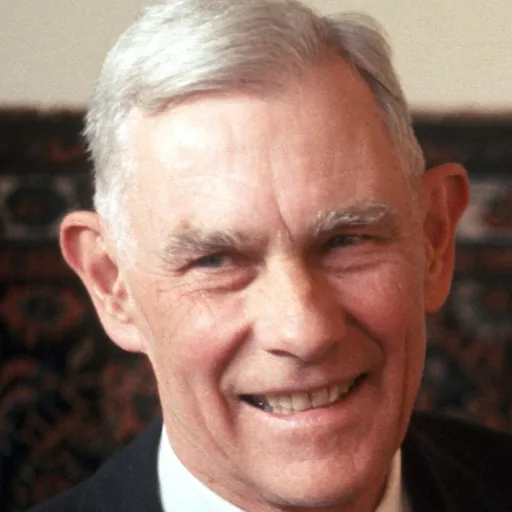
About David M. Dennison
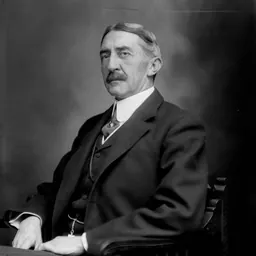
Lived 1900 – 1976 (aged 75). David M. Dennison was an American physicist and university teacher.
David Mathias Dennison (April 26, 1900 in Oberlin, Ohio – April 3, 1976) was an American physicist who made contributions to quantum mechanics, spectroscopy, and the physics of molecular structure.
Education
In 1917, Dennison entered Swarthmore College, where he graduated in 1921. He then went to the University of Michigan, in Ann Arbor, for graduate studies in physics with Walter F. Colby and Oskar Klein. Klein, already associated with the Kaluza–Klein theory (1921), joined the faculty at Michigan in 1922, after a six-year stay at the Institute for Theoretical Physics, under Niels Bohr, at the University of Copenhagen. It was through Klein that Dennison heard and leaned much about the current theoretical physics being developed in Europe, which created a yearning in him to go to Copenhagen for further study. Dennison's thesis was on the molecular structure and infrared spectrum of the methane molecule, and he was awarded his doctorate in 1924.
From 1924 to 1926, Dennison had an International Education Board (IEB) Fellowship to do postgraduate study and research in Europe. By the end of that time, Harrison McAllister Randall, chairman of physics department at the University of Michigan, had arranged for Dennison to stay in Europe another year on a University of Michigan fellowship. Dennison arrived at the Institute of Theoretical Physics at the University of Copenhagen, in October 1924. During his three years in Europe, he mostly did postdoctoral research in Copenhagen, where he had associations with other visiting physicists working there, such as Paul Dirac, Samuel Abraham Goudsmit, Werner Heisenberg, Walter Heitler, Ralph H. Fowler, Friedrich Hund, Hendrik Anthony Kramers, Yoshio Nishina, Wolfgang Pauli, and George Eugene Uhlenbeck. In the last half of 1925, Heisenberg and Max Born published their matrix mechanics formulation of quantum mechanics. In the fall of 1926 he went to the University of Zurich to study and work with Erwin Schrödinger, who had early in the year published his papers on his wave mechanics formulation of quantum mechanics. In early spring of 1927, Dennison went back to Copenhagen, and in late spring he went to the University of Cambridge to work with Ralph Fowler for six weeks – there at the time were Ernest Rutherford, Nevill Francis Mott, Pyotr Kapitsa, Patrick Blackett, and John Cockcroft. The last few weeks of his fellowship were spent at the University of Leiden with Paul Ehrenfest.
Career
In 1927, upon Dennison's return from Europe, he started his lifelong career at the University of Michigan until 1976. Otto Laporte had arrived at Michigan in 1926, and George Uhlenbeck and Samuel Goudsmit arrived in 1927. These four men were a team in developing theoretical physics, including quantum mechanics, for many years. They had been brought there by the chairman of the physics department, Harrison McAllister Randall, to build the theoretical capabilities of the department.
Dennison was a student of Niels Bohr, and knew Hans Bethe, Wolfgang Pauli, and Enrico Fermi before they became world-famous. Most of Dennison's work was on molecular structure. Following the discovery of the spin of the electron in 1925 by George Uhlenbeck and Samuel Goudsmit, the specific heat of hydrogen was a major unsolved problems. Dennison solved this problem in 1927 by postulating that the spin of protons does not transition frequently during measurements. This new theory agreed precisely with experiments given that the proton's spin was 1/2. In 1932 Dennison and Uhlenbeck solved the two-minima "reversing umbrella" problem for the position of nitrogen in ammonia. This result predicted absorption at microwave wavelengths, which inspired Neal Williams to build a molecular microwave spectrograph, one of the first ever built. During World War 2 Dennison received a citation from the US Navy for his work with the VT radio proximity fuse. The Colloquium Hall of the Department of Physics now bears Dennison's name. Dennison Reef, in Crystal Sound, Antarctica is also named in his honor.
Personal life David M. Dennison married Helen Lenette Johnson in 1924 and they had two sons.
Selected Literature
Don’t just read it —
keep it.
Full-length biographies made to live with: read them, listen on the way to work, watch them tonight.
- E-book
- Audio
- Video
Instant download · yours to keep · every purchase keeps this site free
Important facts
People in David M. Dennison's life
Named in this biography and alive at the same time





Related people
Same field, nearest in time

Contemporaries
People whose lives overlapped David M. Dennison's


Frequently asked questions
Who was David M. Dennison?
American physicist
When was David M. Dennison born?
David M. Dennison was born on 26 April 1900 in Oberlin.
When did David M. Dennison die?
David M. Dennison died on 3 April 1976 in Ann Arbor.
What was David M. Dennison's occupation?
David M. Dennison was a physicist and university teacher.
What nationality was David M. Dennison?
David M. Dennison was American.
Sources & further reading
· Wikipedia: David M. Dennison
Cite this page
APA: Biography.guide. (2026). David M. Dennison. https://biography.guide/david-m-dennison/
MLA: "David M. Dennison." Biography.guide, https://biography.guide/david-m-dennison/.
Chicago: "David M. Dennison." Biography.guide. https://biography.guide/david-m-dennison/.
Data last updated: 2026-09-23 · Spot an error? Report a correction.
Portrait: Wikimedia Commons · author & licence
Page generated 2026-09-27 05:06 UTC