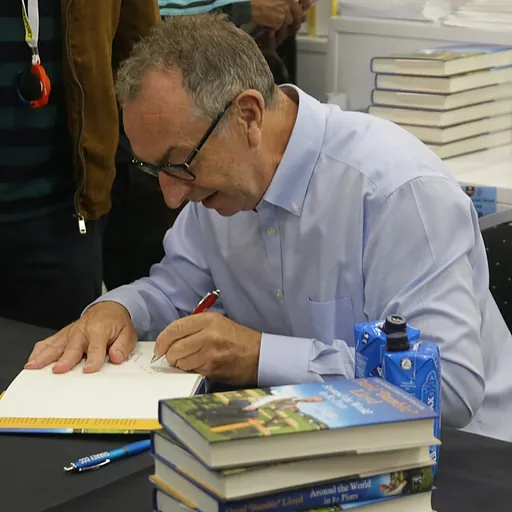
David Lloyd
English former cricketer, coach, and commentator (born 1947)
About David Lloyd
Born 1947. David Lloyd is a British cricketer, cricket umpire and association football player.
David Lloyd (born 18 March 1947) is an English former cricket player, umpire, coach and commentator, who played county cricket for Lancashire County Cricket Club and Test and One Day International cricket for the English cricket team. He also played semi-professional football for Accrington Stanley. He is known through the cricketing world as Bumble due to the ostensible similarity between his facial profile and those of the Bumblies, characters from Michael Bentine's children's television programmes. He is also an author, journalist and columnist. In 2022, he signed a contract with Lancashire's in-house channel LancsTV to commentate on every non-televised Vitality Blast home match and select County Championship fixtures.
Early and personal life Lloyd was born in Accrington, Lancashire, in March 1947, and was educated at Accrington Secondary Technical School. A second son, Ben Lloyd, also played Lancashire League cricket between 1999 and 2000, making seven appearances for Church. In 2018, Lloyd was given the freedom of Accrington.
Playing career Lloyd had an extensive playing career, with 407 first-class matches and 288 one day games. He scored nearly 27,000 runs and took 276 wickets in his career for Lancashire and England, and took 423 catches. His batting average of 33.33 in all first-class cricket, and bowling average of 30.26, illustrate his capability as a successful all-rounder.
Lancashire Lloyd played his first first-class match for Lancashire on 12 June 1965 in a County Championship match against Middlesex at Old Trafford cricket ground in Manchester. Lloyd batted at number seven, and made a pair – scores of zero in both innings – as Middlesex took a nine wicket victory. He did, however, take two wickets. He went on to struggle in his first season with the bat, playing 13 matches and scoring only 262 runs at 14.55 with a high score of 44. He did find success with the ball, however, taking 21 wickets at 31.33.
Lloyd made his debut in one day matches on 22 June 1966 – the only one day match he would play that season. It was a Gillette cup quarter-final against Somerset at Taunton cricket ground. He failed to make an impression: batting at six Lloyd was dismissed without scoring, and was not called on to bowl. He did, however, enjoy greater success with the bat in first-class cricket – scoring 588 runs from 25 matches at 21.77, including two half-centuries and a best of 77. Lloyd would later state to The Sunday Times that this was the moment when he realised he wanted to be a cricketer. He went on to score 935 runs from 23 matches that season, largely batting up the order. Lancashire did not use Lloyd's bowling in the one day games that year, though he did take four first-class wickets at 17.50, He scored over 1,000 runs in each of these seasons, He was nevertheless called up to the Test squad for the second Test against India on 20 June 1974 at Lord's. Opening the batting in place of Geoffrey Boycott,
Lloyd kept his place for the third Test against India at Edgbaston on 4 July. Batting first, and with the first day lost to rain, India were dismissed for 165 and by the end of day two, England were 117/0, with both Amiss and Lloyd not out with half-centuries. The next day, Amiss was dismissed for 79. However, in partnership with Denness (100) and Keith Fletcher (51*), Lloyd went on to score 214* from 396 balls. Lloyd thus ended his first Test series with a 260.00 Test batting average. He then went on to face India in two ODI matches at Headingley and The Oval on 13 and 15 July 1974. In the first, he made 34 from 63 balls as England won by four wickets, and in the second he scored 39 from 81 as England won by six wickets.
Lloyd then faced Pakistan at Headingley on 25 July and Lord's on 8 August, making 48, nine, 23 and 12* as both matches ended in draws. Lloyd went on to play both ODI matches, scoring 116* in the first match from 159 balls, though in a losing cause and followed up with four in the second match. On 26 December they met again at Melbourne cricket ground, for a drawn match where Lloyd score 14 and 44. The following day, England and Australia played an ODI match at Melbourne. Lloyd made 49 from 95 balls as England won by three wickets. Lloyd's Test average had now dropped down into the 40s, he did not play Test cricket again. and John Arlott wrote in 1984 that, "in a side routed by the 'heart-line' attack of Lillee and Thomson, [Lloyd] was effectively shocked and shattered out of Test cricket."
Accrington Stanley Lloyd has been a lifelong supporter of Accrington Stanley F.C., and played for them during the 1960s. Lloyd has maintained links with the club after his playing career ended, and in May 2009 he voiced his wishes to become involved in the club from the point of view of investment. He stated to the Accrington Observer that "I love football and always have. I was talking to Eric Whalley about it the other day and he said he wanted to sell and I wish I could afford to buy the club off him. I can't do that but I would like some involvement and perhaps raise the profile of Accrington Stanley. The town needs a football club – and I want to help to make sure they have one." In March 2021, Lloyd had a street named after him, close to the football and cricket clubs.
Later career Umpiring
I have been incredibly lucky to have been involved in all aspects of cricket. Whatever I am doing at the time is the best thing. I do enjoy watching other coaches at work and I think we have a gem in Peter Moores. Of course you are so dependent on the performances of the players for results. Umpiring was such a rewarding job and I hope I fight the umpires' corner in commentary. His first match was on 20 April 1985 between Cambridge University and Essex in Cambridge, and his last was on 9 September 1987 between Nottinghamshire and Glamorgan at Trent Bridge. In all, he oversaw 35 first-class matches and 27 List-A games, including tour matches for India and New Zealand.
Coaching Lancashire Lloyd became Lancashire head coach in 1993, and went on to guide Lancashire to their third Benson and Hedges Cup title.
England Lloyd became England's coach in 1996, and saw England to Test series victories against India, New Zealand and South Africa, as well as ODI victories against India, Pakistan and the West Indies. He worked to expand England's support structure, including "a fitness consultant and a media relations officer, as well as a number of specialist coaches." The comments were not appreciated by Zimbabwe fans, with one banner in the crowd reading "Wanted. David Lloyd. For Murder of Zim Cricket Team. Last seen with his finger up his nose talking complete bollocks. He knows it and we know it." However, in September 1998, following the tour of England by Sri Lanka Lloyd received criticism from both the England and Wales Cricket Board and the Sri Lanka Cricket Board for calling Sri Lanka's Muttiah Muralitharan a "chucker", as well as for frequent outbursts following poor England performances. He initially announced that he was stepping down from the coaching role during the 1998–99 Ashes series in Australia following the appointment of Graham Gooch as tour manager, however in March 1999 he stated that that year's Cricket World Cup would signal his retirement after talks with the ECB revealed that his contract was not to be renewed. England performed poorly at the tournament, failing to advance from the group stages. Afterwards, Lloyd immediately joined Sky Sports as a commentator.
The ECB Chairman Lord MacLaurin reported to the media that "We owe David a huge debt for the job he has done as England coach since taking over the role in 1996. During his time in the job, David has introduced many innovations that mean we are now world leaders in several aspects of our approach to the game at international level. It would be a fitting send-off for him if we could lift the World Cup for the first time this summer." He was a regular on coverage of England's Test and one-day international cricket, but it is as the voice of Twenty20 cricket, since its launch in 2003, that he has become particularly known, with his excitable style and catchphrases such as "Start the Car!", the title of his second autobiography. However, he has admitted he sees the game as "a form of entertainment using cricket equipment" rather than real cricket. Lloyd often makes reference to songs and lyrics by the band Half Man Half Biscuit in commentaries, often completely lost on other commentators working with him. Lloyd was also part of Talksport's live coverage of the 2017 ICC Champions Trophy.
Lloyd retired from commentating for Sky Sports after controversy about comments he was alleged to have made about Asian players. Azeem Rafiq told a Digital, Culture, Media and Sport select committee that Lloyd had sent messages saying that "Asian players don't go in" clubhouses and that "getting subs out of Asian players is like getting blood out of stone"; Lloyd later said he had "made some comments about the Asian cricket community", adding that he "deeply regret[ted]" his actions and apologised to Rafiq and to the Asian cricket community.
Lloyd has commentated for the Indian Premier League (IPL) in the past, and remarked in 2015 that England and Wales Cricket Board (ECB) should make a window for English players to participate in the tournament. However, in recent years, he has not been selected on the IPL commentary panel and been critical of IPL and BCCI. In 2022, Lloyd stated that IPL is "disrupting the traditional international programme" and "benefitting already rich people." Lloyd would make a one-off return to Sky Sports for to commentate on finals day of the 2025 T20 Blast.
Books
In 2000, Lloyd published his autobiography, Anything but Murder, published by HarperCollins. The book received criticism on 15 May 2000, from former England batsman Graham Thorpe who reacted to Lloyd's criticism of him and his influence on the team at a moment when Thorpe had been left out of a match against Zimbabwe. Lloyd also criticised Nasser Hussain and Andy Caddick; Hussain as poor in his preparation for Test matches, and Caddick as insecure about his cricket. Lloyd later stated that he had "been taken a little bit by surprise by the criticism of the reference to players."
Don’t just read it —
keep it.
Full-length biographies made to live with: read them, listen on the way to work, watch them tonight.
- E-book
- Audio
- Video
Instant download · yours to keep · every purchase keeps this site free
Important facts
People in David Lloyd's life
Named in this biography and alive at the same time



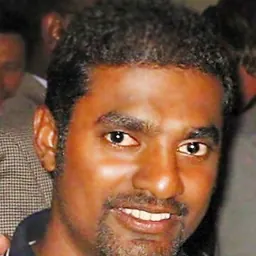

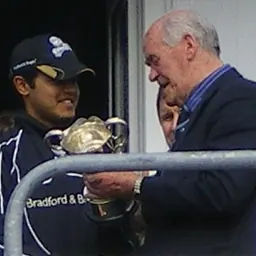

Related people
Same field, nearest in time
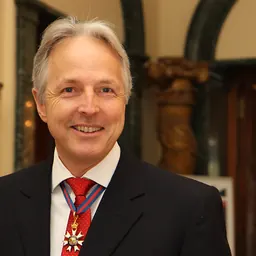


Contemporaries
People whose lives overlapped David Lloyd's



Frequently asked questions
Who is David Lloyd?
English former cricketer, coach, and commentator (born 1947)
When was David Lloyd born?
David Lloyd was born on 18 March 1947 in Accrington.
What is David Lloyd's occupation?
David Lloyd is a cricketer, cricket umpire and association football player.
What nationality is David Lloyd?
David Lloyd is British.
Sources & further reading
· DBpedia: David Lloyd (cricketer)
Cite this page
APA: Biography.guide. (2026). David Lloyd. https://biography.guide/david-lloyd-cricketer-1947/
MLA: "David Lloyd." Biography.guide, https://biography.guide/david-lloyd-cricketer-1947/.
Chicago: "David Lloyd." Biography.guide. https://biography.guide/david-lloyd-cricketer-1947/.
Data last updated: 2026-09-23 · Spot an error? Report a correction.
Portrait: Wikimedia Commons · author & licence
Page generated 2026-09-27 05:06 UTC