
About David Levi
Lived 1742 – 1801 (aged 58–59). David Levi was a British hebraist and translator.
David Levi (1742 – 1801) was an English-Jewish writer, Hebraist, Jewish apologist, translator, and poet.
Biography Levi was born in London, to poor immigrant parents who could not afford to educate him. He worked as a shoemaker, then as a hatter, then as a printer. He read voraciously in Jewish literature from ancient times to the present, as well as in Christian writings about Judaism and about the Bible. Self-educated, he realised how little both Jews and Christians in England knew about Judaism and resolved to explain and defend his faith.
His first published work, A Succinct Account of the Rites and Ceremonies of the Jews (1782), tried to explain Judaism to Jews and to correct Christian misconceptions about Judaism. Next, he translated the prayer books of both the Ashkenazi and Spanish and Portuguese Jews. He supervised a translation of the Old Testament into English and published a Hebrew grammar and dictionary, and a guide to the Hebrew language.
In 1786, Joseph Priestley published his Letter to the Jews (1786), urging them to convert. Levi published a lengthy answer, which led to many arguments with Christian divines. This led to his three-volume Dissertation on the Prophecies of the Old Testament (1793–1800), which he printed and published himself. It was republished in London in 1817 in two volumes. Levi's work was well known in Christian circles; his Dissertation on the Prophecies was accepted as authoritative by many scholars, both Jewish and Christian, well into the nineteenth century.
His six-volume English translation of the liturgy served as the foundation for later editions published in England and in the United States.
His Protestant friend Henry Lemoine published an obituary in the Gentleman's Magazine (October 1801), "He's Gone! the Pride of Israel's Busy Tribe". It praised him as a great explainer and defender of Judaism against both Christians and sceptics.
Levi was also poet in ordinary to the synagogue, and furnished odes when required on several public celebrations, as, for instance, on the king's escape from assassination in 1795.
Don’t just read it —
keep it.
Full-length biographies made to live with: read them, listen on the way to work, watch them tonight.
- E-book
- Audio
- Video
Instant download · yours to keep · every purchase keeps this site free
Important facts
People in David Levi's life
Named in this biography and alive at the same time
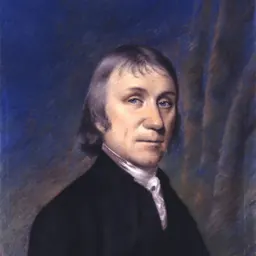

Related people
Same field, nearest in time



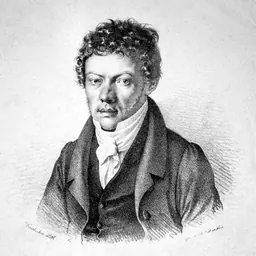

Contemporaries
People whose lives overlapped David Levi's





Frequently asked questions
Who was David Levi?
British scholar
When was David Levi born?
David Levi was born in 1742.
When did David Levi die?
David Levi died in 1801.
What was David Levi's occupation?
David Levi was a hebraist and translator.
What nationality was David Levi?
David Levi was British.
Sources & further reading
· DBpedia: David Levi (scholar)
Cite this page
APA: Biography.guide. (2026). David Levi. https://biography.guide/david-levi-hebraist/
MLA: "David Levi." Biography.guide, https://biography.guide/david-levi-hebraist/.
Chicago: "David Levi." Biography.guide. https://biography.guide/david-levi-hebraist/.
Data last updated: 2026-09-20 · Spot an error? Report a correction.
Page generated 2026-09-27 05:29 UTC