
About David Keith
Born 1963. David Keith is a Canadian engineer and physicist.
David W. Keith is a professor in the Department of the Geophysical Sciences at the University of Chicago. He joined the University of Chicago in April 2023. Keith previously served as the Gordon McKay Professor of Applied Physics for Harvard University's Paulson School of Engineering and Applied Sciences (SEAS) and professor of public policy for the Harvard Kennedy School at Harvard University. Early contributions include development of the first atom interferometer (considered a major breakthrough in atomic physics) and a Fourier-transform spectrometer used by NASA to measure atmospheric temperature and radiation transfer from space.
A specialist on energy technology, climate science, and related public policy, and solar radiation management approaches. He emphasizes that their scientific, environmental, geopolitical, social, psychological and ethical implications all need to be carefully examined and understood, before there can be a meaningful consideration of their possible use.
Personal life Keith was born in Wisconsin, where his father, a British-born field biologist and Canadian Wildlife Service civil servant named Anthony Keith, attended grad school. His mother, Deborah Gorham, was a history professor at Carleton University. Keith grew up in Great Britain and in Ottawa, Ontario. As a doctoral student at MIT, Keith was supervised by David E. Pritchard. Keith was a leader in the research group that created the first working atom interferometer, considered a major breakthrough in atomic physics. After achieving this success, Keith chose to leave atomic physics, in part because one of the most obvious applications for atom interferometry was in building highly accurate gyroscopes for submarines carrying ballistic missiles.
Keith was a post-doctoral fellow at Carnegie Mellon University from 1991 to 1992, working with Granger Morgan to better understand uncertainty and expert judgments relating to climate change.
Keith spent the final year of his NOAA postdoc as a research scientist in the Department of Earth and Planetary Sciences at Harvard University where he remained from 1993 to 1999. He worked with atmospheric chemist James G. Anderson.
As of 1999, Keith became an assistant professor at the Department of Engineering and Public Policy at Carnegie Mellon University.
In 2004, Keith was recruited to join the University of Calgary, where he became a professor of chemical and petroleum engineering and economics, and held the Canada Research Chair in Energy and the Environment. Keith became the director of the Institute for Sustainable Energy, Environment and Economy (ISEEE)'s Energy and Environmental Systems Group at the University of Calgary, an interdisciplinary research group within ISEEE. While at the University of Calgary, he remained an adjunct professor at Carnegie Mellon.
Also as of 2011, Keith accepted a professorship in applied physics and public policy at the Kennedy School of Harvard University. As of 2019, Keith became the sole director, after Wagner joined the faculty of New York University.
Keith presented to US National Academy of Sciences meetings in 2000, 2009 and 2013.
Keith moved his research to the University of Chicago in 2023, where he will lead a program with up to ten faculty members studying geoengineering.
Public policy
Keith was a coauthor of the 2001 IPCC Third Assessment Report (chapters AR3-WG1, 8 Model Evaluation; AR3-WG3, 4 Technological and Economic Potential of Options to Enhance, Maintain, and Manage Biological Carbon Reservoirs and Geo-engineering ). Keith also chaired one of three groups for the United Nations' Intergovernmental Panel on Climate Change (IPCC) He resigned from the committee for the IPCC Fifth Assessment Report.
In May 2005 Keith was appointed to a federal advisory panel for the Canadian government's Sustainable Energy Science and Technology Strategy. Keith was a member of the Geoengineering the climate: science, governance and uncertainty working group of the UK Royal Society, which produced a 2009 report. In 2010, Keith testified before committees of the US Congress and the UK Parliament.
With Ken Caldeira, Keith has managed the Fund for Innovative Energy and Climate Research (FICER), established by Bill Gates for climate-change research. The authors of the BPC report believe "the (US) federal government should embark on a focused and systematic program of research into climate remediation."
Scientific work Keith has written about the possible cost-effectiveness and geopolitical and ethical implications of many approaches to climate change and climate mitigation. In 2003, he and Alexander Farrell published a commentary in Science, questioning government initiatives for the development of fuel cell vehicles using compressed hydrogen. Hydrogen tends to be derived from oil and coal, and produces carbon dioxide. In 2004, the National Academy of Sciences published a controversial paper in which his computer models suggested that massive wind farms turbines might have unexpected local and global impacts on climate. His argument was not that wind energy should not be considered, but rather that it needed to be better understood.
Carbon engineering In the 1990s and 2000s, Keith worked on CO2 capture and storage, Keith emphasizes that the primary goal in combating climate change must be the reduction of carbon emissions. However, it will still be necessary to counteract the effects of the carbon dioxide that has already been released into the atmosphere. He therefore sees multiple approaches to the problem of climate change, including pollution-management techniques and a "carbon tax", as desirable. Having created the company, he largely ceased to do research and policy analysis in that area, feeling it would be a conflict of interest. Financial backers of Carbon Engineering include Bill Gates, N. Murray Edwards, Peter J. Thomson, Chevron Corporation, Occidental Petroleum, and mining conglomerate BHP. Occidental purchased the company in 2023 for $1.1 billion; Keith held about four percent ownership prior to the sale. Keith has also appealed for international standards of governance and oversight for how such research might proceed.
Keith published another overview of geoengineering in 2000, describing it in terms of moral hazard and setting geoengineering in the context of the post-war history of weather control. At the time geoengineering was "deeply controversial" and rarely talked about. Since then, interest in the field has increased and it is more openly discussed.
Related publications include: in 2010 a method to reduce the amount of sulfur needed for a given radiative forcing; in 2010 a proposal for self-levitating photophoretic particles that might limit ozone loss; in 2011 he co-authored the first large-scale survey of public perception as to geoengineering; in 2012 the first quantitative analysis of "regional inequality" of "solar radiation management"; he supervised the first economics Ph.D. to focus on geoengineering, and together with his student Moreno-Cruz in 2012 published an economic analysis of "optimal" decisions under result uncertainty. in 2013 he proposed a two-threshold system that combines "deployment moratoria" with a pathway for regulating "small-scale" (sic) research;
A Case for Climate Engineering In 2013, Keith published A Case for Climate Engineering, providing "a clear and accessible overview" to a "controversial technology". The book is described as a useful entry point for discussions, particularly for stratospheric aerosol injection and less so for other approaches to geoengineering. "The book's arguments are clear and it is upfront about many of the problems that arise from the position it defends." Another reviewer appreciated Keith's ability to discuss issues "in simple language that can be understood by any reader" and his objectivity as he "discusses his own internal dilemma" and "exposes the reader to opposing views".
The book garnered the attention of Stephen Colbert, and Keith appeared in a 9 December 2013 segment on The Colbert Report to discuss his geoengineering idea to slow climate change by spraying reflective particles into the upper atmosphere. Keith described the possibility of deploying planes to release tons of sulfuric acid into the atmosphere, which he freely admitted "would be a totally imperfect technical fix .. But it might actually save people and be useful." Colbert was skeptical. Critics of the idea also include University of Chicago geophysicist Raymond Pierrehumbert who termed the idea "wildly, utterly, howlingly barking mad",
SCoPEx Keith has worked initially with atmospheric chemist James G. Anderson Types of particles that have been proposed include sulfur dioxide, diamond dust, alumina and calcite or other forms of calcium carbonate. In February 2021, plans to launch a stratospheric seeder balloon from Kiruna's Esrange Space Center in Lapland ran into opposition from the Swedes who wrote a heated letter to Per Bolund, the Swedish minister for environment and the Swedish Space Corporation (SSC). The latter said "The flight will only be conducted provided that it is compliant with national and international regulations. The process to find out if this flight is legally compliant and ethically appropriate is ongoing. As of today we don't know whether there will be a flight or not." On 31 March 2021, the SSC "said it had decided not to conduct the technical test" in the face of opposition from the local Sami reindeer herders and other environmental groups such as the Swedish Society for Nature Conservation, who thought the techniques "too dangerous to ever be used".
Awards 2024, Australian Institute of Botanical Science Eureka Prize for Excellence in Botanical Science 2012, Queen Elizabeth II Diamond Jubilee Medal 2009, Time magazine, Hero of the Environment 2008, City of Calgary Award for Environmental Achievement by an Individual 2006, inaugural Royal Canadian Geographical Society Society Environmental Scientist of the Year
Media Keith is a frequent speaker and presenter. Among others, he has shared his thoughts in the TED forum in 2007, was featured on the Discovery Channel in 2008, participated in a panel on 21st-century challenges at the Royal Geographical Society in 2009, did an interview on BBC News HARDTalk in 2011, and appeared in a Nova documentary on geoengineering which aired 28 October 2020.
Don’t just read it —
keep it.
Full-length biographies made to live with: read them, listen on the way to work, watch them tonight.
- E-book
- Audio
- Video
Instant download · yours to keep · every purchase keeps this site free
Important facts
People in David Keith's life
Named in this biography and alive at the same time
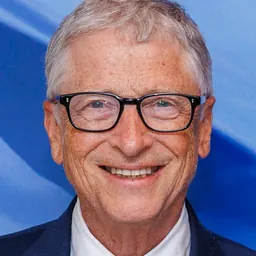

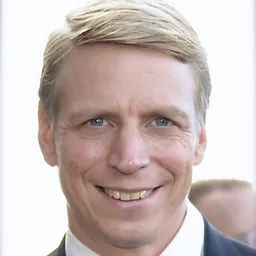



Related people
Same field, nearest in time
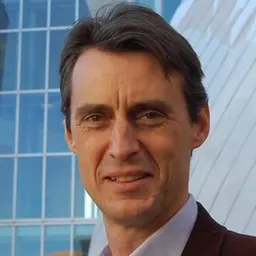

Contemporaries
People whose lives overlapped David Keith's




Frequently asked questions
Who is David Keith?
Environmental scientist, Geo-Engineer
When was David Keith born?
David Keith was born in 1963.
What is David Keith's occupation?
David Keith is an engineer and physicist.
What nationality is David Keith?
David Keith is Canadian.
Sources & further reading
· DBpedia: David Keith (physicist)
Cite this page
APA: Biography.guide. (2026). David Keith. https://biography.guide/david-keith/
MLA: "David Keith." Biography.guide, https://biography.guide/david-keith/.
Chicago: "David Keith." Biography.guide. https://biography.guide/david-keith/.
Data last updated: 2026-09-20 · Spot an error? Report a correction.
Page generated 2026-09-27 05:19 UTC