
About David Galula
Lived 1919 – 1967 (aged 48). David Galula was a French military officer, military personnel, military theorist and harvard University.
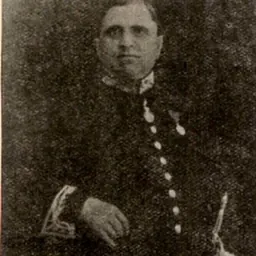
David Galula (10 January 191911 May 1967) was a French military officer and scholar who was influential in developing the theory and practice of counterinsurgency warfare.
Early life Born in Sfax, then part of the French protectorate of Tunisia, on 10 January 1919 into a family of Jewish merchants, Galula obtained his baccalauréat in Casablanca at the Lycée Lyautey.
In 1949, Galula married Ruth Beed Morgan (1922–2011). He is survived by his only son, Daniel Frederic Galula, born in Paris in 1959, and his grandchildren, David Salvador Galula and Danielle Sophia Galula.
Military career Galula graduated from the École spéciale militaire de Saint-Cyr in the number 126 promotion of 1939–1940. In 1941, he was expelled from the French officer corps, in accordance with the Law on the status of Jews of the Vichy State. After living as a civilian in North Africa, he joined the I Corps of the Army of the Liberation, and served during the liberation of France, receiving a wound during the invasion of Elba in June 1944.
Galula departed for China in 1945 to work as an assistant military attaché at the French embassy in Beijing. There he continued his warm relationship with Jacques Guillermaz, an officer from an old French military family with whom he had served in France. Galula's wife recalled that her husband went to China to follow Guillermaz, who was, "without a doubt, the most influential person in David's life." Galula witnessed the rise to power of the Chinese Communist Party. In April 1947, he was captured by Chinese Communists during a solo trip into the interior. Though he was fiercely anti-Communist, his captors treated him well and he eventually was released through the help of the Marshall mission. In 1948, he took part in the United Nations Special Committee on the Balkans (UNSCOB) during the Greek Civil War. From 1952 to February 1956, he served as a military attaché at the French consulate in Hong Kong. He visited the Philippines, and studied the Indochina War without taking part in it.
From August 1956 to April 1958, during the Algerian War, Galula, then a captain, led the 3rd Company of the 45th Bataillon d'Infanterie Coloniale. He distinguished himself by applying personal tactics in counterinsurgency to his sector of Kabylie, at Djebel Mimoun, near Tigzirt, effectively eliminating the nationalist insurgency in his sector and earning accelerated promotion from this point.
In 1958, Galula was transferred to the Headquarters of National Defence in Paris. He gave a series of conferences abroad and attended the Armed Forces Staff College.
Later life and death Galula resigned his commission in 1962 to study in the United States, where he obtained a position of research associate at the Center for International Affairs of Harvard University.
He died in 1967 of lung cancer. He is survived by his only son Daniel Frederic Galula, his wife Claudia Elena, and his grandchildren David Salvador and Danielle Sophia Galula.
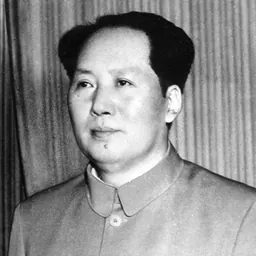
Theory and influence Galula described his experiences in two books, Pacification in Algeria, published by the RAND Corporation in 1963, and Counterinsurgency Warfare: Theory and Practice in 1964. His books analyse his experiences in Indochina, Greece and Algeria, giving a taxonomy of favourable and unfavourable settings for a revolutionary war from the point of view of both the revolutionary (insurgent) and loyalist (counterinsurgent) forces. Galula cites Mao Zedong's observation that "evolutionary war is 80 percent political action and only 20 percent military", and proposes four "laws" for counterinsurgency:
The aim of the war is to gain the support of the population rather than control of territory. Most of the population will be neutral in the conflict; support of the masses can be obtained with the help of an active friendly minority. Support of the population may be lost. The population must be efficiently protected to allow it to cooperate without fear of retribution by the opposite party. Order enforcement should be done progressively by removing or driving away armed opponents, then gaining the support of the population, and eventually strengthening positions by building infrastructure and setting long-term relationships with the population. This must be done area by area, using a pacified territory as a basis of operation to conquer a neighbouring area.
Galula's laws thus take at face value and recognize the importance of the aphorism, based on the ideas of Mao, that "The people are the sea in which the revolutionary swims." He contends that:
A victory [in a counterinsurgency] is not the destruction in a given area of the insurgent's forces and his political organization. ... A victory is that plus the permanent isolation of the insurgent from the population, isolation not enforced upon the population, but maintained by and with the population. ... In conventional warfare, strength is assessed according to military or other tangible criteria, such as the number of divisions, the position they hold, the industrial resources, etc. In revolutionary warfare, strength must be assessed by the extent of support from the population as measured in terms of political organization at the grassroots. The counterinsurgent reaches a position of strength when his power is embedded in a political organization issuing from, and firmly supported by, the population.
Some of these steps can be skipped in areas that are only partially under insurgent control, and most of them are unnecessary in areas already controlled by the government.
Galula has been considered an important theorist by contemporary defence experts. Notably, the United States military used his experiences as examples in the context of the Iraq War and he is often quoted in the US Army's Counterinsurgency Manual. Galula's Counterinsurgency Warfare: Theory and Practice is highly suggested reading for students of the U.S. Army Command and General Staff College.
Galula's work on counter-insurgency is in large part based on the experiences and lesson of 130 years of French colonial warfare, most notably the work of Joseph-Simon Gallieni and Hubert Lyautey. He was also influenced by Jacques Guillermaz, with whom he disagreed on the handling of counter-revolutionary warfare, but who gave Galula intellectual mentorship during the years following 1945 when they served in China. The older soldier imparted an intellectual approach to military and geopolitical analysis.
Works Counterinsurgency Warfare: Theory and Practice. Wesport, Connecticut: Praeger Security International, 1964, Les Moustaches du tigre. Flammarion, 1965 (under the pseudonym of Jean Caran), Pacification in Algeria, 1956–1958. RAND Corporation, 2006,
Don’t just read it —
keep it.
Full-length biographies made to live with: read them, listen on the way to work, watch them tonight.
- E-book
- Audio
- Video
Instant download · yours to keep · every purchase keeps this site free
Important facts
People in David Galula's life
Named in this biography and alive at the same time

Related people
Same field, nearest in time



Contemporaries
People whose lives overlapped David Galula's


Frequently asked questions
Who was David Galula?
French Army officer (1919 – 1967)
When was David Galula born?
David Galula was born on 10 January 1919 in Sfax.
When did David Galula die?
David Galula died on 11 May 1967 in Arpajon.
What was David Galula's occupation?
David Galula was a military officer, military personnel, military theorist and harvard University.
What nationality was David Galula?
David Galula was French.
Sources & further reading
Cite this page
APA: Biography.guide. (2026). David Galula. https://biography.guide/david-galula/
MLA: "David Galula." Biography.guide, https://biography.guide/david-galula/.
Chicago: "David Galula." Biography.guide. https://biography.guide/david-galula/.
Data last updated: 2026-09-20 · Spot an error? Report a correction.
Page generated 2026-09-27 05:34 UTC