
David Dundas
British army officer and military writer
About David Dundas
Lived 1735 – 1820 (aged 84–85). David Dundas was a British military officer and military personnel.
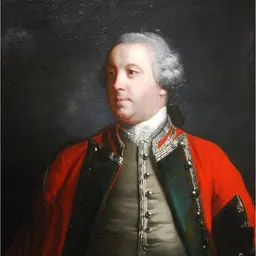
General Sir David Dundas, (1735 – 18 February 1820) was a British Army officer who fought in the Seven Years' War and French Revolutionary Wars, wrote important texts on the Principles of Military Movements and then served as Commander-in-Chief of the Forces from 1809 to 1811.
Military service
The son of Robert Dundas, a Scottish merchant, and Margaret Dundas (née Watson), Dundas was enrolled at the Royal Military Academy, Woolwich. Whilst still a cadet at the Academy, he spent some time with his uncle, Colonel David Watson, the Director of the Military Survey of the Highlands, where he was grounded in the arts of surveying under the tutelage of William Roy. He graduated as a lieutenant-fireworker in the Royal Artillery on 1 March 1755. He exchanged to the 56th Foot as a lieutenant on 24 January 1756, serving with this regiment during the Seven Years' War taking part in combined operations against the French ports of St. Malo and Cherbourg and fighting at the Battle of Saint Cast in September 1758. On 31 December 1777, he was appointed Quartermaster-General in Ireland, in which post he was promoted to brevet colonel on 12 February 1782.
Army improvements On 31 August 1783, Dundas left regimental service and became an advocate of officer training in the British Army, writing many manuals on the subject, the first being Principles of Military Movements, which was published in 1788. He chose to play down the light infantry tactics that generals such as Lord Cornwallis or Willam Howe favoured during the American War of Independence. Instead, after witnessing Prussian army manoeuvres in Silesia in 1784, Dundas favoured the army model that Frederick the Great had created. Its use of drilled battalions of line infantry marching in formation was a stark contrast to the light brigades that fought in small independent groups and with cover during the American War of Independence. He was promoted to major-general on 1 May 1790 and, as Britain became involved in the French Revolutionary Wars, he was appointed second in command at the siege of Toulon under O’Hara and Lord Mulgrave from September 1793, Dundas became commanding officer under Lord Hood after O’Hara's capture in this action. Dundas commanded the initial expedition to Corsica in 1794, Next, he captured the Port of San Fiorenzo and Bastia, an important first step ultimately leading to the capture of the island and establishment of a short-lived Anglo-Corsican Kingdom by forces under Hood and Admiral Lord Nelson.
Hood forced Dundas to resign on 10 March 1794; Dundas transferred to serve in the Flanders Campaign under the Duke of York. on 30 December and directed the rearguard action at Geldermalsen on 5 January 1795. He was made commander of the British forces (mainly cavalry) left behind at Bremen in April 1795 and given the local rank of brevet lieutenant general while remaining in Europe on 2 May 1795.
On 26 December 1795, Dundas became Colonel of the 7th Light Dragoons and on 8 November 1796 he became Quartermaster-General to the Forces in which role he implemented the army's official drill book for Cavalry officers.
Dundas commanded the 3rd Division under the Duke of York in the Helder Campaign 1799, On 15 February 1800, he was given the honorary appointment of Governor of Landguard Fort.
He was made Colonel of 2nd Dragoons on 9 May 1801, promoted to general on 24 April 1802 and went into semi-retirement in 1805. He became General Officer Commanding Northern District in 1807 and, in that capacity, he was involved in suppressing a keelmen's strike on Tyneside. He chaired the hearing against Le Marchant on charges of calumny from 23 January 1807, was a member of the Court Martial that tried Whitelocke for the failure of the Buenos Aires expedition on 28 January 1808 and was a member of the Board of Enquiry of the Convention of Cintra in 1808. and Colonel of the 1st Dragoon Guards from 27 January 1813. until his death. Advanced to Knight Grand Cross of the Order of the Bath on 4 January 1815, he died at the Royal Hospital Chelsea on 18 February 1820 and is buried in the grounds. Burne describes him as "A level-headed officer", but "cautious", while Bunbury writes "He...was an aged man...a brave, careful, and well-skilled soldier...Dundas was a tall, spare man, crabbed and austere, dry in his looks and demeanour...there were peculiarities in his habits and style which excited some ridicule amongst young officers. But though it appeared a little out of fashion, there was 'much care and valour in that Scotchman'". Thoumine writes that "Dundas was perhaps not as graceful nor as polished as some of his contemporaries, but he was as sound as oak and utterly reliable".
Family In 1807, he married Charlotte De Lancey, daughter of Brigadier General Oliver De Lancey (1718-1785); they had no children.
Don’t just read it —
keep it.
Full-length biographies made to live with: read them, listen on the way to work, watch them tonight.
- E-book
- Audio
- Video
Instant download · yours to keep · every purchase keeps this site free
Important facts
People in David Dundas's life
Named in this biography and alive at the same time


Related people
Same field, nearest in time


Contemporaries
People whose lives overlapped David Dundas's





Frequently asked questions
Who was David Dundas?
British army officer and military writer (1735-1820)
When was David Dundas born?
David Dundas was born in 1735 in Edinburgh.
When did David Dundas die?
David Dundas died on 18 February 1820 in Royal Hospital Chelsea.
What was David Dundas's occupation?
David Dundas was a military officer and military personnel.
What nationality was David Dundas?
David Dundas was British.
Sources & further reading
· DBpedia: David Dundas (British Army officer)
Cite this page
APA: Biography.guide. (2026). David Dundas. https://biography.guide/david-dundas-military-officer/
MLA: "David Dundas." Biography.guide, https://biography.guide/david-dundas-military-officer/.
Chicago: "David Dundas." Biography.guide. https://biography.guide/david-dundas-military-officer/.
Data last updated: 2026-09-20 · Spot an error? Report a correction.
Page generated 2026-09-27 05:18 UTC