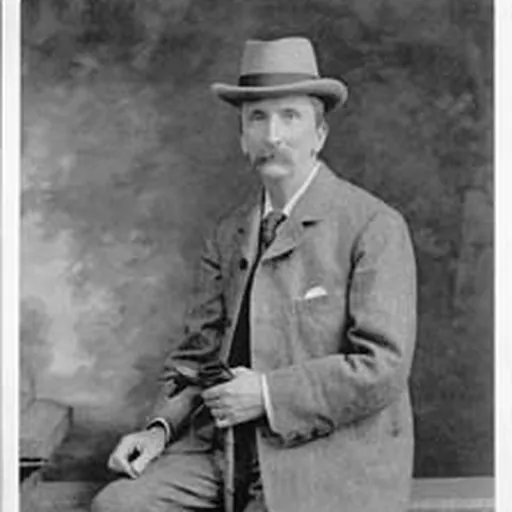
About David Douglas Cunningham
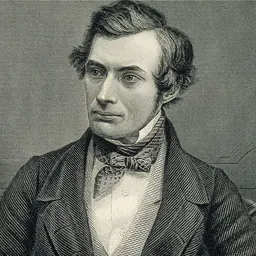
Lived 1843 – 1914 (aged 71). David Douglas Cunningham was a British military physician, physician and botanist.
David Douglas Cunningham (29 September 1843 – 31 December 1914) was a Scottish medical doctor and researcher who worked extensively in India on various aspects of public health and medicine. He studied the spread of bacteria and the spores of fungi through the air and conducted research on cholera. In his spare time he also studied the local plants and animals.
Life and career Cunningham was born in 1843, in Prestonpans, the third son of Cecilia Margaret Douglas (1813–98), daughter of David Douglas, Lord Reston (1769–1819), the heir of Adam Smith, and her husband the Rev. William Bruce Cunningham (1806–78). He attended the Royal College of Physicians of Edinburgh, and graduated with honours in medicine from the University of Edinburgh in 1867. He entered the Indian Medical Service in 1868, and was selected to conduct a special enquiry into cholera by the Secretaries of State for India and for War. He studied for a time in Munich, and arrived in Calcutta in January 1869 along with another physician Timothy Richards Lewis (1841–1886). From 1874 he was appointed as a special assistant to the sanitary commissioner of India. In June 1879 he was appointed Professor of Physiology in the Medical College, Calcutta, where he was much engaged in the investigation of cholera. There were multiple competing theories on the nature of diseases in general and cholera in particular. There was a "miasma" theory that certain locations had bad air that led to disease and there was a "contagion" theory that particles of causal agents entered the body to cause disease and could be carried by a person. In addition there were questions on whether the two theories may both hold and that cholera was caused by a fungus-like organism that produced spores that would be distributed in the air. Cunningham examined many of these theories in India.
Scientific contributions Cunningham made pioneering studies in aerobiology. He made use of the aeroconiscope, a device with a vane that pointed a sampling cone towards the wind with a sticky slide placed behind a funnel. The sticky slide would then be examined for aerially dispersed biota. His studies on the microbes, spores and pollen in the air of Calcutta were published in 1873. Cunningham's other major and official work was in studying the nature of spread of cholera. Their official work however did not progress and the project was terminated and in 1879, Cunningham took up an academic position as Professor of Physiology at the Calcutta Medical College. He was also able to pursue his interests in botany being temporarily appointed in 1880 as a superintendent of the Calcutta Royal Botanic Garden as George King, the regular superintendent, was put in charge of the cinchona plantation in the Mungpoo Hills, Darjeeling District. Cunningham was a member of the council of the Calcutta zoological garden and in 1898, a bronze medallion of him was gifted to the zoological garden. In 1876 he was elected Fellow of the Linnean Society and in June 1889 Fellow of the Royal Society. In June 1893 he was made a Companion of the Order of the Indian Empire. A species of Gymnosporangium fungus, G. cunninghamianum was named after him by Major A. Barclay in 1890, who found it in Simla but received illustrations matching them made by Cunningham from Almora in 1874. Cunningham also took a great interest in the mode of action of snake venom. He was interested in the fertilization mechanism in Ficus, the gases released by Ottelia and a range of other topics. He was interested in the philosophy of Kant and Hegel.
Publications Cunningham, D.D. 1873. Microscopic examination of air. Govt. of India Publication, Calcutta. Some Indian Friends and Acquaintances: A Study of the Ways of Birds and other Animals Frequenting India (John Murray, 1903) Plagues and pleasures of life in Bengal (John Murray, 1907).
Cunningham, D.D. 1884 On the relation of Cholera to Schizomycete organisms Scientific memoirs by medical officers of the Army of India. Part 1. Cunningham, D.D. 1884 On the presence of peculiar parasitic organisms in the tissue of a specimen of Delhi Boil. Scientific memoirs by medical officers of the Army of India. Part 1.
Don’t just read it —
keep it.
Full-length biographies made to live with: read them, listen on the way to work, watch them tonight.
- E-book
- Audio
- Video
Instant download · yours to keep · every purchase keeps this site free
Important facts
People in David Douglas Cunningham's life
Named in this biography and alive at the same time



Related people
Same field, nearest in time


Contemporaries
People whose lives overlapped David Douglas Cunningham's

Frequently asked questions
Who was David Douglas Cunningham?
British doctor
When was David Douglas Cunningham born?
David Douglas Cunningham was born on 29 September 1843.
When did David Douglas Cunningham die?
David Douglas Cunningham died on 31 December 1914.
What was David Douglas Cunningham's occupation?
David Douglas Cunningham was a military physician, physician and botanist.
What nationality was David Douglas Cunningham?
David Douglas Cunningham was British.
Sources & further reading
· Wikipedia: David Douglas Cunningham
· DBpedia: David Douglas Cunningham
Cite this page
APA: Biography.guide. (2026). David Douglas Cunningham. https://biography.guide/david-douglas-cunningham/
MLA: "David Douglas Cunningham." Biography.guide, https://biography.guide/david-douglas-cunningham/.
Chicago: "David Douglas Cunningham." Biography.guide. https://biography.guide/david-douglas-cunningham/.
Data last updated: 2026-09-20 · Spot an error? Report a correction.
Portrait: Wikimedia Commons · author & licence
Page generated 2026-09-27 04:58 UTC