
About David Daube
Lived 1909 – 1999 (aged 90). David Daube was a German university teacher.
David Daube (8 February 1909, in Freiburg, Germany – 24 February 1999, in Berkeley, California) was the twentieth century's preeminent scholar of ancient law. He combined a familiarity with many legal systems, particularly Roman law and biblical law, with an expertise in Greek, Roman, Jewish, and Christian literature, and used literary, religious, and legal texts to illuminate each other and, among other things, to "transform the position of Roman law" and to launch a "revolution" or "near revolution" in New Testament studies.
Early life and education 'Stolpersteine' in front of Goethestraße 35, 79100 Freiburg im Breisgau, for Jakob Daube, Selma Daube née Ascher, Dr. Benjamin Daube and Dr. David Daube David Daube was born on 8 February 1909 in Freiburg im Bresgau, Germany. He was the son of Jacob Daube, of Freiburg (whose family probably migrated generations earlier from France), and Selma Ascher of Nördlingen, whose family descended directly from Rabbi Meir of Rothenburg, the Maharam.
He earned degrees from the University of Freiburg and the University of Gottingen in 1932. Daube's early teachers included Otto Lenel, who "encouraged" him to take up the study of legal history in the first place, according to Daube's notes in his first published book, Studies in Biblical Law. Daube goes on to thank Professors Johannes Hempel and Wolfgang Kunkel of the University of Göttingen, who trained Daube in rigorous scholarly methods.
Daube fled Germany for England in 1933, but made several trips back to Europe to help bring out family members, friends, and mere acquaintances, with the assistance of Cambridge professors, fellows, and students, but especially the then-graduate student Philip Grierson. He earned his doctorate from the University of Cambridge in 1936. ). Daube was critical in getting Strauss out of Nazi Germany by helping to find him a position at the University of Cambridge in 1935.
He married again in 1986, marrying Helen Smelser (Margolis), prior wife of Neil Smelser.
According to Carmichael, on account of Daube's knowledge of Aramaic and the Talmud, Daube was invited to attend the New Testament seminar run by C.H. Dodd at Cambridge. It aroused in him an absorbing interest in the rabbinic background to Christianity. New Testament studies was the area in which he was to make his most original contribution to scholarship, in his eyes also a contribution to Jewish–Christian relations, according to Tony Honoré. Daube reinterpreted many New Testament texts in the light of Talmudic scholarship. The Christian scriptures could be reappraised as a form of Jewish literature, which he called "New Testament Judaism."
W. D. Davies focused on this in his tribute to his teacher on his death: "It is the complexity in David that made him so magical. It is not surprising then that it was this most Jewish of scholars, who taught us that Christianity, is a New Testament Judaism—a strikingly pregnant phrase that he invented and which sums up best perhaps his legacy and the near revolution that he introduced into New Testament studies."
Students
In addition to Carmichael and the late W.D. Davies, Daube's students include the late C.K. Barrett, Durham (UK); Saul Berman, Yeshivat Chovevei Torah; Davi Ascher Strauss Bernstein, University of Chicago; David Cohen, UC-Berkeley; Martin Evans, Stanford; William Frankel; (A.M.) Tony Honoré, Regius Professor of Civil Law (Oxford); Bernard Jackson, Manchester and Liverpool; Lee Kuan Yew, longtime prime minister—and "father of"—Singapore; Fergus Millar, Oxford; John T. Noonan, Jr., UC-Berkeley/United States Court of Appeals for the Ninth Circuit; Stephen Passamaneck, Hebrew Union College-Jewish Institute of Religion; the late Lord Rodger (Alan Rodger, Baron Rodger of Earlsferry), Justice of the Supreme Court of the United Kingdom; E.P. Sanders, Duke; Peter Stein, Regius Professor of Civil Law (Cambridge); Géza Vermes, Oxford; Alan Watson, law faculties at the universities of Georgia, Edinburgh, and Belgrade; Reuven Yaron, Hebrew University of Jerusalem.
Pedagogy
Bernard Jackson testifies: "For two years, I submitted material on a weekly or fortnightly basis. As was his normal pattern with research students, [Daube] would invite me for lunch at All Souls, then spend most of the rest of the afternoon analysing and criticising my work line by line. No more intense or productive supervision could be imagined. I owe everything I may have done subsequently to this foundation. Alan Watson has recorded his enduring sense of fear of disappointing Daube in approaching these sessions. My own recollection is that of the feeling with which I always emerged. However devastating the criticism may have been – and never without justification – Daube always concluded with sincere and persuasive words of encouragement, which made me ready, even eager, to commence the next cycle of destruction.
"He was a warm, wise and generous mentor, whose support went far beyond doctoral supervision and subsequent academic advancement. He did not distance himself from the personal lives of his pupils, both in joy and sorrow. He spoke at [my wedding], but what stands out in my mind is not merely the studied flattery of his speech, but the manner in which he spoke informally to members of our respective families, without a hint of condescension but rather with genuine interest and human feeling."
Education
Universities of Freiburg and Göttingen (Dr jur 1932) PhD University of Cambridge 1936
Other posts and honours 1953–1999 Member, Academic Board, Institute of Jewish Affairs 1957 Fellow of the British Academy 1957–8 President: Société d'Histoire des Droits de l'Antiquité 1961 Founder-President, B'nai B'rith Oxford Lodge 1964 Honorary D. Litt., University of Leicester 1970 Honorary Member, Royal Irish Academy 1971 DHL: Hebrew Union College 1973 Honorary Fellow, Oxford Centre for Postgraduate Hebrew Studies 1979 Fellow: American Academy for Jewish Research 1983–5 President: Jewish Law Association
Publications Books
– based on his Messenger Lectures at Cornell )
Edited by
Chapters
Journal articles
Festschriften Daube Noster: Essays in Legal History for David Daube, 1974 (ed. Alan Watson) Studies in Jewish Legal History: Essays in Honour of David Daube, 1974 (ed. Bernard Jackson) Donum Gentilicium: New Testament Studies in Honour of David Daube, 1978 (eds. Ernst Bammel, C.K. Barrett, and W.D. Davies) Essays on Law and Religion: The Berkeley and Oxford Symposia in Honour of David Daube, 1993 (ed. Calum M. Carmichael)
Memorial volumes Law for All Times: Essays in Memory of David Daube, 2004. (ed. Ernest Metzger) David Daube: A Centenary Celebration, 2010. (ed. Ernest Metzger)
Don’t just read it —
keep it.
Full-length biographies made to live with: read them, listen on the way to work, watch them tonight.
- E-book
- Audio
- Video
Instant download · yours to keep · every purchase keeps this site free
Important facts
People in David Daube's life
Named in this biography and alive at the same time





Related people
Same field, nearest in time


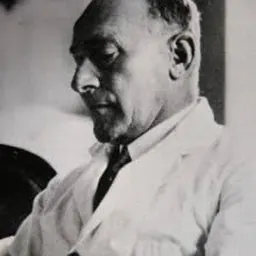
Contemporaries
People whose lives overlapped David Daube's
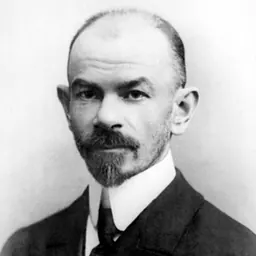



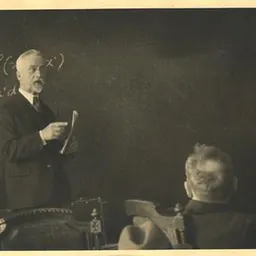
Frequently asked questions
Who was David Daube?
German American legal scholar, historian (1909-1999)
When was David Daube born?
David Daube was born on 8 February 1909 in Freiburg im Breisgau.
When did David Daube die?
David Daube died on 24 February 1999 in Berkeley.
What was David Daube's occupation?
David Daube was a university teacher.
What nationality was David Daube?
David Daube was German.
Sources & further reading
Cite this page
APA: Biography.guide. (2026). David Daube. https://biography.guide/david-daube/
MLA: "David Daube." Biography.guide, https://biography.guide/david-daube/.
Chicago: "David Daube." Biography.guide. https://biography.guide/david-daube/.
Data last updated: 2026-09-20 · Spot an error? Report a correction.
Page generated 2026-09-27 05:04 UTC