
David Card
Canadian economist and university teacher (born 1956)
About David Card
Born 1956. David Card is a Canadian economist and university teacher.
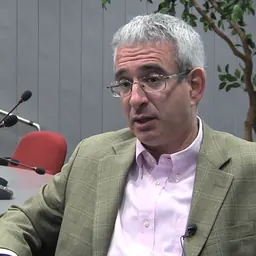
David Edward Card (born 1956) is a Canadian-American labour economist and the Class of 1950 Professor of Economics at the University of California, Berkeley, where he has been since 1997. He was awarded half of the 2021 Nobel Memorial Prize in Economic Sciences "for his empirical contributions to labour economics", with Joshua Angrist and Guido Imbens jointly awarded the other half.
Early life and career David Card was born in Guelph, Ontario, in 1956, to a family of dairy farmers. Card was originally pursuing a degree in physics, before switching to economics during his undergraduate studies. He then earned his Bachelor of Arts degree from Queen's University in 1978 and his Ph.D. degree in economics in 1983 from Princeton University, after completing a doctoral dissertation titled "Indexation in long term labor contracts" under the supervision of Orley Ashenfelter.
Card began his career at the University of Chicago Graduate School of Business, where he was assistant professor of Business Economics from 1982 to 1983. 1990 to 1991. From 1988 to 1992, Card was Associate Editor of the Journal of Labor Economics, and from 1993 to 1997, he was co-editor of Econometrica. From 2002 to 2005, he was co-editor of The American Economic Review. and many economists, including Joseph Stiglitz and Paul Krugman, accept these findings.
David Card has also made contributions to research on immigration, education, job training and inequality. Much of Card's work centers on a comparison between the United States and Canada in various situations. On immigration, Card's research has shown that the economic impact of new immigrants is minimal. Card has done several case studies on the rapid assimilation of immigrant groups, finding that they have little or no impact on wages. For example, Card studied the economic impacts of the Mariel boatlift, and compared the economic effects in Miami to those in Atlanta, Houston, Los Angeles and Tampa, which receive fewer Cuban immigrants.
Despite the fact that Card sometimes researches issues with strong political implications, he does not publicly take a stand on political issues or make policy suggestions. Nevertheless, his work is regularly cited in support of increased immigration and minimum wage legislation.
He served as the expert witness for Harvard in the 2018 Harvard admissions case.
Contributions to Economics of Education David Card has made influential contributions to the economics of education by studying how access and school environments affect long-term outcomes. In one of his studies, Card used proximity to colleges as an instrumental variable. Results showed that people who lived closer to universities were more likely to enroll. Because of the additional years of schooling, this translated into higher earnings. His findings encouraged economists to consider how educational environments can affect inequality over time, and his studies helped broaden how economists think about education by highlighting the importance of real-world variation, institutional differences, and student experiences. His work played an important role in shifting the field toward a more careful empirical design and helped establish education as an area where credible causal evidence could be used to understand economic mobility and opportunity. These contributions were part of a broader empirical movement recognized when Card received the 2021 Nobel Memorial Prize in Economics Sciences. They were dissatisfied with the existing approach that was used to evaluate minimum wage and employment, instead desiring natural experiments that would provide stronger evidence on the topic. Though a major purpose of the book was to showcase this misconception, perhaps an even greater purpose was present, through the usage of natural experiments the authors acted as a driving force in the establishment of empirical research to test the underlying economic model, furthering their purpose of further establishing economic research as a quantitative, research based field.
Conclusion & Implications Myth and Measurement is a monumental economic work, which contains two primary conclusions, minimum wage does not necessarily adversely influence employment and a need to establish new models that are applied to the low-wage market. Throughout the work the usage of numerous samples of minimum wage changes, state and federal, demonstrates that there is no notable decrease in employment when the wage floor level is raised, as demonstrated through all data in the work indicating either an increase, no change, or insignificant decrease in employment. The final conclusion derives from the many anomalies present in minimum wage when evaluated under the standard market model, such as differences in wages amongst same skill workers, workers of varying ability receiving the same pay, the spillover effect, and minimum wage employers attracting more applicants than if minimum wage was not present, these conclusions suggest that the low-wage market does not fall into accordance with the standard labor model. The proposed alternative models place an emphasis on avoiding the problems of the standard labor market, these models are non-static, placing an emphasis on being dynamic. These models would not make the same unambiguous predictions and would allow for consideration of other wage setting factors, thus allowing for a more complete encasement of the low-wage market. Card describes two key implications of the work, policy and economic research implications. The first described implication of the work describes that there is too great of an emphasis placed on minimum wage policy, with those in opposition exaggerating the influence on employment and those in favor overemphasizing the effects on poverty. The focus of the policy debate, according to Card, should be the distributional effects of minimum wage, how minimum wage influences wage inequality, which the findings present suggest that it will counteract the growth experienced in the 1980s. Finally, Card believes that this work will greatly influence economic research in two manners, establishing prespecified conditions and the importance of firm-level microdata. Prespecified conditions will allow for broad agreement amongst researchers in regard to methodology, he believed that this work would allow for acceptance of this standard in economics. The value of firm-level microdata which would allow for a deeper understanding of factors that determine wages and alter the analysis of a variety of topics allowing for greater precision in data sets. Card concludes the work through emphasizing the importance of empirical research to create a more complete understanding of the low-wage market.
Awards He was the recipient of the 1995 John Bates Clark Medal, awarded to "that American economist under the age of forty who is judged to have made the most significant contribution to economic thought and knowledge" for his work related to the minimum wage as well as the economic effects of the Mariel boatlift. Along with N. Gregory Mankiw, he was elected vice president of the American Economic Association for 2014.
He has received along with Richard Blundell the 2014 BBVA Foundation Frontiers of Knowledge Award in Economics, Finance and Management category for "their contributions to empirical microeconomics," in the words of the jury's citation. "Motivated by important empirical questions, they developed and estimated appropriate econometric models, making significant methodological contributions in the process. Both are known for their attention to institutional detail, careful and innovative research design, rigorous application of econometric tools, and dispassionate reporting of results."
Card was elected as a member of the U.S. National Academy of Sciences in 2021. He won the Nobel Memorial Prize in Economic Sciences in 2021 for research showing that an increase in minimum wage does not lead to less hiring, and immigrants do not lower pay for native-born workers.
Publications Books and Papers
Card, David; Peri, Giovanni. (2016). Immigration Economics: A Review. American Economic Association. Card, David; Devicienti, Francesco; Maida, Agata. (2013). Rent-sharing, Holdup, and Wages: Evidence from Matched Panel Data. The Review of Economic Studies. Vo. 81 (1). Card, David. (2011). Origins of the Unemployment Rate: The Lasting Legacy of Measurement without Theory. American Economic Review. Vo. 101 (3). Card, David; Dobkin, Carlos; Maestas, Nicole. (2008) The Impact of Nearly Universal Insurance Coverage on Health Care Utilization: Evidence from Medicare. American Economic Review. Vo. 98(5).
Don’t just read it —
keep it.
Full-length biographies made to live with: read them, listen on the way to work, watch them tonight.
- E-book
- Audio
- Video
Instant download · yours to keep · every purchase keeps this site free
Important facts
People in David Card's life
Named in this biography and alive at the same time







Related people
Same field, nearest in time



Contemporaries
People whose lives overlapped David Card's


Frequently asked questions
Who is David Card?
Canadian economist and university teacher (born 1956)
When was David Card born?
David Card was born in 1956 in Guelph.
What is David Card's occupation?
David Card is an economist and university teacher.
What nationality is David Card?
David Card is Canadian.
Sources & further reading
Cite this page
APA: Biography.guide. (2026). David Card. https://biography.guide/david-card/
MLA: "David Card." Biography.guide, https://biography.guide/david-card/.
Chicago: "David Card." Biography.guide. https://biography.guide/david-card/.
Data last updated: 2026-09-26 · Spot an error? Report a correction.
Page generated 2026-09-27 05:16 UTC