
About David Ausubel
Lived 1918 – 2008 (aged 89). David Ausubel was an American psychologist, pedagogue and psychiatrist.
David Paul Ausubel (October 25, 1918 – July 9, 2008) was an American psychologist. His most significant contribution to the fields of educational psychology, cognitive science, and science education learning was on the development and research on "advance organizers" (see below) since 1960.
Biography Family He was born on October 25, 1918, and grew up in Brooklyn, New York. He was nephew of the Jewish historian Nathan Ausubel. Ausubel and his wife Pearl had two children.
Education and academic career Ausubel studied at the University of Pennsylvania where he graduated with honors in 1939, receiving a bachelor's degree majoring in psychology. Ausubel later graduated from medical school in 1943 at Middlesex University where he went on to complete a rotating internship at Gouverneur Hospital, located on the Lower East Side of Manhattan, New York. He served with the US Public Health service, worked in Germany after World War Two in the medical treatment of displaced persons and as a psychiatrist in Veterans Administration hospitals.
In 1957 he won a Fulbright Research Grant to study in New Zealand. During that period his most noteworthy publication was The Fern and the Tiki, in which he made several controversial claims that Māori people were discriminated against in the country.
Ausubel continued to hold a series of professorships at several schools of education, including University of Illinois (1950-1966), University of Toronto (1966-1968) and the City University of New York, where he stayed until his retirement. conceptualizing death from the perspective of both Christian believers and non-believers, expressing his view that "the relevance and value of faith should certainly not be derogated or treated pejoratively, as atheists, agnostics, and rationalists tend to do."
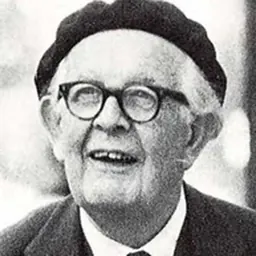
Influences Ausubel was influenced by the teachings of Jean Piaget. Similar to Piaget's ideas of conceptual schemes, Ausubel related this to his explanation of how people acquire knowledge. "David Ausubel theorized that people acquire knowledge primarily by being exposed directly to it rather than through discovery" (Woolfolk et al., 2010, p. 288) In other words, Ausubel believed that an understanding of concepts, principles, and ideas is achieved through deductive reasoning. Through his belief of meaningful learning, Ausubel developed his theory of advance organizers. However, Ausubel was a critic of discovery-based teaching techniques, stating:
Actual examination of the research literature allegedly supportive of learning by discovery reveals that valid evidence of this nature is virtually nonexistent. It appears that the various enthusiasts of the discovery method have been supporting each other research-wise by taking in each other's laundry, so to speak, that is, by citing each other's opinions and assertions as evidence and by generalizing wildly from equivocal and even negative findings.
Advance organizers An advance organizer is information presented by an instructor that helps the student organize new incoming information. This is achieved by directing attention to what is important in the coming material, highlighting relationships, and providing a reminder about relevant prior knowledge. Similarly, a comparative organizer is used both to integrate as well as discriminate. It "integrate new ideas with basically similar concepts in cognitive structure, as well as increase discriminability between new and existing ideas which are essentially different but confusably similar" (Ausubel, 1968, p. 149).
In a response to critics, Ausubel defends advance organizers by stating that there is no one specific example in constructing advance organizers as they "always depends on the nature of the learning material, the age of the learner, and his degree of prior familiarity with the learning passage" (Ausubel, 1978, p. 251).
Another criticism of Ausubel's advance organizers is that the critics often compare the idea of advance organizers with overviews. However, Ausubel has addressed that issue in saying that advance organizers differ from overviews "in being relatable to presumed ideational content in the learner's current cognitive structure" (Ausubel, 1978, p. 252).
Thirdly, critics also address the notion of advance organizers on whether they are intended to favor high ability or low ability students. However, Ausubel notes that "advance organizers are designed to favour meaningful learning.." (Ausubel, 1978, p. 255). Therefore, to question whether advance organizers are better suited for high or low ability students is unrelated as Ausubel argues that advance organizers can be catered to any student to aid them in bridging a gap between what they already know and what they are about to learn.
Don’t just read it —
keep it.
Full-length biographies made to live with: read them, listen on the way to work, watch them tonight.
- E-book
- Audio
- Video
Instant download · yours to keep · every purchase keeps this site free
Important facts
People in David Ausubel's life
Named in this biography and alive at the same time



Related people
Same field, nearest in time



Contemporaries
People whose lives overlapped David Ausubel's


Frequently asked questions
Who was David Ausubel?
American psychologist (1918–2008)
When was David Ausubel born?
David Ausubel was born on 25 October 1918 in New York City.
When did David Ausubel die?
David Ausubel died on 9 July 2008 in New York City.
What was David Ausubel's occupation?
David Ausubel was a psychologist, pedagogue and psychiatrist.
What nationality was David Ausubel?
David Ausubel was American.
Sources & further reading
Cite this page
APA: Biography.guide. (2026). David Ausubel. https://biography.guide/david-ausubel/
MLA: "David Ausubel." Biography.guide, https://biography.guide/david-ausubel/.
Chicago: "David Ausubel." Biography.guide. https://biography.guide/david-ausubel/.
Data last updated: 2026-09-20 · Spot an error? Report a correction.
Page generated 2026-09-27 04:59 UTC