
About Dave Orr
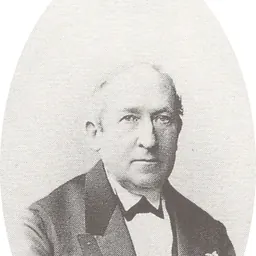
Lived 1859 – 1915 (aged 55). Dave Orr was an American baseball player.
David L. Orr (September 29, 1859 – June 2, 1915) was an American first baseman in Major League Baseball from 1883 through 1890. Orr played most of his career in the American Association for the New York Metropolitans (1883–1887), Brooklyn Bridegrooms and Columbus Solons (1889). He also played for the New York Gothams in the National League for one game in 1883 and for the Brooklyn Ward's Wonders of the Players' League in 1890.
Orr was one of the best hitters in baseball during his major league career. He never hit below .305 for a full season, and his career batting average of .342 is the eleventh highest in major league history and the third highest for a right-handed hitter. He was also regarded as the hardest-hitting batsman of his era. His 31 triples in 1886 set a major league record that stood for 25 years; the mark has since been surpassed only once, by Chief Wilson in 1912.
He was also the first batter to compile more than 300 total bases in a season, and he was the first player with at least 3,000 plate appearances to retire with a slugging percentage above .500 (.502).
Despite his weight (250 pounds at ), Orr was also a solid defensive performer with a .973 fielding percentage. He twice led the American Association in range factor by a first baseman. In 1886, he led the Association's first basemen in putouts and fielding percentage, and in 1889 he led in assists with 61. Orr hit .371 in 1890, but his career was cut short by a stroke suffered during an exhibition game at the end of the 1890 season.
Early life Orr was born in Brooklyn, New York, in 1859. Orr grew up in Brooklyn and began his baseball career playing for minor league teams, including the Brooklyn Alaskas and teams in Newark, New Jersey, and Hartford, Connecticut.
1886 season In 1886, had career highs with 136 games, 593 plate appearances, 93 runs, 31 triples, and 301 total bases. His .338 batting average was the third best in the American Association, He led the association in hits (193), total bases (301), extra base hits (63), triples (31), slugging percentage (.527). Orr also had the highest offensive WAR rating (5.4) and the highest overall WAR rating (6.3) among position players in the American Association.
1887 season In 1887, despite multiple injuries, Orr had another fine season. His .338 batting average was third best in the American Association. He remained out of the lineup until the middle of May.
The Metropolitans started the 1887 record with a 6–24 record. On June 2, 1887, the manager was fired, and Orr took over on an interim basis as player-manager and captain. In his first game as manager on June 3, 1887, Orr had to be carried off the field after a blood vessel in his leg burst while sliding into second base.
Miscellaneous Orr used an unorthodox batting stance that was described by one newspaper reporter as follows:"Big Dave Orr has a position which seems utterly at variance with all the rules of batting. Instead of standing in the center of the plate he takes his place at the extreme edge furthest from the pitcher and almost behind it, in fact. His feet are placed in a most peculiar way. The toes of the right foot point almost toward second base, and the heel is placed in the hollow of the left. He swings his body forward, moving his feet but a few inches, all the swing he gives his bat seeming to come from the upper part of his body."
During the off-season, Orr worked as a butcher and a brownstone cutter.
Brooklyn Bridegrooms On October 20, 1887, Orr was sold to the Brooklyn Bridegrooms along with seven other players. Orr appeared in 99 games for the 1888 Brooklyn team and had the fifth highest batting average (.305) in the American Association. He was also among the league leaders in fielding percentage, assists by a third baseman, and fielding runs. In December 1888, the Bridegrooms sold Orr and Al Mays to the Columbus Solons for $3,000.
Columbus Solons Orr appeared in 134 games for the Columbus Solons in 1889. His .327 batting average was the fourth best in the American Association, and he was also among the association's leaders in hits (183), total bases (250), doubles (31), triples (12), and RBIs (87). Orr reportedly hit the historic home run against St. Louis with the bat that he famously named "Charlotte." Orr had three bats that he had named Charlotte, Gertrude, and Rose. Charlotte was his favorite, and a sports writer later recalled "the big fellow certainly could clout the ball when she was in his hands."
Brooklyn Ward's Wonders On January 22, 1890, Orr signed with the Brooklyn Ward's Wonders in the newly formed Players' League. Orr helped lead Brooklyn to second place in the league with a 76–56 record. In June 1890, Orr became the first Brooklyn player to hit the ball over the left field fence at Eastern Park. On June 17, 1890, Though he had been expected to miss the remainder of the 1890 season, He finished second in a close race with Pete Browning for the batting championship. In early September 1890, Sporting Life observed: "Big Dave Orr is batting like great guns, and is keeping the leader, Browning, guessing. How the two must watch for each other's score day after day!"
Despite appearing in only 107 games in 1890 and still ranked among the Players' League leaders in batting average (.371), RBIs (124), slugging percentage (.534), hits (172), total bases (248), and doubles (32). He also led the league with an at bat to strikeout ratio of 42.2. He was paralyzed on his left side, but by January 1891, he was reportedly "able to walk out on pleasant days."
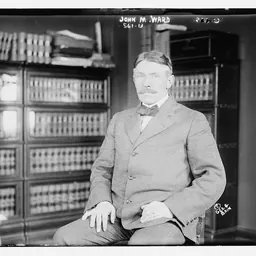
In September 1891, 4,000 tickets were sold for "a grand benefit picnic" held in Orr's honor at Euler's Washington Park, the home of the Brooklyn baseball club. Former teammates, including John Montgomery Ward attended, and the park was lit with Chinese lanterns, a marching band led a parade, and a dance platform was "festooned with flags." A newspaper account stated that "Dave's big right hand finally grew tired of wagging. His left was there, too, but it has not done duty for almost a year and this is why he was given a picnic."
In March 1892, Orr traveled to Florida to umpire exhibition games. He announced that, although one leg was still "somewhat affected by paralysis", he was contemplating a comeback in 1893. He was not able to return to the game as a player.
Accolades Though largely forgotten in the modern era, Orr was remembered by both fellow players and sports writers as one of the greatest hitters of the 19th century. In 1894, Baseball Hall of Fame inductee Dan Brouthers opined that Orr was the greatest hitter to ever play the game:"The greatest hitter that ever played ball was old Dave Orr. He didn't care whether they were over the plate or not. If they were within reach of that long bat of his he would hit them out, and when he hit them there was no telling whether they would be found again or not. I have always held that Dave Orr was the strongest and best hitter that ever played ball."
Pitcher Silver King broke his wrist when he was struck with a ball hit by Orr. He later recalled: "Dave could crack 'em at you like a shot, and the one I stopped had all of Dave's avoirdupois good and hard up against it."
In 1898, the editor of Sporting Life recalled Orr once hitting a ball over the fence ( from home plate) and wrote: "Dave Orr, that broad chested, good-natured big chap, who once held down a place on the Brooklyn team, in his day was the hardest hitting batsman in League or Association. I have seen him wallop a ball so far over the outfielders' heads that it took a search warrant to get it back again, and every third baseman crossed himself and muttered the last prayers of the dying whenever he stalked to the plate." Years later, another account in Sporting Life observed: "He was a mighty slugger and his home-run drives earned him the reputation of being the greatest batter in the world."
Orr died at his niece's home at 1211 Stoothoff Avenue (modern-day 114th Street) in the Richmond Hill section of the New York City borough of Queens in June 1915. His funeral was held on June 4, 1915 at Woodlawn Cemetery in The Bronx. On learning of Orr's death, Brooklyn sports writer Abe Yager wrote: "Dave Orr is no more. A finer soul never breathed in any walk of life and he was a credit to the profession. In a talk on general subjects the last time he was in the press box at Washington Park, the veteran remarked that he never said anything derogatory against anybody, and that was true. The writer knew him 25 years and never heard him say a harsh word to anybody."
Don’t just read it —
keep it.
Full-length biographies made to live with: read them, listen on the way to work, watch them tonight.
- E-book
- Audio
- Video
Instant download · yours to keep · every purchase keeps this site free
Important facts
People in Dave Orr's life
Named in this biography and alive at the same time




Related people
Same field, nearest in time


Contemporaries
People whose lives overlapped Dave Orr's


Frequently asked questions
Who was Dave Orr?
American baseball player
When was Dave Orr born?
Dave Orr was born on 29 September 1859 in Brooklyn.
When did Dave Orr die?
Dave Orr died on 2 June 1915 in Richmond Hill.
What was Dave Orr's occupation?
Dave Orr was a baseball player.
What nationality was Dave Orr?
Dave Orr was American.
Sources & further reading
Cite this page
APA: Biography.guide. (2026). Dave Orr. https://biography.guide/dave-orr/
MLA: "Dave Orr." Biography.guide, https://biography.guide/dave-orr/.
Chicago: "Dave Orr." Biography.guide. https://biography.guide/dave-orr/.
Data last updated: 2026-09-25 · Spot an error? Report a correction.
Page generated 2026-09-27 05:08 UTC