
Dave Jones
Footballer and manager (born 1956)
About Dave Jones
Born 1956. Dave Jones is a British association football player, association football coach and autobiographer.
Managerial career
Stockport County In July 1990, he joined Stockport County as a manager for their youth team and took over as first-team manager from Danny Bergara in March 1995. He took the team into the First Division from an automatic promotion place in 1997. He also took the club to the semi-finals of the League Cup where they were narrowly defeated 2–1 on aggregate by Middlesbrough despite an impressive win at the Riverside Stadium. During the same cup run, Stockport also defeated Sheffield United, Blackburn Rovers, Southampton and West Ham United, all of whom were in higher divisions than the club at the time.
Southampton This promotion brought him to the attention of Southampton, who offered him a contract to manage their Premier League team. His reign during the 1999–2000 season was rocked by his arrest on charges of child abuse during his employment as a care worker in the late 1980s.
The case put tremendous strain on Jones, who was forced to defend his case on Merseyside whilst managing a team based over 200 miles away on the south coast. In January 2000, Southampton decided to suspend him on full pay until the case was resolved, with Glenn Hoddle taking over his managerial duties.
When the case eventually came to court, it was thrown out in its first week, with the judge recording a not guilty verdict and commenting that the case "should have never reached the trial stage".
Jones's new-look team quickly made an impact, hitting the top of the league by late September, and remaining in the automatic promotion spots over the following months. He won the Division One Manager of the Month Award in February 2002, as part of a sequence of ten wins from eleven games. By mid-March, they sat in second place, with an eleven point lead over their arch-rivals and nearest challengers West Bromwich Albion.
However, the final nine games saw Wolves take just ten points from 27 available, while Albion, in contrast, won eight of their final ten fixtures to overtake their rivals and pip them to promotion on the final day of the season. Jones suffered more disappointment when his side compounded their poor end to the campaign by losing their play-off semi-final to Norwich City.
The following season proved a similar rollercoaster ride for Jones. Inconsistent early form left them well off the pace for automatic promotion and a dismal Christmas period saw him under increasing pressure as they weren't even in the playoff zone. An FA Cup win over top flight Newcastle United seemed to reverse fortunes though, and his side lost just two of their remaining twenty games to finish fifth, in the play-off zone. The FA Cup run lasted until the quarter-finals.
They overcame Reading in the semi-finals and 3–0 victory over Sheffield United in the final at Millennium Stadium, Cardiff, saw Jones become the manager who returned Wolves to the top level of English football for the first time since 1984, and the man who achieved the chairman Jack Hayward's ambition of Premier League football after eleven years, millions of pounds spent on players and four previous managers.
Jones had just £4 million to spend in the summer preparing for Premier League football. However, the team was significantly weakened by long-term injuries to Joleon Lescott and Matt Murray, and began the season missing several other key components of their promotion campaign. The side endured a very poor start to the campaign, shipping nine goals in two games, and remaining winless until their eighth match. Although, he oversaw several impressive results – most notably defeating a full strength Manchester United 1–0 in the league on 17 January 2004 – his side was mired in the relegation zone for almost all the season and was duly relegated in 20th place with 33 points. They only won eight league games all season, and failed to win a single away game.
Their relegation was effectively confirmed on 1 May despite an impressive win over Everton, which left them needing a mathematical miracle to finish outside the bottom three, and the following weekend their survival became mathematically impossible.
Jones aimed for an immediate return to the Premier League in 2004–05, but had to begin the season once again under a cloud of injuries. His squad was now ageing, with most of the players bought as experienced pros in 2001 still forming the core. The side failed to live up to expectations and managed just four wins from the first fifteen games, leaving them 17th. As pressure mounted, he was sacked on 1 November 2004, after a final loss against a Gillingham side reduced to ten men, a side who had been on the receiving end of a 6–0 Wolves victory in their previous meeting just before the promotion 18 months earlier.
Cardiff City During Jones' first season in charge of Cardiff City, they achieved a respectable 11th place in the Championship. Re-building over the summer of 2006, Jones forged a talented side who found themselves at the top of the Championship. However, after a strong start, poor form later in the season led to Cardiff City finishing the season in 13th.
On 29 September 2007, Jones was sent to the stands during a league match against Barnsley after criticising referee Phil Dowd over a penalty decision. He was formally charged with misconduct on 2 October. Jones countered by claiming: "I was angry with the referee because I think he was the only person in the stadium that didn't think it was a penalty. He didn't make a big call."
He also complained that Dowd ordered him into a section of the stadium containing Barnsley fans and feared that his safety had been put at risk. He faced an FAW hearing about the incident and was found guilty, resulting in a two-match touchline ban, which he served in the Championship match against Plymouth Argyle and the third round FA Cup tie against Chasetown.
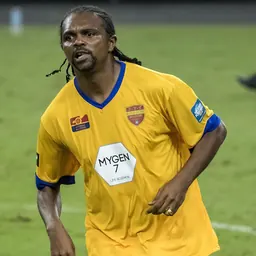
On 9 March 2008, Jones led Cardiff to their first FA Cup semi-final tie since 1927 after beating Premier League side Middlesbrough 2–0 in the quarter-finals. On 6 April, Cardiff City beat Barnsley 1–0 at Wembley to book an FA Cup Final place against Portsmouth. Cardiff City lost the final, played on 17 May 2008, with the only goal of the game being scored by Nwankwo Kanu for Portsmouth after 37 minutes.
The start of the 2008–09 season saw veterans Jimmy Floyd Hasselbaink, Robbie Fowler and Trevor Sinclair released and the sales of some of the team's biggest assets in Glenn Loovens and Aaron Ramsey. Despite this, Jones brought in several new faces and by November Cardiff found themselves in a play-off spot, earning Jones the Championship manager of the month for October. However, after spending the majority of the season in a play-off position, the side missed out on the final day of the season after suffering a 1–0 defeat against Sheffield Wednesday. Despite missing out on the play-offs, Jones had led Cardiff to their highest league position for 38 years.
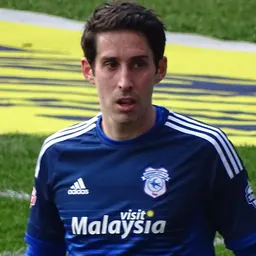
The start of the 2009–10 season saw Cardiff in top form, beating Scunthorpe United 4–0 putting them top. In the first five games, Cardiff were only in the top two until a 1–0 defeat against Newcastle United which put Cardiff eighth. On 7 November 2009, Jones earned the Championship Manager of the Month for October, the same day Cardiff lost the first South Wales derby 3–2 at Liberty Stadium. At the end of the season, Jones took Cardiff to their highest finish in the league in 39 years, fourth place, meaning they would take part in the play-offs. Cardiff beat Leicester at the Walkers Stadium 1–0, thanks to Peter Whittingham's free kick but lost the second leg 3–2, resulting in extra time. The match eventually went to penalties with Cardiff winning 4–3. In the Play-off Final at Wembley, Cardiff suffered a 3–2 defeat to Blackpool.
In the 2010–11 season, Cardiff started the season with four wins out of five games. By the end of October, Cardiff had only lost two games and Jones received the October Championship Manager of the Month, whilst leading scorer Jay Bothroyd won Player of the Month. The club suffered a big loss of form in November and December, with only two wins out of nine games. They finished the season in fourth place behind rivals Swansea City. Cardiff then faced fifth placed Reading in the play-off semi-final, where they lost 3–0 on aggregate.
Jones was later sacked from Cardiff City on 30 May 2011.
Sheffield Wednesday Jones was appointed Sheffield Wednesday boss on 1 March 2012, replacing Gary Megson who was sacked the day before.
His first official game in charge was against Bury and Wednesday came out 4–1 winners, the following game ended with a 3–0 win after three goals in the first ten minutes. After leading Wednesday to five wins and a draw during his first month in charge, Jones was awarded League One Manager of the Month for March 2012. Jones then led Wednesday to another five wins and a draw during his second month in charge and was awarded the Manager of the Month award for April 2012. On 5 May 2012, Jones led Wednesday to promotion from Football League One to the Championship after beating Wycombe Wanderers 2–0.
Jones' first game in charge of Sheffield Wednesday in the Championship was a 2–2 draw away to Derby on 18 August 2012. Two home wins in the next two matches and a League Cup victory over Premier League side Fulham saw Jones stretch his unbeaten start as Sheffield Wednesday manager to eighteen matches. Jones' first defeat eventually came on 1 September 2012 after eighteen games unbeaten, a 2–1 loss away to Crystal Palace. Jones returned to his former side Cardiff for the first time as Sheffield Wednesday manager on 2 December 2012, losing 1–0.
In February 2013, Jones was fined £2,000 and given a one-match touchline ban by the FA for misconduct after a fracas on the touchline with Brighton & Hove Albion coach Charlie Oatway during Wednesday's 3–1 victory over Brighton. Jones later said that he disagreed with his fine and described Oatway as a "nobody".
Jones was dismissed on 1 December 2013, with the club second from bottom in the Championship, having won only one league match all season.
Hartlepool United On 18 January 2017, Jones returned to football management when he joined Hartlepool United of League Two. Jones joined with the North-East club 19th in the table and four points clear of the relegation zone. Hartlepool's form deteriorated further, winning only 13 points from a potential 51, and left the club by mutual consent on 24 April 2017.
During Jones' last match in charge of Hartlepool, club president Jeff Stelling urged him to quit, in an impassioned speech on Soccer Saturday, following a home defeat to Barnet which had placed Hartlepool in the bottom two. Notified of this public criticism afterwards, Jones told reporters that Stelling showed a "lack of respect" and accused him of being "hypocritical", having been in his office when Hartlepool had gone five games without a loss.
Upon Jones' departure, Hartlepool striker Billy Paynter criticised the manager's tactics. Despite Hartlepool winning their final game of the season against Doncaster Rovers, a late goal from Newport consigned Pools to relegation from the Football League for the first time after joining in 1921.
Post-Hartlepool In April 2018, Jones applied for the role of head coach of the Singapore national team but was unsuccessful.
Jones began working as a consultant at Bury in July 2019. His first task with the club was helping them to appoint Paul Wilkinson as manager. Jones left Bury following the club's expulsion from the Football League in August 2019.
Acquittal of child abuse In June 1999, Jones was formally questioned by police over alleged sexual abuse at St George's School in Formby, Merseyside, a home for children with educational and behavioural problems, where he had been employed as a care worker from 1986 to 1990. After voluntarily attending the police station, he was arrested then questioned, before being released on bail without charge.
He was subsequently charged on 27 September with nine offences against young boys of indecent assault and child cruelty. He denied all the allegations and stated he was "confident that [his] innocence will be established in due course".
The case reached Liverpool Crown Court in December 2000, by which time Jones had left Southampton. He stood trial on an eventual 21 charges, which was swiftly reduced to 14, after two other alleged victims pulled out of proceedings on the eve of the trial.
One of the key alleged victims was later found to have fabricated their claim of abuse in Jones' and other cases brought from Operation Care – the police investigation into child abuse – to win compensation. Jones himself later spoke bitterly of the handling of the case and believed it was the cause of his father's death, who had died shortly after the allegations became public.
Career statistics Playing statistics Source:
Managerial statistics Source:
Honours As a player Everton Football League Cup runner-up: 1976–77
Seiko SA Hong Kong First Division League: 1980–81, 1982–83 Hong Kong FA Cup: 1980–81
As a manager Stockport County Football League Second Division second-place promotion: 1996–97
Wolverhampton Wanderers Football League First Division play-offs: 2003
Sheffield Wednesday Football League One second-place promotion: 2011–12
Individual LMA Manager of the Year: 1998 Football League First Division Manager of the Month: September 2001, February 2002 Football League Championship Manager of the Month: August 2006, January 2008, October 2008, October 2009, October 2010 Football League One Manager of the Month: March 2012, April 2012
Don’t just read it —
keep it.
Full-length biographies made to live with: read them, listen on the way to work, watch them tonight.
- E-book
- Audio
- Video
Instant download · yours to keep · every purchase keeps this site free
Important facts
People in Dave Jones's life
Named in this biography and alive at the same time





Related people
Same field, nearest in time




Contemporaries
People whose lives overlapped Dave Jones's
Frequently asked questions
Who is Dave Jones?
footballer and manager (born 1956)
When was Dave Jones born?
Dave Jones was born on 17 August 1956 in Liverpool.
What is Dave Jones's occupation?
Dave Jones is an association football player, association football coach and autobiographer.
What nationality is Dave Jones?
Dave Jones is British.
Sources & further reading
· DBpedia: Dave Jones (footballer, born 1956)
Cite this page
APA: Biography.guide. (2026). Dave Jones. https://biography.guide/dave-jones-association-football-player/
MLA: "Dave Jones." Biography.guide, https://biography.guide/dave-jones-association-football-player/.
Chicago: "Dave Jones." Biography.guide. https://biography.guide/dave-jones-association-football-player/.
Data last updated: 2026-09-20 · Spot an error? Report a correction.
Page generated 2026-09-27 05:20 UTC