
About Dasaratha Maurya
Lived 252 BC – 224 BC (aged 27–28). Dasaratha Maurya was a ruler.
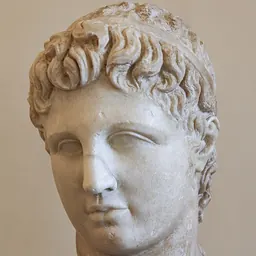
Dasharatha Maurya was the 4th Mauryan emperor from 232 to 224 BCE. He was a grandson of Ashoka the Great and is commonly held to have succeeded him as the Emperor of Magadha. Dasharatha presided over a declining imperium and several territories of the empire broke away from central rule during his reign. He had continued the religious and social policies of Ashoka. Dasharatha was the last Mauryan emperor to have issued imperial inscriptions—thus the last Mauryan emperor to be known from epigraphical sources.
Dasharatha died in 224 BCE and was succeeded by his cousin Samprati.
Background Dasharatha was a grandson of the Mauryan emperor Ashoka. He is commonly held to have succeeded his grandfather as Emperor of Magadha although some sources including the Vayu Purana have given different names and numbers of Maurya Emperors after Ashoka. The latter is described in the Vishnu Purana as the son and imperial successor of Suyashas (a son of Ashoka). In some of the sources the division is recorded as having been between Samprati and Dasharatha, the latter holding the eastern parts with the capital at Pataliputra and the former the western imperium with the capital at Ujjain. However, Smith also wrote that "there is no clear evidence to support [the] hypothesis."
The Vayu and Brahmanda Puranas mention three Mauryan rulers—Bandhupalita, Indrapalita and Dasona—whose identification is rather difficult.
Various dynasties of the south including the Satavahana had been vassals of the Mauryan Empire. These kingdoms are mentioned in Ashoka's edicts (256 BCE) and were considered part of the outer circle of the imperium—subject to the rule of the Mauryan Emperor, although doubtless enjoying a considerable degree of autonomy under their local rulers.
Religion
Ashoka had displayed divine support in his inscriptions; although a Buddhist ruler, he was called Devanampriya, which means "Beloved of the Gods" in Pali. The title of Devanampiya and religious adherence of the Mauryan ruler to Buddhism was continued by Dasharatha.
Dasharatha is known to have dedicated three caves in the Nagarjuni Hills to the Ajivikas. Three inscriptions at the caves refer to him as "Devanampiya" and state that the caves were dedicated by him shortly after his accession.
Nagarjuni caves inscriptions by Dasaratha Maurya
Dasaratha Maurya, Ashoka's grandson and regnal successor, wrote dedicatory inscriptions in the three forming the Nagarjuni group (Gopika, Vadathi and Vapiya caves) of the Barabar Caves. It is generally considered that their construction dates from his reign.
The three caves were offered to the Ajivikas upon the accession to the throne of Dasaratha, confirming that these were still active around 230 BCE, and that Buddhism was not the exclusive religion of the Mauryas at that time.
The three caves are also characterized by an extremely advanced finish of the granite walls inside, which again confirms that the technique of "Mauryan polish" did not die out with the reign of Ashoka.
Succession Samprati, who succeeded Dasharatha, was according to the Hindu Puranas, the latter's son and according to the Buddhist and Jain sources, Kunala's son (making him possibly a brother of Dasharatha). The familial relationship between the two is thus not clear although evidently they were closely related members of the imperial family.
Don’t just read it —
keep it.
Full-length biographies made to live with: read them, listen on the way to work, watch them tonight.
- E-book
- Audio
- Video
Instant download · yours to keep · every purchase keeps this site free
Important facts
People in Dasaratha Maurya's life
Named in this biography and alive at the same time

Related people
Same field, nearest in time



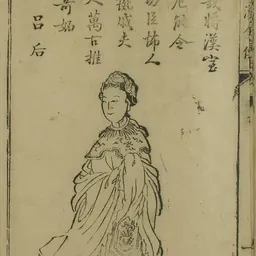
Contemporaries
People whose lives overlapped Dasaratha Maurya's
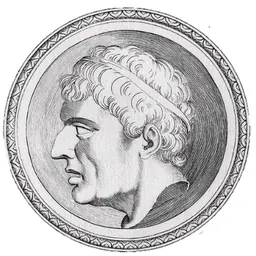
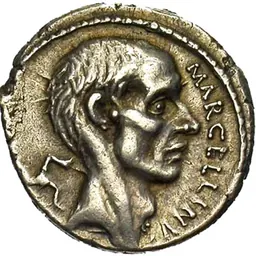
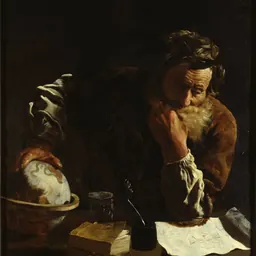
Frequently asked questions
Who was Dasaratha Maurya?
Mauryan emperor from c.232 to c.224 BCE
When was Dasaratha Maurya born?
Dasaratha Maurya was born in 252 BC.
When did Dasaratha Maurya die?
Dasaratha Maurya died in 224 BC.
What was Dasaratha Maurya's occupation?
Dasaratha Maurya was a ruler.
What nationality was Dasaratha Maurya?
Dasaratha Maurya's recorded nationality: Maurya empire.
Sources & further reading
Cite this page
APA: Biography.guide. (2026). Dasaratha Maurya. https://biography.guide/dasaratha-maurya/
MLA: "Dasaratha Maurya." Biography.guide, https://biography.guide/dasaratha-maurya/.
Chicago: "Dasaratha Maurya." Biography.guide. https://biography.guide/dasaratha-maurya/.
Data last updated: 2026-09-20 · Spot an error? Report a correction.
Page generated 2026-09-27 04:59 UTC