
About Dario DiFrancesco
Born 1948. Dario DiFrancesco is an Italian cardiologist, physiologist and university teacher.
Dario DiFrancesco (born 10 February 1948) is a Professor Emeritus (Physiology) at the University of Milano. In 1979, he and collaborators discovered the so-called "funny" (or "pacemaker") current in cardiac pacemaker cells, a new mechanism involved in the generation of cardiac spontaneous activity and autonomic regulation of heart rate. That initiated a new field of research in the heart and brain, where hyperpolarization-activated, cyclic nucleotide-gated (HCN) channels, the molecular components of "funny" channels cloned in the late 90's, are today known to play fundamental roles in health and disease. Clinically relevant exploitation of the properties of "funny" channels has developed a channel blocker with specific heart rate-slowing action, ivabradine, marketed for the therapy of coronary artery disease, heart failure and the symptomatic treatment of chronic stable angina.
Dario DiFrancesco is the 2008 recipient of the Grand Prix scientifique de la Fondation Lefoulon-Delalande of the Institute de France. These studies eventually led to developments of pharmacological and clinical relevance. As well as in cardiomyocytes, it opened a new field of research in neurons, where a similar current (hyperpolarization activated Ih) was described soon after the cardiac If.
The funny current and the new interpretation of cardiac pacemaking
By identifying in 1979 the If ("funny") pacemaker current in the sinus node, Dario DiFrancesco challenged the prevailing theory and proposed a novel mechanism to explain the origin of cardiac rhythm. Based on the discovery of the new "funny" channels, carrying an inward (mixed Na+ and K+) current and activating on hyperpolarization, he modified the concept of cardiac pacemaking by demonstrating that the universally accepted "pacemaker" theory of the time, attributed to the deactivation of an outward potassium current (IK2) in Purkinje fibres, was wrong and had to be turned upside-down. He showed that IK2 had been incorrectly interpreted for over a decade as a pure K+ current and was instead a disguised "funny" current, and pacemaking was not due to deactivation of the outward IK2, but to activation of the inward If. These results showed that the mechanism of pacemaker generation in Purkinje fibres and in sinoatrial node cells was the same, allowing for the first time an integrated view of pacemaking in the heart. and investigated its single-channel properties, providing first evidence for the smallest conductance (1 pS) channel recorded by patch-clamp. Using a macro-patch clamp technique, he showed for the first time that funny channels are directly activated by intracellular cAMP, a mechanism responsible for the If -mediated autonomic modulation of heart rate. The same modulatory mechanism was later confirmed in HCN channels. These experimental studies have been complemented by mathematical and modelling analyses demonstrating the role of If in pacemaker rhythm. In 1985, he developed with Denis Noble a theoretical model incorporating the If -based model of pacemaking and other new experimental results. The model allowed to interpret all experimental data, and represented the paradigm from which subsequent cellular models of the heart were developed. The 1985 model paper was selected in 2015 by the Royal Society, London, as one of the 33 most influential articles published by the Philosophical Transactions of the Royal Society in the 350 years since its foundation in 1665.
HCN channels
Following their cloning, DiFrancesco contributed to the molecular biological characterization of the hyperpolarization-activated, cyclic nucleotide-gated (HCN) family of channels responsible for If, analyzing their biochemical and pharmacological regulations. A blocker of the funny/HCN channels (ivabradine) approved in 2005 has proved efficacious in the treatment of coronary artery disease and heart failure by reducing cardiac frequency (and hence metabolic demand). HCN channels have also been identified as potential drug targets in the nervous system, which can help develop new ivabradine-derived drugs to treat neurological diseases like epilepsy, inflammatory, and neuropathic pain. Beyond heart and brain, HCN channels are in fact expressed in a much larger number of systems/organs than previously thought, where their action is still under investigation and where development of HCN isoform-specific drugs could help clarify their functional roles.
Career
1973–1974 - Teaching and research fellowship, Institute of General Physiology, Univ. Milano 1975–1980 - Research assistant, Institute of General Physiology, Univ. Milano 1976 - Postdoctoral fellow in Cambridge, The Physiological Laboratory (R.D. Keynes) 1977–1978 - Postdoc in cardiac electrophysiology in Oxford, Laboratory of Physiology (Denis Noble) 1979–1980 - Wellcome Trust Fellowship at Oxford University Laboratory of Physiology From 1978 - Visiting scientist for short periods in various university laboratories of physiology (Homburg/Saar, Paris XI, Tours) 1981–1986 - Assistant professor, Dept. of General Physiology and Biochemistry, Univ. Milano From 1986 - Periodically, visiting scientist at SUNY - Stony Brook, New York (Ira Cohen) 1986–2018 - Professor of physiology, Department of General Physiology and Biochemistry, then Department of Biosciences, University of Milano 1990–1996 - Periodically, visiting scientist and consultant, Department of Pharmacology of Columbia University, New York (Richard Robinson, Mike Rosen) From 1999 - Professor of physiology and biophysics at Vita-Salute University, San Raffaele Hospital, Milano From 2019 - Emeritus professor (physiology), University of Milan
Publications
Dario DiFrancesco's publication list includes more than 380 articles in academic journals including Nature, Science, Journal of Physiology, Journal of General Physiology, PNAS, Progress in Biophysics & Molecular Biology, Circulation, Circulation Research, New England Journal of Medicine, Journal of Molecular and Cellular Cardiology, European Heart Journal and others.
DiFrancesco's h-index is 78 and the number of citations is higher than 22000 (Google Scholar, 07/2022). He is a member of the Academia Europaea, of the Istituto Lombardo- Accademia di Scienze e Lettere and a Fellow of the IUPS Academy. 1994 - Prix Pr Pierre Rijlant Académie royale de Médecine de Belgique 1994 - Lectio Magistralis Annual Congress Italian Society of Physiology 2008 - Grand Prix Scientifique, Fondation Lefoulon-Delalande - Institut de France 2013 - Member of the "Istituto Lombardo- Accademia di Scienze e Lettere" 2013 - Lectio Magistralis Annual Congress Italian Society of Physiology 2015 - Magnes Lecture Prize, Israel Society of Physiology and Pharmacology 2015 - Emeritus Membership of the American Physiological Society 2017 - Carmeliet-Coraboeuf-Weidmann Prize Lecture at 41st EWGCCE Congress, Vienna 2017 - Fellow Membership Physiological Society UK 2019 - Emeritus Professor, University of Milano 2021 - Elected a Fellow of the International Union of Physiological Sciences (IUPS) Academy
Don’t just read it —
keep it.
Full-length biographies made to live with: read them, listen on the way to work, watch them tonight.
- E-book
- Audio
- Video
Instant download · yours to keep · every purchase keeps this site free
Important facts
People in Dario DiFrancesco's life
Named in this biography and alive at the same time
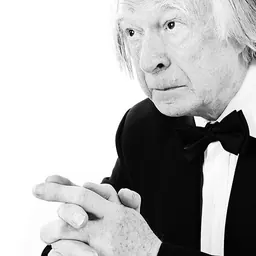
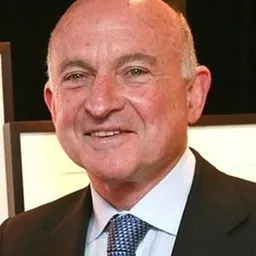


Related people
Same field, nearest in time
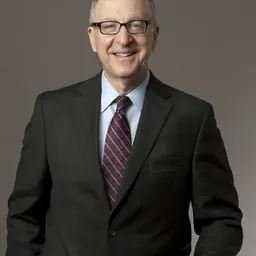


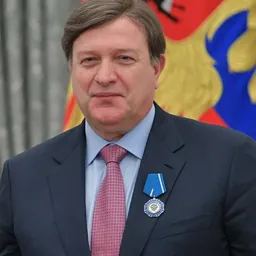

Contemporaries
People whose lives overlapped Dario DiFrancesco's


Frequently asked questions
Who is Dario DiFrancesco?
Italian cardiac physiologist
When was Dario DiFrancesco born?
Dario DiFrancesco was born on 10 February 1948 in Milan.
What is Dario DiFrancesco's occupation?
Dario DiFrancesco is a cardiologist, physiologist and university teacher.
What nationality is Dario DiFrancesco?
Dario DiFrancesco is Italian.
Sources & further reading
· Wikipedia: Dario DiFrancesco
Cite this page
APA: Biography.guide. (2026). Dario DiFrancesco. https://biography.guide/dario-difrancesco/
MLA: "Dario DiFrancesco." Biography.guide, https://biography.guide/dario-difrancesco/.
Chicago: "Dario DiFrancesco." Biography.guide. https://biography.guide/dario-difrancesco/.
Data last updated: 2026-09-20 · Spot an error? Report a correction.
Page generated 2026-09-27 05:20 UTC