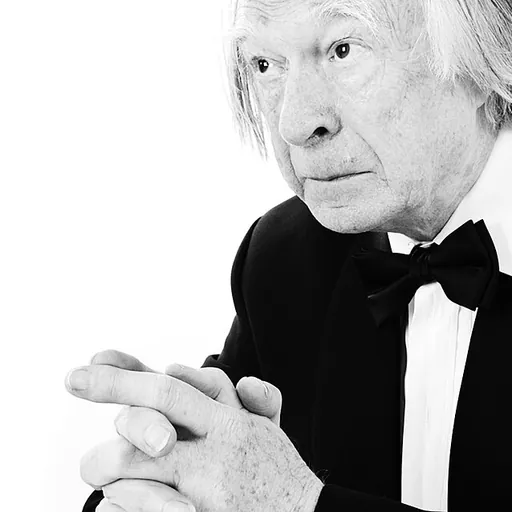
About Denis Noble
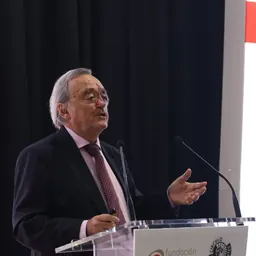
Born 1936. Denis Noble is a British biologist, bioinformatician, university teacher and physiologist.
Reductionism His 2006 book The Music of Life examines some of the basic aspects of systems biology, and is critical of the ideas of genetic determinism and genetic reductionism. He points out that there are many examples of feedback loops and "downward causation" in biology, and that it is not reasonable to privilege one level of understanding over all others.
He argues that "the paradigms for genetic causality in biological systems are seriously confused" and that "The metaphors that served us well during the molecular biological phase of recent decades have limited or even misleading impacts in the multilevel world of systems biology. New paradigms are needed if we are to succeed in unravelling multifactorial genetic causation at higher levels of physiological function and so to explain the phenomena that genetics was originally about."
Noble calls his multilevel account “biological relativity”. It holds that no organizational level—such as the gene, cell, organ or organism—automatically has privileged causal status, and that biological explanation may require interactions operating in both upward and downward directions between levels. The proposal has received both qualified support and criticism.
The Third Way of Evolution Noble has rejected natural selection as the primary mechanism of evolution, contrary to the longstanding consensus of evolutionary biologists, and has called for an extended evolutionary synthesis, known as The Third Way of Evolution (TWE), as a replacement for the modern synthesis.
He has argued that from research in epigenetics, acquired characteristics can be inherited and in contrast to the modern synthesis, genetic change is "far from random" and not always gradual. He has also claimed that the central dogma of molecular biology has been broken as an "embodiment of the Weismann Barrier", and a new synthesis will integrate research from physiology with evolutionary biology.
Noble and James A. Shapiro established The Third Way of Evolution (TWE) project in 2014. The TWE which is also known as the "Integrated Synthesis" shares many similarities with the extended evolutionary synthesis but is more radical in its claims. The difference between the extended synthesis and the TWE is that the latter calls for an entire replacement of the modern synthesis rather than an extension.
Publications Noble has published over 700 articles in academic journals, Science, PNAS, Journal of Physiology, Progress in Biophysics & Molecular Biology, and many articles in the national press. He is the (co-)author and/or editor of many books, including:
Historical reviews continue to use the Noble models as reference points in the development of mechanistic cardiac modelling, from early representations of Purkinje-fibre activity to models incorporating ion pumps, calcium handling and changing ionic concentrations. the Nahum Lecture at Yale in 1977 and the Ueda lecture at Tokyo University in 1985 and 1990. He was President of the Medical Section of the British Science Association 1991–92. Many further invited lectures during his election as Secretary-General (1993–2001) and President (2009–2017) of IUPS.
In 1979 he was elected a Fellow of the Royal Society. His nomination for the Royal Society reads:
He was elected an Honorary Member of the Royal College of Physicians in 1988 and an Honorary Fellow in 1994, an Honorary Member of the American Physiological Society in 1996 and of the Physiological Society of Japan in 1998. In 1989 he was elected a Member of the Academia Europaea. In 1998, he also became a founding Fellow of the Academy of Medical Sciences. In 1998 he was awarded a CBE. In 2021 he was elected a Fellow of the IUPS Academy. In 2022 he was elected a Fellow of The Linnean Society (FLS)
He has honorary doctorates from the University of Sheffield (2004), the Université de Bordeaux (2005) and the University of Warwick (2008).
He is an Honorary Foreign Member of the Académie Royale de Médecine de Belgique (1993), of the Istituto Lombardo Accademia di Scienze e Lettere, and received the Pavlov Medal of the Russian Academy of Sciences (2004). In 2022 he was elected Foreign Member of the Russian Academy of Sciences and was also awarded the Lomonosov Gold Medal.
Personal life
Noble was born in London in 1936 to working-class tailors, George and Ethel Noble.
He plays classical guitar and sings Occitan troubadour and folk songs (Oxford Trobadors ). In addition to English, he has lectured in French, Italian, Japanese and Korean.
In popular culture In 2011, Alison MacLeod's story, "The Heart of Denis Noble", featuring a fictionalised version of Denis Noble recovering from a heart attack, was shortlisted for the BBC National Short Story Award.
Don’t just read it —
keep it.
Full-length biographies made to live with: read them, listen on the way to work, watch them tonight.
- E-book
- Audio
- Video
Instant download · yours to keep · every purchase keeps this site free
Important facts
People in Denis Noble's life
Named in this biography and alive at the same time


Related people
Same field, nearest in time

Contemporaries
People whose lives overlapped Denis Noble's






Frequently asked questions
Who is Denis Noble?
British biologist
When was Denis Noble born?
Denis Noble was born on 16 November 1936 in United Kingdom.
What is Denis Noble's occupation?
Denis Noble is a biologist, bioinformatician, university teacher and physiologist.
What nationality is Denis Noble?
Denis Noble is British.
Sources & further reading
Cite this page
APA: Biography.guide. (2026). Denis Noble. https://biography.guide/denis-noble/
MLA: "Denis Noble." Biography.guide, https://biography.guide/denis-noble/.
Chicago: "Denis Noble." Biography.guide. https://biography.guide/denis-noble/.
Data last updated: 2026-09-23 · Spot an error? Report a correction.
Portrait: Wikimedia Commons · author & licence
Page generated 2026-09-27 05:07 UTC