
Daniel Robertson
British military officer in Canada
About Daniel Robertson
Lived 1735 – 1810 (aged 74–75).
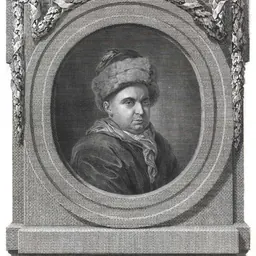
Colonel Daniel Robertson ( 1733 – 5 April 1810) was an officer in the British Army in North America, commandant of the British post at Michilimackinac, and a landowner in Chatham Township, Canada. Born in Scotland, he first joined the 42nd Regiment of Foot, also known as the "Black Watch," and was present at the British capture of Montreal in 1760, as well as the invasion of Martinique in 1762. During the American Revolutionary War, he was an officer in the 84th Regiment of Foot, another regiment of Scots known as the Royal Highland Emigrants. In 1779, he was appointed commandant of Fort Osgewatchie and oversaw Native American raids on American settlements on the Mohawk River.
From 1782, Robertson served as commandant of Fort Michilimackinac (later known as Fort Mackinac). He freed his black slaves, Jean Bonga and Marie-Jeanne Bonga, before leaving Mackinac Island for Montreal in 1787. "Robinson's Folly" at Mission Point on Mackinac Island was originally called "Robertson's Folly" after Captain Robertson.
Between 1763 and 1773, they had four children who survived to adulthood, including daughters Margaret, Charlotte and Elizabeth, and a son named John. Marie-Louise died in 1773.
Medical practice After leaving the 42nd Regiment, Daniel Robertson practiced medicine in Montreal and was one of the few British represented in the professions in Montreal.
Appointment as justice In 1765, Robertson was appointed as a justice of the peace in Montreal. Through the 1760s, he was a highly active magistrate.
On 18 September 1782, Sinclair left to settle his financial affairs, and Robertson formally assumed the post of commandant. They had grown accustomed to a certain level of British hospitality, and Robertson felt compelled to distribute gifts to them rather than anger such a large group.
In April 1783, he commissioned George McBeath and Charles-Michel Mouet de Langlade to visit Native American leaders around Prairie du Chien and spread the word that peace between the British and the American colonies was imminent, and that the Indians should end any inter-tribal hostilities. Robertson also sought to discourage their allies from coming to Michilimackinac, so that he would not have to continue supplying them with food, provisions and arms.
Mackinac Island after the war
Upon learning that Mackinac Island would become part of the United States, Robertson grew concerned that he would need to evacuate the fort. In 1784, Robertson and McBeath searched for a new site for a British post on the north shore of Lake Superior. Robertson recommended a location near present-day Thessalon, Ontario to Governor Haldimand and also suggested engaging his son-in-law, Montreal merchant Daniel Sutherland, to supply building materials for a new fort. In 1784, Robertson was succeeded as commandant by Lieutenant George Clowes, However, after a few years, part of the cliff including the summer house collapsed to the base of the rocks, leaving a mass of debris on the beach. For over a century, the cliff was called "Robertson's Folly" but eventually became known as "Robinson's Folly," a corruption of Robertson's name.
Relationship to Bonga family In 1781, Jean Bonga and Marie-Jeanne Bonga were captured in the Illinois country as prisoners during the American Revolutionary War. According to one of their grandchildren, they were probably then sold to Indian traders at Mackinac. After arriving at Mackinac, Captain Robertson retained them as slaves and wrote that he refused to return them to "a set of Spanish rascals."
Before leaving Michilimackinac in 1787, Robertson freed Jean and Marie-Jeanne Bonga, who became well known tavern keepers on Mackinac Island. Their children and grandchildren went on to become successful in the North American fur trade. Robertson had bought him in Martinique during the Seven Years' War. However, Robertson insisted that Lamour had to pay for the release of his wife Catherine.
On 3 December 1787, Lamour paid Robertson £100 for Catherine – the highest recorded price for a female slave in Montreal. Lamour most likely borrowed money to raise the sum, which meant that Catherine technically became her husband's slave and subject to seizure by his creditors in payment of his debt. Hilaire finally succeeded in emancipating Catherine Lamour on 26 December 1787.
Promotion to colonel After his return to Montreal, Robertson was promoted to the rank of major in the British Army in 1790. In February 1793, he was appointed captain in the 60th Regiment of Foot and became a lieutenant-colonel in March 1794. He finally advanced to the rank of colonel on 1 January 1798.
In 1793, Robertson was elected an honorary member of the Beaver Club, an exclusive gentlemen's club for fur traders in Montreal. In 1799, he was reappointed as justice of the peace, but appears not to have been active.
Land ownership By 1806, Robertson had acquired over 5,000 acres of land in Chatham Township on the east bank of the Ottawa River. He invested in developing his land to attract settlers. By 1804, there were 43 families comprising 170 people living on his properties. In 1806, he gave 96 acres of land to Anglican missionary Richard Bradford for the establishment of a church in the area.
However, Robertson's financial situation was precarious. In 1802, 1804 and 1806, Sheriff Edward William Gray seized much of Robertson's property in Chatham and on the Serpentine River. In 1810, Bradford purchased a further 3,000 acres from Robertson's estate.
Death Due to his declining health, in December 1809, Robertson went to live with his daughter Margaret and Daniel Sutherland. He died on 5 April 1810 in Montreal and was buried with military honours at the Scotch Presbyterian Church.
Don’t just read it —
keep it.
Full-length biographies made to live with: read them, listen on the way to work, watch them tonight.
- E-book
- Audio
- Video
Instant download · yours to keep · every purchase keeps this site free
Important facts
People in Daniel Robertson's life
Named in this biography and alive at the same time


Contemporaries
People whose lives overlapped Daniel Robertson's





Frequently asked questions
Who was Daniel Robertson?
British military officer in Canada
When was Daniel Robertson born?
Daniel Robertson was born in 1735.
When did Daniel Robertson die?
Daniel Robertson died on 5 April 1810.
Sources & further reading
· DBpedia: Daniel Robertson (British Army officer)
Cite this page
APA: Biography.guide. (2026). Daniel Robertson. https://biography.guide/daniel-robertson/
MLA: "Daniel Robertson." Biography.guide, https://biography.guide/daniel-robertson/.
Chicago: "Daniel Robertson." Biography.guide. https://biography.guide/daniel-robertson/.
Data last updated: 2026-09-20 · Spot an error? Report a correction.
Page generated 2026-09-27 05:28 UTC