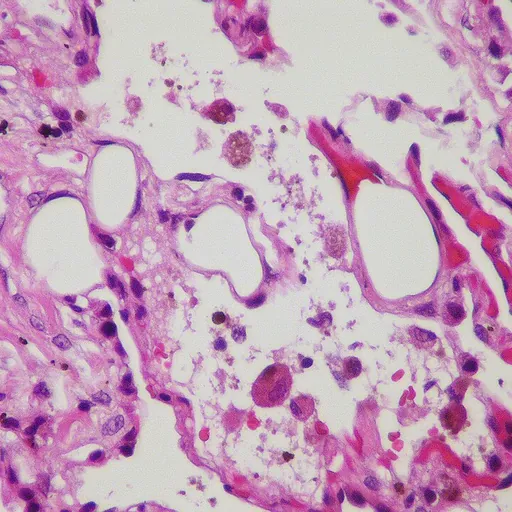
Daniel Hale Williams
African American cardiologist who performed the first documented, successful pericardium surgery in the world
About Daniel Hale Williams
Lived 1858 – 1931 (aged 73). Daniel Hale Williams was an American cardiologist and surgeon, known for Heart surgery.
Daniel Hale Williams (January 18, 1856 – August 4, 1931) was a Black American surgeon and hospital founder. He founded Provident Hospital in 1891, which was the first non-segregated hospital in the United States. He is known for being the first to successfully perform a cardiac surgery—specifically, a procedure on the pericardium, the double-layered, fluid-filled sac that encloses the heart and the roots of the great vessels. The pericardium anchors the heart, protects it from infection and trauma, and reduces friction during its constant beating by providing lubrication.
In 1913, Williams was elected as the only African-American charter member of the American College of Surgeons. His mother, Sarah Price, was a mixed race American. His Williams family great grandfather was listed in the 1790 U. S. census for Philadelphia City, as 'other free,' a designation that included black Americans.
The fifth born child, Williams lived with his parents, a brother and five sisters. His family eventually moved to Annapolis, Maryland. Shortly after when Williams was nine, his father died of tuberculosis. Williams' mother realized she could not manage the entire family and sent some of the children to live with relatives. Williams was apprenticed to a shoemaker in Baltimore, Maryland but ran away to join his mother, who had moved to Rockford, Illinois. He later moved to Edgerton, Wisconsin, where he joined his sister and opened his own barber shop. After moving to nearby Janesville, Wisconsin, Williams became fascinated by the work of a local physician and decided to follow his path.
He began working as an apprentice to Henry W. Palmer, studying with him for two years. In 1880, Williams entered Chicago Medical College, now known as Northwestern University Medical School. His education was funded by Mary Jane Richardson Jones, a prominent activist and leader of Chicago's black community. He earned a Doctor of Medicine from Northwestern University Medical School in 1883.
Career After graduation, he opened a private medical practice in Chicago, Illinois.
From 1885 to 1888, Williams worked as a demonstrator in anatomy at Northwestern.
Provident Hospital In 1891, Williams founded the Provident Hospital, which also provided a training residency for doctors and training school for nurses in Chicago. This was established mostly for the benefit of African-American residents, to increase their accessibility to health care, but its staff and patients were integrated from the start.
In 1892, he endorsed the application of Emma Ann Reynolds, who was a graduate of the nurses training school at Provident, to Northwestern University Woman’s Medical School. and Dominique Jean Larrey in 1810.
On July 10, 1893, Williams repaired the torn pericardium of a knife wound patient, James Cornish. It was not reported until 1897.
Public and teaching posts In 1893, during the administration of President Grover Cleveland, Williams was appointed surgeon-in-chief of Freedman's Hospital in Washington, D.C., a post he held until 1898. That year he married Alice Johnson, who was born in the city and graduated from Howard University, and moved back to Chicago. In addition to organizing Provident Hospital, Williams also established a training school for African-American nurses at the facility. In 1897, he was appointed to the Illinois Department of Public Health, where he worked to raise medical and hospital standards.
Williams was a Professor of Clinical Surgery at Meharry Medical College in Nashville, Tennessee, and was an attending surgeon at Cook County Hospital in Chicago. He worked to create more hospitals that admitted African Americans. In 1895 he co-founded the National Medical Association for African-American doctors, and in 1913 he became a charter member and the only African-American doctor in the American College of Surgeons.
Death His wife, Alice Johnson, died in 1924. His retirement home was in Idlewild, Michigan, a black community.
Williams was baptized a Catholic by Fr Joseph Eckert, SVD on his deathbed. He left $2,500 (worth $44,686 in 2021) in his will to St. Elizabeth's Church in Chicago. Williams was buried at Graceland Cemetery in Chicago's Uptown neighborhood.
Legacy and impact In the 1890s several attempts were made to improve cardiac surgery. On September 6, 1891, the first successful pericardial sac repair operation in the United States of America was performed by Henry C. Dalton of Saint Louis, Missouri. The first successful surgery of the heart, performed without any complications, was by Ludwig Rehn of Frankfurt, Germany, who repaired a stab wound to the right ventricle on September 7, 1896. Despite these improvements, heart-related surgery was not widely accepted in the field of medical science until during World War II. Surgeons were forced to improve their methods of surgery in order to repair severe war wounds.
Honors Williams received honorary degrees from Howard and Wilberforce Universities, was named a charter member of the American College of Surgeons, and was a member of the Chicago Surgical Society. A Pennsylvania State Historical Marker was placed at U.S. Route 22 eastbound (Blair St., 300 block), Hollidaysburg, Pennsylvania, to commemorate his accomplishments and mark his boyhood home. His home in Chicago is now known as the Daniel Hale Williams House and was added to the National Register of Historic Places in 1975. His retirement home in Idlewild was given a historical marker by the state of Michigan in 2008. Several schools are named in his honor, including the Daniel Hale Williams Preparatory School of Medicine in Chicago; Daniel Hale Williams Elementary in Gary, Indiana; P.S. 307 Daniel Hale Williams in Brooklyn; and M.S. 180 Dr. Daniel Hale Williams in the Bronx. Williams Park in Chicago is also named in his honor.
Representation in other media The Stevie Wonder song "Black Man" honors the achievements of Williams, among others. Tim Reid Plays Williams in the TV series Sister, Sister season 5 episode 18 "I Have a Dream" (February 25, 1998). In 2002, scholar Molefi Kete Asante listed Daniel Hale Williams on his list of 100 Greatest African Americans. His life (along with Ulysses Grant Dailey) is retold in the 1948 radio drama "The Heart of George Cotton", presented by Destination Freedom The Kendrick Lamar song “Prayer” references Dr. Daniel Hale Williams’ historic achievement as the first person to successfully perform open-heart surgery.
Don’t just read it —
keep it.
Full-length biographies made to live with: read them, listen on the way to work, watch them tonight.
- E-book
- Audio
- Video
Instant download · yours to keep · every purchase keeps this site free
Important facts
People in Daniel Hale Williams's life
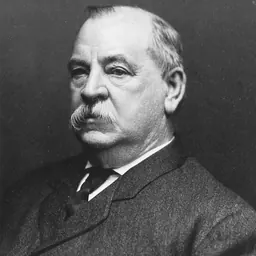
Named in this biography and alive at the same time




Related people
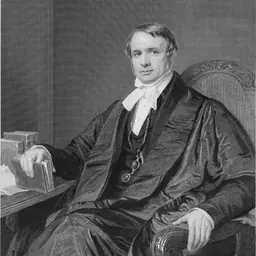
Same field, nearest in time
Contemporaries
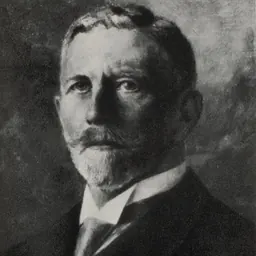
People whose lives overlapped Daniel Hale Williams's

Frequently asked questions
Who was Daniel Hale Williams?
African American cardiologist who performed the first documented, successful pericardium surgery in the world
When was Daniel Hale Williams born?
Daniel Hale Williams was born on 18 January 1858 in Hollidaysburg.
When did Daniel Hale Williams die?
Daniel Hale Williams died on 4 August 1931 in Idlewild.
What was Daniel Hale Williams's occupation?
Daniel Hale Williams was a cardiologist and surgeon.
What was Daniel Hale Williams known for?
Daniel Hale Williams was known for Heart surgery.
What nationality was Daniel Hale Williams?
Daniel Hale Williams was American.
Sources & further reading
· Wikipedia: Daniel Hale Williams
· DBpedia: Daniel Hale Williams
Cite this page
APA: Biography.guide. (2026). Daniel Hale Williams. https://biography.guide/daniel-hale-williams/
MLA: "Daniel Hale Williams." Biography.guide, https://biography.guide/daniel-hale-williams/.
Chicago: "Daniel Hale Williams." Biography.guide. https://biography.guide/daniel-hale-williams/.
Data last updated: 2026-09-23 · Spot an error? Report a correction.
Portrait: Wikimedia Commons · author & licence
Page generated 2026-09-27 05:07 UTC