
About Daniel Govan
Lived 1829 – 1911 (aged 81). Daniel Govan was an American military leader, soldier and military personnel.
Daniel Chevilette Govan (July 4, 1829 – March 12, 1911) was an American miner, planter, and soldier. He served as a Confederate general during the American Civil War, prominent in campaigns and battles in the Western Theater.
Early life and career Daniel C. Govan was born in Northampton County, North Carolina. His father was U.S. Representative Andrew R. Govan from South Carolina, who in 1832 relocated the family to Marshall County, Mississippi, where he was raised. Govan received his primary education from private tutoring and then attended South Carolina College (modern day University of South Carolina) graduating in 1848.
Govan participated in the 1849 California Gold Rush along with his cousin Benjamin McCulloch, who would also become a Confederate general. In 1850 Govan was elected deputy sheriff of Sacramento, and two years later he returned to Mississippi and took up work as a planter. In December 1853 Govan married Mary Fogg Otey, the daughter of prominent theologian James Hervey Otey, with whom he would have 14 children. In 1860 he moved to Helena, Arkansas, and again became a planter.
Civil War service At the beginning of the American Civil War in 1861, Govan chose to follow his home state and the Confederate cause. He raised a company of men and in May he was appointed a captain in the Arkansas State forces. On June 5 he was elected lieutenant colonel in the 2nd Arkansas Infantry Regiment, and on January 28, 1862, was promoted to colonel and given command of the regiment.
Govan and his men participated in the Battle of Shiloh in April 1862. Following Shiloh, Govan took part in Edmund Kirby Smith's Kentucky Campaign and fought at the Battle of Perryville in October. His command consisting of the 5th, 6th, 7th, and 8th Arkansas Infantry Regiments. Govan's brigade participated in the Atlanta campaign, and he received particular mention for his conduct at the Battle of Pickett's Mill in May 1864. Govan was captured after a fierce battle at the Battle of Jonesborough on September 1, but was exchanged for George Stoneman on October 2.
Govan served the remainder of the war with the Army of Tennessee, participating in the Franklin-Nashville Campaign and then the Carolinas campaign. Govan surrendered in 1865 with Gen. Joseph E. Johnston at Greensboro, North Carolina. He was paroled from there on May 1 and was pardoned by the U.S. Government on December 12.
Postbellum career Following the war, Govan returned home and resumed farming. He later served as the Indian agent at the Tulalip Agency in the state of Washington in 1894. Govan died in 1911 at the home of one of his children in Memphis, Tennessee. His body was brought to Holly Springs, Mississippi, and was buried at the city's Hillcrest Cemetery.
Don’t just read it —
keep it.
Full-length biographies made to live with: read them, listen on the way to work, watch them tonight.
- E-book
- Audio
- Video
Instant download · yours to keep · every purchase keeps this site free
Important facts
People in Daniel Govan's life
Named in this biography and alive at the same time
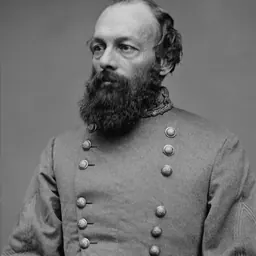
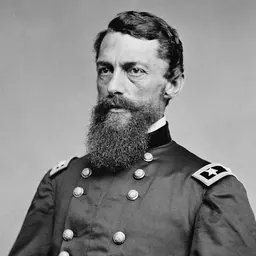
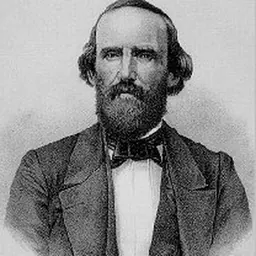
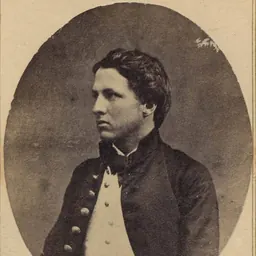
Related people
Same field, nearest in time



Contemporaries
People whose lives overlapped Daniel Govan's




Frequently asked questions
Who was Daniel Govan?
Confederate general
When was Daniel Govan born?
Daniel Govan was born on 4 July 1829 in Northampton County.
When did Daniel Govan die?
Daniel Govan died on 12 March 1911 in Memphis.
What was Daniel Govan's occupation?
Daniel Govan was a military leader, soldier and military personnel.
What nationality was Daniel Govan?
Daniel Govan was American.
Sources & further reading
Cite this page
APA: Biography.guide. (2026). Daniel Govan. https://biography.guide/daniel-govan/
MLA: "Daniel Govan." Biography.guide, https://biography.guide/daniel-govan/.
Chicago: "Daniel Govan." Biography.guide. https://biography.guide/daniel-govan/.
Data last updated: 2026-09-20 · Spot an error? Report a correction.
Page generated 2026-09-27 05:24 UTC