
About Dalva de Oliveira
Lived 1917 – 1972 (aged 55). Dalva de Oliveira was a Brazilian singer and composer.
Dalva de Oliveira or Vicentina de Paula Oliveira (May 5, 1917 – August 31, 1972) was a Brazilian singer and one of "divas" of the "Radio Era." Her greatest hits included "Segredo" (Secret), "Tudo acabado" (It's All Over) (1950), "Ave Maria" (1950), and "Teus olhos verdes" (Your Green Eyes) (1961). In addition, she recorded frequently with her son Pery Ribeiro, from her marriage with composer Herivelto Martins. She died from internal bleeding, probably caused by cancer.
Life and career De Oliveira was born in Rio Claro, São Paulo, Brazil. Her father was a carpenter and semi-professional musician, playing clarinet and saxophone with a group called Os Oito Batutas (the Eight Batons). He died when Dalva was just eight years old, and, as a result, Dalva and her three sisters were placed into an orphanage, where Dalva remained for three years. At the orphanage, Dalva learned to play piano and organ, as well as choral singing. De Oliveira left the orphanage due to an illness, and went to live with her mother in the city of São Paulo.
In 1933, while still a teenager, de Oliveira began working as a singer, touring (together with her mother) with a group led by Antônio Zovetti. Thereafter, de Oliveira spent a year as a regularly featured singer on Rádio Mineira in the state of Minas Gerais. Hoping to achieve success on a larger stage, de Oliveira and her mother moved to Rio de Janeiro. At first, de Oliveira had to work in a factory, while her mother worked as a cleaning woman. In 1936, however, she was hired by Rádio Mayrink Veiga, the most powerful broadcaster in Rio at that time.
De Oliveira began working with Herivelto Martins and Francisco Sena, whose singing duo Preto e Branco (Black and White) was already popular. In 1936, de Oliveira and Martins married. The three renamed the group Trio de Ouro (Golden Trio). The trio performed and recorded together until 1948. In 1949, de Oliveira separated from Martins. The couple's separation and divorce was prolonged, bitter, and public. Their dispute and mutual accusations were featured not only in press coverage, but in the lyrics of songs recorded by each of them. When she left Martins, one part of the public viewed de Oliveira as a fallen woman; another part, as a rebel and hero. De Oliveira was quoted as saying: "I had everything: a home, husband, children, career, and I left that security in order to gain my freedom, to regain myself as a woman." Author Maria Hupfer wrote of her: "Dalva became the idol of the prostitutes, mistresses, and homosexuals, and was excoriated by housewives and family men."
Death She died of internal bleeding because of cancer in her esophagus.
Selected filmography Berlin to the Samba Beat (1944) Snow White and the Seven Dwarfs (Brazilian dubbing) Snow White Speaking (1938) Pinocchio (Brazilian dubbing) The Blue Fairy (1940) Fun and Fancy Free (Brazilian dubbing) Singing Harp (1947)
Don’t just read it —
keep it.
Full-length biographies made to live with: read them, listen on the way to work, watch them tonight.
- E-book
- Audio
- Video
Instant download · yours to keep · every purchase keeps this site free
Important facts
People in Dalva de Oliveira's life
Named in this biography and alive at the same time



Related people
Same field, nearest in time
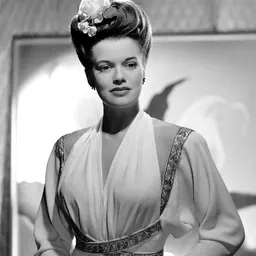


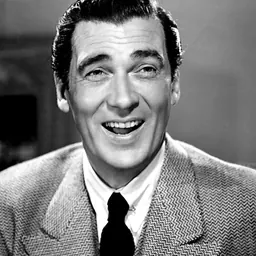

Contemporaries
People whose lives overlapped Dalva de Oliveira's

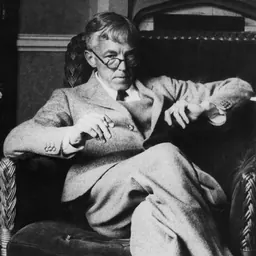
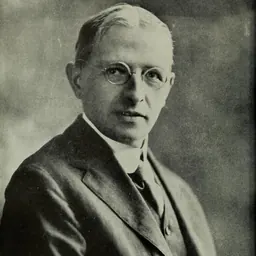
Frequently asked questions
Who was Dalva de Oliveira?
Brazilian singer (1917–1972)
When was Dalva de Oliveira born?
Dalva de Oliveira was born on 5 May 1917 in Rio Claro, São Paulo.
When did Dalva de Oliveira die?
Dalva de Oliveira died on 31 August 1972 in Rio de Janeiro.
What was Dalva de Oliveira's occupation?
Dalva de Oliveira was a singer and composer.
What nationality was Dalva de Oliveira?
Dalva de Oliveira was Brazilian.
Sources & further reading
· Wikipedia: Dalva de Oliveira
Cite this page
APA: Biography.guide. (2026). Dalva de Oliveira. https://biography.guide/dalva-de-oliveira/
MLA: "Dalva de Oliveira." Biography.guide, https://biography.guide/dalva-de-oliveira/.
Chicago: "Dalva de Oliveira." Biography.guide. https://biography.guide/dalva-de-oliveira/.
Data last updated: 2026-09-20 · Spot an error? Report a correction.
Page generated 2026-09-27 05:26 UTC