
About Dalpalan
Born 1966. Dalpalan is a South Korean composer, singer-songwriter, film score composer and music director.
Kang Ki-young (born 16 July 1966), known professionally as Dalpalan, is a South Korean film score composer and music director. He was a first-generation Korean heavy metal and electronic musician and a former member of the bands Sinawe, H2O and Pipi Band.
He began making film music in 1997 with the film "Bad Movie" and made his full-fledged debut two years later with the film "Lies" (1999). In 2002, Dalparan, Jang Young-gyu, Bang Jun-seok, and Lee Byeong-hoon established the film music group "Pitch Present." Dalparan frequently collaborates with musician Jang Young-gyu, a fellow member of Pitch Present, on several film scores, including A Bittersweet Life (2005), The Good, the Bad, the Weird (2008), The Front Line (2011), The Thieves (2012), Assassination (2015), and The Wailing (2016). As music director he is also known for his work in the film Vanishing Time: A Boy Who Returned (2017), Believer (2018), Samjin Company English Class (2019), and Phantom (2023).
Early life Dalpalan was born on 16 July 1966 as Kang Ki-young in Seoul. He attended Yongsan High School. In high school, he became close friends with Shin Dae-cheol, son of the legendary singer-songwriter Shin Joong-hyun.
Career Early career as band musician After graduating from high school, Kang Ki-young started his music career as a bassist for the band Little Sky (1986) with Lee Ho-gyu, Lee Geun-hyung, and Kim Jong-seo. Kang then joined the heavy metal band Sinawe with Shin Dae-cheol (guitar), Kim Jong-seo, and Kim Min-ki. He left during the recording of their first album, but later returned for their second.
He then formed the band H2O with Kim Min-gi (drums) and Park Hyun-jun (guitar) and did first album Don't Worry. He worked on the second and third albums of H2O, which had an alternative genre. He stopped promoting with H2O in 1993 as he no longer found rock music appealing. He expressed concerns about the authoritarian spirit of rock. In 1994, he spent a year in Paris, France to relax and pursue painting. It was during this time that he discovered techno music, which was booming in Europe. He realized that he could become disconnected from the international music scene if he didn't adapt to the changing trends.
After coming home to Korea, in 1995, Dalpalan formed the neo-punk a Pipi Band with guitarist Park Hyeon-joon, whom he met at H2O, and experimented with punk music.
After Lee Yoon-jeong's departure, the band changed its name to "Pippi Long Stocking with Goguma (Kwon Byeong-jun)" and continued performing. However, their unconventional actions, such as stopping performances and spitting at a camera during a live music ranking program, led to a ban from future appearances. The band eventually disbanded. Despite their short-lived existence, Pippi Long Stocking's musical experiments had a lasting impact on the culture of the time, introducing punk to a music industry dominated by ballads and dance music, incorporating techno into songs such as 'Strawberry'.
Techno and film music In late 1997, Kang Ki-young became deeply engaged with techno music. At that time, there were only around a dozen DJs active in the Hongdae area, most of whom were either night club DJs or rock cafe DJs, excluding those focused on hip-hop. Around this same period, techno DJs began to emerge, with musicians gradually getting involved in the scene casually for enjoyment. Prior to this, he had considered trying his hand at DJing and ultimately decided to pursue it. He selected the stage name 'Dalparan,' which derives from 'blue moon' in Korean, reversing the order of the words to create a more melodic-sounding name in the Korean language.
The domestic techno scene was lacking in the late 1990s. Techno clubs near Hongik University were not established, and even Korea's largest PC communication techno club, '21st Century Groove' (Hitel), only had a few visitors each day. The first techno performance at 'Master Plan' near Hongik University in late 1997 was met with criticism from attendees who found the repetitive beats without lyrics unappealing. Dalparan experienced the challenges of the underground scene firsthand, realizing the difficulties of being a pioneer in a market with few consumers and no institutional support. Dalparan emphasized the need for collaboration between different music scenes, but lamented the lack of opportunities for emerging artists due to limited genre representation on mainstream media like TV.
In 1998, Dalparan released what is considered the first techno solo album to come out of Korea, titled 'Whistle Star'.
Subsequently, Dalparan made his official debut as a music director with Jang Sun-woo's Lies in 1999. As a 'techno evangelist,' Dalparan incorporated techno music into his debut film. Jang Young-gyu from Fisherman Project and Inalchi, and Lee Byung-hoon from the synth-pop band Lizard. Peach Project was a kind of loose community brought together by their shared interests. Gradually, the Peach Project began to gain recognition in the film industry, as this was a time when Korean films were entering a revival period.
In 2002, a planner named Jang Min-seung proposed a meeting with them. Together, they created a unique music space in Gimpo and established the film music company "Peach Present" (복숭아 프레젠트).
In 2005, He worked with Jang Young-gyu as music directors for Kim Jee-woon's film A Bittersweet Life (2005).
In 2007, Pippi Band's first album, "Cultural Revolution," was selected as the 51st in the top 100 Korean popular music albums by Kyunghyang Shinmun and the music-specialized webzine 'Heart Network.' Most of the tones used in his techno music are psychedelic, and he often uses sharp and aggressive tones on expensive vintage electronic instruments such as Waldorf and Roland TB-303.
In 2009, Techno music finally gained popularity in Korea. Techno DJ 'Dalparan' played a key role in transforming techno, a once vague concept, into familiar music. As a leading member of 'Aurasoma', a DJ group known for techno parties, Dalparan also opened a techno club called '108' near Hongik University and hosted a release party for 'techno@kr', a compilation album featuring techno tracks by emerging artists.
In 2015, The Pippi Band reunited to celebrate their 20th anniversary with the release of EP album "Pppb". Their former manager, now a prominent figure in pop music, proposed releasing an album to mark the occasion.
In 2016, Dalparan and Jang Young-gyu participated in the exhibition Delusion Earth with sound work. He also served as judge for the 'World Music Film Trends' section of the international competition section of the 12th Jecheon International Music and Film Festival.
Although he participated in some of the music for the SBS drama Big Issue in 2019, Mine is the first time he has overseen the overall music for a drama. Followed by Kingdom Season 2.
In 2020, Bang Jun-seok, Kim Tae-seong, and Dalparan joined The Audio Cinema Series (planned by Studio N).
In 2021, Dalparan, who created Samjin Company English Class OST with the atmosphere of the 90s, including electronic music, techno, and disco, from the opening to the ending, received a music award in Blue Dragon Film Awards.
Discography Albums 1987 Sinawi 2nd album "Down And Up" 1991 H2O 2nd album "Don't worry" 1993 H2O 3rd album "Today I" 1995 Pippi Band 1st album "Cultural Revolution [문화혁명]" 1996 Pippi Band's 2nd album "Impossible Mission [불가능한 작전]" 1996 Pippi Band Remake "Red Bean Fish Buns [붕어빵]" 1997 Pippi Longstocking 3rd album "One Way Ticket [원웨이 티켓]" 1998 Dalparan 1st album "Whistle Star" 2001 Toy Elephant Monk "A fairy tale book" 2004 Dalparan & Byeongjun 1st album "Imitation Boy" 2004 Pippi Longstocking "The Complete Best [삐삐밴드 삐삐롱스타킹 The Complete Best]" 2015 Pippi Band 20th anniversary EP album "Pppb"
Singles 1997 Pippi Longstocking "The Fool Bus"
Contributions 1997 Lunchbox Commandos 1st album 《Delicious Omnibus Lunchbox Commandos》 2002 《A New World of Music Invited by Yoo Hee-yeol》 (11. Rain) 2005 《Korean Traditional Music Festival Commemorative Album》 (10. 2005 Kwaejinachingchingnane) 2005 《Eastronika Episode.1》 (15. Love)
Scores Short film +Short film credits 2004 Three... Extremes 쓰리, 몬스터 2006 Fangs 송곳니 Goodbye Children 굿바이 칠드런 2011 Dream the Good Dream 좋은 꿈 꾸세요
Feature film
Television +Series credits YearTitleNotesEnglishOriginal 2020 Kingdom Season 2 킹덤 2021 Kingdom Ashin of the North 킹덤 2021 Mine 마인 Secret Royal Inspector & Joy 어사와 조이2023 See You in My 19th Life 이번 생도 잘 부탁해2024 Moving 무빙 2025 Romantics Anonymous 匿名の恋人たち Mercy for None광장Aema애마Tempest북극성With Jung Jae-ilTyphoon Family태풍상사2026Phantom Lawyer신이랑 법률사무소Mad Concrete Dreams대한민국에서 건물주 되는 법Soul Mateソウルメイト
Accolades Awards and nominations
Listicles
Don’t just read it —
keep it.
Full-length biographies made to live with: read them, listen on the way to work, watch them tonight.
- E-book
- Audio
- Video
Instant download · yours to keep · every purchase keeps this site free
Important facts
People in Dalpalan's life
Named in this biography and alive at the same time

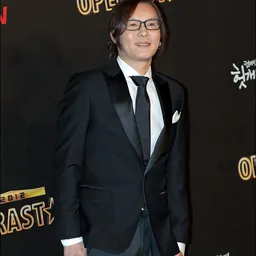




Related people
Same field, nearest in time




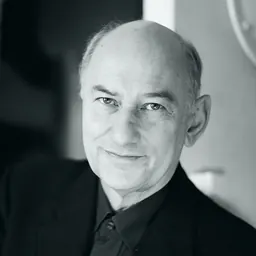
Contemporaries
People whose lives overlapped Dalpalan's


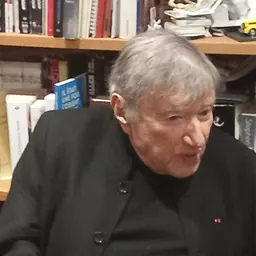

Frequently asked questions
Who is Dalpalan?
South Korean composer
When was Dalpalan born?
Dalpalan was born on 16 July 1966 in Seoul.
What is Dalpalan's occupation?
Dalpalan is a composer, singer-songwriter, film score composer and music director.
What nationality is Dalpalan?
Dalpalan is South Korean.
Sources & further reading
Cite this page
APA: Biography.guide. (2026). Dalpalan. https://biography.guide/dalpalan/
MLA: "Dalpalan." Biography.guide, https://biography.guide/dalpalan/.
Chicago: "Dalpalan." Biography.guide. https://biography.guide/dalpalan/.
Data last updated: 2026-09-20 · Spot an error? Report a correction.
Page generated 2026-09-27 05:18 UTC