
Dally Messenger
Australian rugby union and rugby league footballer
About Dally Messenger
Lived 1883 – 1959 (aged 76). Dally Messenger was a New Zealand rugby league player and rugby union player.
Herbert Henry "Dally" Messenger, (12 April 1883 – 24 November 1959) was an Australian rugby league and rugby union footballer. One of Australia's first professional rugby footballers, he is recognised as one of the greatest-ever players in either code. He played for New South Wales in the first match run by the newly-created New South Wales Rugby Football League, which had just split away from the established New South Wales Rugby Football Union.
Sometimes nicknamed "The Master", Messenger had a stocky build, and while standing only about in height, he was a powerful runner of the ball and a solid defender. According to his peers, the centre's greatest attributes were his unpredictability and astonishing physical co-ordination, coupled with an ability to kick goals from almost any part of the ground. He was a teetotaller and non-smoker during his career and other than breakfast, Messenger would rarely eat before a match.
Early life Messenger was born in the Sydney waterfront suburb of Balmain, New South Wales, and grew up on the southern shores of Sydney Harbour at Double Bay, where his English-born father, Charles Amos Messenger, a champion sculler, owned a boat shed.
Dally's grandfather James Messenger was barge-master to Queen Victoria on the River Thames, world champion sculler (1854-57) and a highly regarded boat-builder, including the Lady Alice for Henry Morton Stanley's second African expedition. Dally was one of eight children. His younger brother by seven years, Walter (Wally) also became an Australian representative rugby league footballer.
In Sydney, Messenger attended Double Bay Public School in the city's eastern suburbs. It was here that he initially honed his rugby skills, while also playing cricket and indulging in his other great sporting love, sailing. Messenger worked, too, at his father's boat shed. By this juncture, he had gained the nickname of "Dally". It derived from a prominent politician of the 1880s, the then Attorney-General of New South Wales, William Bede Dalley, whose most conspicuous physical feature was a splendid pot belly – an anatomical augmentation that Herbert Henry Messenger happened to boast, too, when he was a small child. Fortunately, little Herbert Henry shed his pot belly as he grew older, together with the "e" from the spelling of his nickname.
Rugby union
Messenger first took up competitive rugby in 1900, playing for a local rugby union club called the Warrigals in a semi-social club competition. In 1904. aged 21, Messenger played no football at all. He decided to spend this year working for the Messenger family boatbuilding business in Double Bay. In that same season, he also purportedly played Australian rules football club in a number of first-grade matches in the Sydney competition.
Messenger began the 1906 season in first grade with Easts as a 'standoff' (five-eighth). He swiftly won a following amongst the club's supporters due to his mesmeric ball skills, cheeky tricks, blistering acceleration and accurate short- and long-kicking game off either foot. Messenger moved to what would become his customary position of centre following his selection there for the New South Wales team in 1906. By the time of his Wallaby debut in 1907, he had made that position his own.
When talk of a professional rugby competition, or a Rugby League aligned with the 1895-founded Northern Rugby Union in England, was being aired, Messenger was instantly interested by the development. Messenger signed on with the new professional code on Sunday 11 August 1907. As the premier rugby footballer of the time, Messenger's signing is considered an integral moment in the foundation of rugby league. After he became a professional rugby league footballer, Messenger's rugby games were struck from the record books of the New South Wales Rugby Union and not restored for 100 years.
Rugby league with the New Zealand "All Golds", 1907-08
Messenger played in the rebel series against a professional New Zealand team, the 'All Golds' as they were referred to, and was invited to tour England with the New Zealand professional side. It remains unclear whether this was a result of the form he showed in the series or if it had been agreed on as part of his sign-on fee with the new code. It was said, and believed as Messenger family folklore for years, that the signing of Messenger to rugby league was negotiated with Messenger's mother Annie, and the promised amount for playing, at first, in three All Golds' games, was 50 pounds (based on increases in average earnings, this would be approximately £18,210 in 2015).
In the North of England, Messenger became more acquainted with the new game. By the completion of the tour Messenger had topped the tour aggregates by more than 100 points.
Messenger captained Australia in the first two tests of the tour, missing the third through a knee injury incurred after regular field goal attempts. On tour Messenger was credited with numerous goals from the other side of half way, including one from the sideline on his own 25-yard line that appeared in earlier versions of the 'Guinness Book of World Records' as measuring over 80 yards (73m). Another from over 75 yards is mentioned in an English newspaper under the heading 'A Wonderful Kick' "." Quite a sensation was caused at last Saturday's football match when Mr Messenger kicked the ball from the 75 yards' mark and secured a goal....." In the second test Messenger is said to have scored one of the greatest individual tries ever witnessed in Test rugby league. At the end of the tour Messenger had again topped the aggregates, this time by just under 100 points. In 21 matches played he amassed a then record total of 270 points.
In July 1914, just before the World War I began, Dally was persuaded to come out of retirement to enter "The Kicking championship of the Commonwealth" sponsored by the Australian Rules administrators. This was knockout competition from all states ending in a final between Dally and Herbert Lim. Kicks between the posts from 45 yards out along the touchline and a fifty yard kick from the centre. Dally won this accuracy section.
In the longest kick section Dally was up against the giant champion, Dave McNamara, from the Essendon and St Kilda teams in Melbourne. McNamara kicked 67 yards (61+ metres) from boot to landing point. Dally, although he had kicked many longer distances in his playing career could not quite make it on the day. , and a banana plantation in Mount Buderim, Queensland. and he died in Gunnedah six days later.
Bicentenary "Heritage 200" list In the 1988 Bicentenary year, "Heritage 200" listed the 200 people who had most contributed to the development of Australia since 1788, Dally Messenger was named and recognised for his contributions to Australian sport.
The Dally M Medal The Dally M. Medal is awarded annually to Australian rugby league's best player, as judged by an expert panel of commentators, whose votes are tallied at the conclusion of each regular playing season.
The Dally Messenger stand at the Sydney Cricket Ground A stand at the Sydney Cricket Ground was also named after Messenger, in recognition of his many outstanding games of club and representative football.
Rugby League Hall of Fame In 2003 he was admitted into the Australian Rugby League Hall of Fame.
Royal Agricultural Society Shield In 2004, the original (first 6 years) premiership trophy, the Royal Agricultural Society Shield, presented to Dally Messenger personally in 1914 and held by Messenger's family became part of the National Museum of Australia collection.
Formal reinstatement by The Australian Rugby Union In 2007, a century after he was shunned by rugby union for switching to rugby league for 180 pounds, his playing record was formally reinstated.
The 100 greatest ever players In February 2008, Messenger was named in a list of Australia's 100 greatest ever players (1908–2007) commissioned by the NRL / ARL to celebrate the code's Australian centenary year.
Team of the Century Messenger went on to be named in Australian rugby league's Team of the Century. Announced on 17 April 2008, the team was a selection panel's majority choice for each of the 13 starting positions and four interchange players.
NSW Rugby League Team of the Century In 2008 New South Wales announced their rugby league team of the century also, naming Messenger on the wing. If he were playing today, however, because of the increased average size of footballers, he would probably play as a (scrum-half).
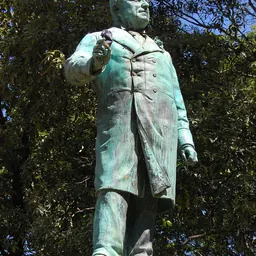
Messenger Statue outside the Sydney Football Stadium Messenger was immortalised in 2008 by a life-size bronze sculpture created by artist Cathy Weiszmann and erected outside the Sydney Football Stadium. The statue forms the second sculpture in an envisaged 10-part series for the Sydney Cricket Ground Trust's Basil Sellers Sports Sculptures Project.
Rugby League Immortal Joining fellow pre-WWII greats Dave Brown and Frank Burge, Messenger was inducted as a Rugby League Immortal in 2018, along with recent greats Norm Provan and Mal Meninga.
External videos and articles Video tribute to Dally Messenger presented at the 2008 Dally M Awards Memorial Video on Dally Messenger published by Eastern Suburbs Memorial Park (cemetery) featuring historian grandson Dally Messenger III
Australian Rugby League Hall of Fame A Personal History told by Dally Messenger III Dally Messenger in Rugby Union's Classic Wallabies Dally Messenger and the Messenger Family published by the Woollahra Municipal Council.
References and Notes
Published books Fagan, Sean / Messenger, Dally III (2007) The Master – The Life and Times of Dally Messenger, Australia First Sporting Superstar, Hachette Livre, Sydney (pbk) Fagan, Sean (2005 & 2007) The Rugby Rebellion: Pioneers of Rugby League, RL1908, Sydney Heads, Ian (1992) True Blue, Ironbark, Sydney Various Authors (1997) Oxford Companion to Australian Sport, Oxford University Press, Melbourne Whiticker, Alan (2004) Captaining the Kangaroos, New Holland, Sydney Moran, Herbert (1939) Viewless Winds – the recollections and digressions of an Australian surgeon P Davies, London
More External links
Don’t just read it —
keep it.
Full-length biographies made to live with: read them, listen on the way to work, watch them tonight.
- E-book
- Audio
- Video
Instant download · yours to keep · every purchase keeps this site free
Important facts
People in Dally Messenger's life
Named in this biography and alive at the same time




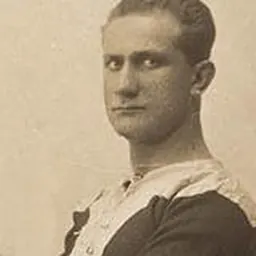
Related people
Same field, nearest in time
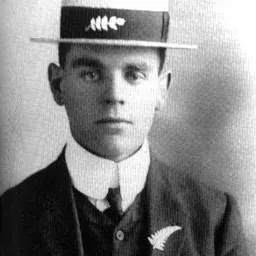


Contemporaries
People whose lives overlapped Dally Messenger's



Frequently asked questions
Who was Dally Messenger?
Australian rugby union and rugby league footballer
When was Dally Messenger born?
Dally Messenger was born on 12 April 1883 in Balmain.
When did Dally Messenger die?
Dally Messenger died on 24 November 1959 in Gunnedah.
What was Dally Messenger's occupation?
Dally Messenger was a rugby league player and rugby union player.
What nationality was Dally Messenger?
Dally Messenger was New Zealand.
Sources & further reading
Cite this page
APA: Biography.guide. (2026). Dally Messenger. https://biography.guide/dally-messenger/
MLA: "Dally Messenger." Biography.guide, https://biography.guide/dally-messenger/.
Chicago: "Dally Messenger." Biography.guide. https://biography.guide/dally-messenger/.
Data last updated: 2026-09-20 · Spot an error? Report a correction.
Page generated 2026-09-27 05:30 UTC