
Albert Henry Baskerville
New Zealand rugby union footballer, and rugby league administrator
About Albert Henry Baskerville
Lived 1883 – 1908 (aged 25). Albert Henry Baskerville was a New Zealand rugby league player and rugby union player.
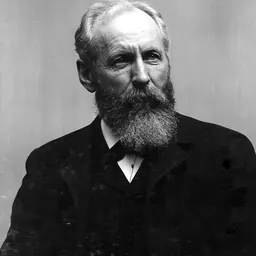
Albert Henry "Bert" Baskerville (born Baskiville; 15 January 1883 – 20 May 1908) was a New Zealand postal clerk, rugby union forward, author of the book Modern Rugby Football: New Zealand Methods; Points for the Beginner, the Player, the Spectator, and a pioneer of rugby league.
Rugby football His father, Henry William Baskiville, had been killed in an accident on 30 January 1903 when doing some drainage works on Upper Queen Street in Auckland. He and some other workmen were working in a deep excavation when one side of it began to collapse, men called out but his father moved the wrong way and was buried to his neck. He was quickly removed but his injuries were too serious to survive. This left Albert as the main income earner for the family since then and they moved to Wellington shortly afterwards. He also played for the Post and Telegraph mid-week side in 1904 which won the tournament, beating Cycle and Bearers in the final. In the following year, he represented the Wednesday Players representative side in a match against the Wairarapa Thursday representative side.
His book, Modern Rugby Football: New Zealand Methods; Points for the Beginner, the Player, the Spectator, was published in 1907 and gave him somewhat of a national profile. After the success of this project he moved on to his next ambitious idea, a professional rugby tour of Great Britain. Baskerville competed in many athletic events from 1903 to 1907 as a short and middle-distance runner where he would compete for prize money. In late 1905, he filed a patent for a "cuff protector and blotter".
The Tour
Baskerville wrote to the Northern Union and asked if it would host a touring party of New Zealand rugby players. The Northern Union was excited by this proposal and quickly agreed. Baskerville began to work full-time on organising the tour, leaving his job at the Postal Department and severing his connection with the Oriental Football Club. The Wellington Rugby Union moved quickly to attempt to stop him from attending its grounds and he received a life ban from the New Zealand Rugby Union. Despite this he managed to put together an impressive touring party that included eight All Blacks, including four from the 1905 tour of Great Britain. The team was dubbed the All Golds by the Sydney press, a derogatory play on the New Zealand rugby union team's nickname the All Blacks.
The tour was a great success both financially (each player earned roughly £300) and on the field, where the touring side won consecutive Test series against Great Britain and Australia. For most of the tour, Baskerville was busy with the administration work and it was not until the final game of the British leg, against St Helens R.F.C., that he played, scoring a try. On arriving in Australia he then played in the first ever trans-Tasman test which was the first match by the Australia national rugby league team, again scoring a try. That was to be the only time that Baskerville represented New Zealand in a Test match. Baskerville contracted pneumonia on the ship taking the touring party from Sydney to Brisbane and, after several days in hospital, died aged 25 in Brisbane on 20 May 1908. His body was taken by the manager, Harry Palmer, and a group of players from each province back to Wellington. The rest of the touring party stayed in Australia to complete the remaining fixtures. Like five other members of the touring party, Baskerville is buried at Karori Cemetery.
Legacy On their return from Australia the remaining members of the tour party held a memorial game, the first game of rugby league in New Zealand, and raised £300 for his widowed mother.
He is commemorated by the naming of the Baskerville Shield, the trophy awarded when Great Britain and New Zealand meet in test series. In 2001, Baskerville was inducted as one of the NZRL Legends of League.
Don’t just read it —
keep it.
Full-length biographies made to live with: read them, listen on the way to work, watch them tonight.
- E-book
- Audio
- Video
Instant download · yours to keep · every purchase keeps this site free
Important facts
People in Albert Henry Baskerville's life
Named in this biography and alive at the same time


Related people
Same field, nearest in time

Contemporaries
People whose lives overlapped Albert Henry Baskerville's




Frequently asked questions
Who was Albert Henry Baskerville?
New Zealand rugby union footballer, and rugby league administrator (1883–1908)
When was Albert Henry Baskerville born?
Albert Henry Baskerville was born on 15 January 1883 in Te Aroha.
When did Albert Henry Baskerville die?
Albert Henry Baskerville died on 20 May 1908 in Brisbane.
What was Albert Henry Baskerville's occupation?
Albert Henry Baskerville was a rugby league player and rugby union player.
What nationality was Albert Henry Baskerville?
Albert Henry Baskerville was New Zealand.
Sources & further reading
· Wikipedia: Albert Henry Baskerville
· DBpedia: Albert Henry Baskerville
Cite this page
APA: Biography.guide. (2026). Albert Henry Baskerville. https://biography.guide/albert-henry-baskerville/
MLA: "Albert Henry Baskerville." Biography.guide, https://biography.guide/albert-henry-baskerville/.
Chicago: "Albert Henry Baskerville." Biography.guide. https://biography.guide/albert-henry-baskerville/.
Data last updated: 2026-09-26 · Spot an error? Report a correction.
Page generated 2026-09-27 05:14 UTC