
About Albert Henry
Lived 1907 – 1981 (aged 73). Albert Henry was a New Zealand rugby union player and politician.
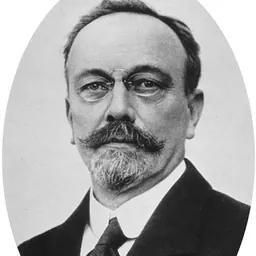
Albert Royle Henry (11 June 19061 January 1981) was the first Premier of the Cook Islands and the founder and first leader of the Cook Islands Party (CIP). First elected Premier in August 1965, he was unseated in the aftermath of the 1978 election after an electoral petition found he had committed electoral fraud. He was later stripped of his knighthood. In 2023 he was posthumously pardoned.
Early life Henry was born in Rarotonga to an Aitutaki family, and was educated on Aitutaki.
In 1942 he moved to Auckland, where he worked as an agricultural worker and a bus driver. In 1945 he became secretary of the Auckland branch of the Cook Islands Progressive Association. He was a leading figure in the CIPA and drew up its programme demanding higher wages, improved shipping, a Cook Islands representative in the New Zealand Parliament, fully elected islands councils, an elected federal islands government, and the abolition of the Resident Commissioner's power to veto legislation. He helped organise the CIPA's industrial campaign in the Cook Islands, and later, its cooperative shipping venture. After the failure of the CIPA he worked at various jobs, including as an interpreter for Cook Islanders in New Zealand courts, while studying economics and philosophy. leading to the formation of the Cook Islands Party. He was elected party president in July 1964. A three-year residential requirement meant that he could not stand for the legislative Assembly, so his sister Marguerite Story ran in the Te-au-o-Tonga electorate in his place. The Cook Islands Party won 14 seats in the 1965 election, Story resigned, and Henry was elected in the resulting by-election. When the Cook Islands was granted self-government in August 1965, Henry became Premier. Story was then appointed Speaker of the Legislative Assembly. and as Premier Henry oversaw its implementation. He also introduced a universal superannuation scheme to be funded by a new philatelic bureau and opposed French nuclear testing in the Pacific. In 1966 he raised income and sales taxes to reduce dependence on New Zealand. The prosecution of Police Minister Julian Dashwood for corruption, a doctor's strike, and the resignation of two Cabinet Ministers cast a pall on his government, but despite this Henry won the 1968 election, defeating the rival United Cook Islanders 16 seats to 6.
In his second term as Premier Henry made a controversial agreement with the New Zealand government for them to fund an upgrade of Rarotonga International Airport in exchange for control of airspace rights. His government also agreed a plan to revitalise Mauke by developing the citrus industry. A proposal from an American syndicate to lease the island of Aitutaki for a tourist resort and casino In 1969 he chaired the annual meeting of the South Pacific Commission which saw island countries take control and elect Harry Moors as secretary-general. In 1970 he advocated for the creation of a political forum to operate alongside the Commission and provide a voice for Pacific nations, which led to the creation of the South Pacific Forum.
At the 1972 election Henry faced fresh opposition from the Democratic Party of Tom Davis. Despite this, the CIP managed to win 15 of the 22 seats. During the election campaign Henry accused public servants of "obstructionism", Despite streamlining government ministries, his government continued to run large deficits, and continued to be financially dependent on New Zealand. In 1973 he introduced a new national flag for the Cook Islands, consisting of a circle of 15 gold stars on a green ensign. In 1974 he hosted a royal visit from Elizabeth II, during which he was knighted.
In September 1974 Henry suddenly declared that his government was planning a referendum on independence from New Zealand, and that he would call a snap-election to do so. The referendum never happened, as both the government and the opposition supported the status quo, and in the resulting 1974 election the Cook Islands party lost its two-thirds majority, though Henry retained power. During the campaign Henry once again threatened public servants who supported the opposition and threatened to become a dictator. but this was delayed due to his lack of the required two-thirds majority. In 1976 he suffered a heart attack while attending the South Pacific Forum in Rotorua, New Zealand, but said he had no plans to retire. In April 1977 he claimed in the New Zealand press that he had uncovered an opposition plot to overthrow the government by force and assassinate him. Later that year he personally supported Czech-born "cancer therapist" Milan Brych and allowed him to practice in the Cook Islands.
1978 election and downfall In January 1978 Henry called elections six months early in an effort to capitalise on a leadership struggle within the opposition Democratic Party. Prior to the elections, three prominent CIP members, William Estall, Raui Pokoati and Joe Williams, left the party. The 1978 election was fiercely contested, and due to restrictions on overseas voting, both parties flew in supporters from New Zealand to vote. The result was a victory for Henry, with the Cook Islands Party regaining its two-thirds majority, and opposition leader Tom Davis losing his seat. The result was challenged in the courts, and in July 1978 Chief Justice Gaven Donne found that Henry had corruptly used government money to fly in voters and secure a majority. The votes of CIP fly-in voters were annulled, resulting in Henry and seven other CIP MP's losing their seats and being replaced by the losing Democratic Party candidates. Henry was ousted from power and Davis was asked to form a government and was sworn in as Prime Minister.
On 16 August 1979, Henry pleaded guilty to two charges of conspiracy and one charge of corruption relating to the use of $337,000 of Cook Islands Government money to fly hundreds of supporters from New Zealand to the Cook Islands in order to vote. He was fined the maximum of $1,400, ordered to pay $2,000 in court costs. A further sentence of three years' probation, imposed solely to bar him from running for political office or participating in political life for that period, was overturned on appeal. Former philatelic bureau director Finbar Kenny subsequently plead guilty to charges under the US Foreign Corrupt Practices Act over the incident.
He was posthumously pardoned on 2 November 2023 by the King's representative on the recommendation of the Cook Islands' Executive Council.
Sport In 1924 the New Zealand All Blacks team called at Rarotonga en route to their tour of the United Kingdom and France. Wanting a local team to train against, Albert Henry, 17 years old and just returned from New Zealand, was asked to get some boys together. A scratch team was put together and the game was played on the Takamoa Grounds. The game ended in a scoreless tie. Henry was very active in forming rugby clubs, first with Tupapa, later with Arorangi where he was a teacher.
Personal life Henry married Elizabeth Connal in 1927, when both were schoolteachers in Rarotonga.
Death Henry died of a heart attack in Rarotonga hospital on 1 January 1981, aged 73. His body was taken around Rarotonga on the back of a pickup truck, and the road was lined with mourners. His grave can be found at the Avarua CICC Church.
Recognition Henry was appointed a Knight Commander of the Order of the British Empire in the 1974 New Year Honours. His knighthood was stripped in April 1980 after his conviction for electoral fraud.
In 1977, Henry was awarded the Queen Elizabeth II Silver Jubilee Medal.
Following his death a bronze bust was erected at his grave.
Don’t just read it —
keep it.
Full-length biographies made to live with: read them, listen on the way to work, watch them tonight.
- E-book
- Audio
- Video
Instant download · yours to keep · every purchase keeps this site free
Important facts
People in Albert Henry's life
Named in this biography and alive at the same time





Related people
Same field, nearest in time

Contemporaries
People whose lives overlapped Albert Henry's


Frequently asked questions
Who was Albert Henry?
Cook Islands politician (1907-1981)
When was Albert Henry born?
Albert Henry was born on 11 June 1907 in Aitutaki.
When did Albert Henry die?
Albert Henry died on 1 January 1981 in Rarotonga.
What was Albert Henry's occupation?
Albert Henry was a rugby union player and politician.
What nationality was Albert Henry?
Albert Henry was New Zealand.
Sources & further reading
· DBpedia: Albert Henry (politician)
Cite this page
APA: Biography.guide. (2026). Albert Henry. https://biography.guide/albert-henry-rugby-union-player-1907/
MLA: "Albert Henry." Biography.guide, https://biography.guide/albert-henry-rugby-union-player-1907/.
Chicago: "Albert Henry." Biography.guide. https://biography.guide/albert-henry-rugby-union-player-1907/.
Data last updated: 2026-09-20 · Spot an error? Report a correction.
Page generated 2026-09-27 05:22 UTC