
About Curtis G. Culin
Lived 1915 – 1963 (aged 48). Curtis G. Culin was an American military personnel and salesperson.
The Curtis G. Culin III memorial in his hometown of Cranford, New Jersey Sgt Curtis Grubb Culin III (February 10, 1915 – November 20, 1963) was a World War II soldier credited with the invention of a hedge-breaching device fitted to Allied armored vehicles during the Battle of Normandy. As they moved inland after the D-Day landings, the Allies found their tanks were unable to operate easily or safely in the Normandy bocage countryside. Instead of breaking through the thick, high hedges the tanks rode over them, which exposed their thinly armored undersides to attack while their own guns could not be brought to bear.
A native of Cranford, New Jersey, Culin was serving as a tanker with the 102nd Cavalry Reconnaissance Squadron (New Jersey National Guard, the "Essex Troop," 2nd Armored Division) when he came up with the four-pronged plow device created from scrap steel from a German roadblock. When attached to the front of his tank it was successful in rapidly plowing gaps in the hedgerows. Military historian Max Hastings notes that Culin was inspired by "a Tennessee hillbilly named Roberts",
Bradley ordered that as many Sherman tanks as possible be fitted with the device. By the launch of Operation Cobra, some 60 percent of First Army tanks were so equipped.
Culin received the Legion of Merit.
Four months after his invention, he lost a leg to a land mine in the Huertgen Forest. When he returned to the United States, he became a salesman for Schenley Industries, Inc., liquor distributors.
Eisenhower speech Culin was mentioned in one of the last addresses by Dwight D. Eisenhower as President of the United States, in a January 10, 1961, speech to the American Society of Mechanical Engineers:
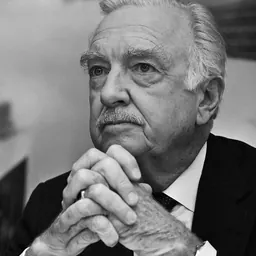
Eisenhower repeated this story about Sergeant Culin in 1964 in a television interview with CBS correspondent Walter Cronkite on the 20th anniversary of the D-Day invasion taking place in the actual hedgerow country of France.
Personal life
Curtis G. Culin married Bernice Enright in 1945. They lived in New York City, where he worked for Schenley Industries. "Curtis Grubb" is a third-generation family name arising from Patriot ancestor Col. Curtis Grubb. Curtis was a member of the Sons of the American Revolution. Culin died in Greenwich Village, Manhattan, New York in 1963. He is buried in Westfield, New Jersey.
Don’t just read it —
keep it.
Full-length biographies made to live with: read them, listen on the way to work, watch them tonight.
- E-book
- Audio
- Video
Instant download · yours to keep · every purchase keeps this site free
Important facts
People in Curtis G. Culin's life
Named in this biography and alive at the same time

Related people
Same field, nearest in time



Contemporaries
People whose lives overlapped Curtis G. Culin's



Frequently asked questions
Who was Curtis G. Culin?
American soldier
When was Curtis G. Culin born?
Curtis G. Culin was born on 15 February 1915 in Cranford.
When did Curtis G. Culin die?
Curtis G. Culin died on 20 November 1963 in Greenwich Village.
What was Curtis G. Culin's occupation?
Curtis G. Culin was a military personnel and salesperson.
What nationality was Curtis G. Culin?
Curtis G. Culin was American.
Sources & further reading
Cite this page
APA: Biography.guide. (2026). Curtis G. Culin. https://biography.guide/curtis-g-culin/
MLA: "Curtis G. Culin." Biography.guide, https://biography.guide/curtis-g-culin/.
Chicago: "Curtis G. Culin." Biography.guide. https://biography.guide/curtis-g-culin/.
Data last updated: 2026-09-20 · Spot an error? Report a correction.
Page generated 2026-09-27 05:07 UTC