
About Creighton Abrams
Lived 1914 – 1974 (aged 59). Creighton Abrams was an American military officer.
Creighton Williams Abrams Jr. (15 September 1914 – 4 September 1974) was a United States Army general who commanded military operations in the Vietnam War from 1968 to 1972. He was then Chief of Staff of the United States Army from 1972 until his death in 1974.
In 1980, the United States Army named its then new main battle tank, the M1 Abrams, after him. The IG Farben building in West Germany was also named after Abrams from 1975 to 1995.
Military career Early career
Abrams graduated from the United States Military Academy at West Point in the Class of 1936, ranking 185th of 276 in the class. His classmates included Benjamin O. Davis Jr. and William Westmoreland. He served with the 1st Cavalry Division from 1936 to 1940, being promoted to first lieutenant in 1939 and temporary captain in 1940.
Abrams became an armor officer early in the development of that branch and served as a tank company commander in the 1st Armored Division in 1940.
World War II During World War II, Abrams served in the 4th Armored Division, initially as regimental adjutant (June 1941 – June 1942), battalion commander (July 1942 – March 1943), and regiment executive officer (March–September 1943) with the 37th Armor Regiment. In September 1943, a reorganization of the division redesignated the 37th Armor Regiment to the 37th Tank Battalion, which Abrams commanded. He commanded Combat Command B of the division during the Battle of the Bulge, and entitled to wear the French Fourragère as a member of the 4th Armored Division.
During this time Abrams was promoted to the temporary ranks of major (February 1942), lieutenant colonel (September 1942), and colonel (April 1945). Abrams was promoted to lieutenant colonel at age 27 years, 11 months.
During much of this time, the 4th Armored Division, led by the 37th Tank Battalion, was the spearhead for General George S. Patton's Third Army. Abrams was well known as an aggressive armor commander. By using his qualities as a leader and by consistently exploiting the relatively small advantages of speed and reliability of his vehicles, he managed to defeat German forces that had the advantage of superior armor and superior guns. He was twice decorated with the Distinguished Service Cross for extraordinary heroism, on 20 September and 26 December 1944. General George Patton said of him: "I'm supposed to be the best tank commander in the Army, but I have one peer—Abe Abrams. He's the world champion."
Frequently the spearhead of the Third Army during World War II, Abrams was one of the leaders in the relief effort that broke up the German entrenchments surrounding Bastogne and the 101st Airborne Division during the Battle of the Bulge. In April 1945, he was promoted to temporary colonel but reverted to lieutenant colonel during the post-war demobilization. On April 23, 1945, Will Lang Jr. wrote a biography of Abrams called "Colonel Abe" for Life.
Interbellum and Korean War Following the war, Abrams served on the Army General Staff (1945–1946), as head of the department of tactics at the Armored School, Fort Knox (1946–1948), and graduated from the Command and General Staff College at Fort Leavenworth (1949).
Abrams commanded the 63rd Tank Battalion, part of the 1st Infantry Division, in Europe (1949–1951). He was again promoted to colonel and commanded the 2nd Armored Cavalry Regiment (1951–1952). These units were important assignments due to the Cold War concern for potential invasion of western Europe by the Soviet Union. He then attended and graduated from the Army War College in 1953.
Because of Abrams's service in Europe and his War College tour, he joined the Korean War late. In South Korea (1953–1954), he successively served as chief of staff of the I, IX, and X Corps.
Staff assignments and division command Upon Abrams' return from South Korea, he served as Chief of Staff of the Armor Center, Fort Knox (1954–1956). He was promoted to brigadier general and appointed deputy chief of staff for reserve components at the Pentagon (1956–1959). He was assistant division commander of 3rd Armored Division (1959–1960) and then commanded the division (1960–1962) upon his promotion to major general. He was transferred to the Pentagon as deputy Chief of Staff for Operations (1962–1963) and during this time he served as representative of the Army Chief of Staff overseeing the armed forces deployed to support the enrollment of James Meredith at the segregated University of Mississippi.
He performed a similar role in May 1963 during the civil rights protests in Birmingham, Alabama. 1968 (19 April), and 1971 (15 February).
Vietnam War
Abrams was promoted to general in 1964 and appointed Vice Chief of Staff of the United States Army. He was seriously considered as a candidate for chief of staff. Due to concerns about the conduct of the Vietnam War, he was appointed as deputy to his West Point classmate, General William Westmoreland, commander of the Military Assistance Command, Vietnam (MACV), in May 1967.
Abrams succeeded Westmoreland as COMUSMACV on 10 June 1968. His tenure of command was not marked by the public optimism of his predecessors, who were prone to press conferences and public statements.
Lewis Sorley asserted that in contrast to Westmoreland, Abrams implemented counterinsurgency tactics that focused on winning the hearts and minds of the Vietnamese rural population. A joint military-civilian organization named Civil Operations and Rural Development Support under CIA official William Colby carried out the hearts and minds programs. According to a colonel cited in Men's Journal, there was more continuity than change in Vietnam after Abrams succeeded Westmoreland.
Newsweek magazine at the time of Abrams' appointment observed that its sources within the Lyndon Johnson administration had spoken at length with Abrams in the past, and had come away convinced that the general would make few changes. The magazine quoted an unidentified military analyst to the effect that, "All this talk of dropping search-and destroy operations in favor of clear-and-hold is just a lot of bull." None of the strategy papers produced by Abrams on assuming command of MACV indicated the need for any change in U.S. strategy and U.S. forces continued large-scale operations to engage People's Army of Vietnam (PAVN) main force units including the Battle of Hamburger Hill in May 1969.
From 1969, the Vietnam War increasingly became a conventional war between the military forces of South Vietnam and North Vietnam. Following the election of President Richard Nixon, Abrams began implementing the Nixon Administration's Vietnamization policy to decrease U.S. involvement in Vietnam. With this new goal, Abrams decreased American troop strength from a peak of 543,000 in early 1969 to 49,000 in June 1972.
The South Vietnamese forces with aerial support from the U.S. repelled the PAVN conventional Easter Offensive in 1972. The prolonged efforts and expense of the war had by then exhausted much of the American public and political support. Abrams disdained most of the politicians with whom he was forced to deal, in particular Robert McNamara and McGeorge Bundy, and had an even lower opinion of defense contractors, whom he accused of war profiteering.
Abrams was in charge of the Cambodian Incursion in 1970. President Nixon seemed to hold Abrams in high regard, and often relied on his advice. In a tape-recorded conversation between Nixon and National Security Advisor Henry Kissinger on December 9, 1970, Nixon told Kissinger about Abrams' thoughts on intervention in Cambodia that: "If Abrams strongly recommends it we will do it." Troop levels in Vietnam eventually reached 25,000 in January 1973, at the time of the four power Paris Peace Accords. Although it occurred before he assumed total command, Abrams bore the brunt of fallout from the My Lai massacre in March 1968.
Nixon grew increasingly dissatisfied with Abrams' performance during Operation Lam Son 719 and had debated for some time whether to recall Abrams. On 4 May 1972, a little more than a month after the onset of the Easter Offensive, Nixon resolved to replace Abrams with his former deputy General Frederick Weyand, but the decision was not publicly announced until 20 June 1972.
Chief of Staff
Abrams was appointed Chief of Staff of the United States Army by Nixon in June 1972. He was not confirmed by the United States Senate until October, due to political repercussions involving accusations of unauthorized bombings of North Vietnam. The modern Ranger battalions owe their existence to Abrams and his charter:
Abrams served as Chief of Staff until his death on 4 September 1974.
Personal life Born in Springfield, Massachusetts, and raised in the Feeding Hills section of Agawam, he was the son of Nellie Louise (Randall) and Creighton Williams Abrams, a railroad worker. Abrams married Julia Berthe Harvey in 1936. She founded the army group of Arlington Ladies and devoted time to humanitarian causes.
The Abramses had three sons and three daughters. All three sons became Army general officers, including John N. Abrams and Robert B. Abrams.
Abrams converted to Catholicism during his time in Vietnam. He was raised as Methodist Protestant.
A heavy cigar smoker, Abrams died at age 59, eleven days before his 60th birthday at Walter Reed Army Medical Center in Washington, D.C., from complications of surgery to remove a cancerous lung.
Awards and decorations His awards and decorations include: Distinguished Service Cross with bronze oak leaf clusterDefense Distinguished Service Medal with bronze oak leaf clusterArmy Distinguished Service Medal with four bronze oak leaf clustersAir Force Distinguished Service MedalSilver Star with bronze oak leaf clusterLegion of Merit with bronze oak leaf clusterBronze Star Medal with V deviceJoint Service Commendation MedalAmerican Defense Service MedalAmerican Campaign MedalEuropean–African–Middle Eastern Campaign Medal with silver campaign starAsiatic-Pacific Campaign MedalWorld War II Victory MedalArmy of Occupation MedalNational Defense Service Medal with one bronze oak leaf clusterKorean Service Medal with bronze campaign starVietnam Service Medal with two silver and three bronze campaign starsVietnam Service Medal with bronze campaign star (second ribbon required for accoutrement spacing)Army Presidential Unit Citation
Foreign decorations and awards His foreign awards and decorations include:
Other awards
French Fourragère
Other badges
Army Staff Identification Badge
Dates of rank
Don’t just read it —
keep it.
Full-length biographies made to live with: read them, listen on the way to work, watch them tonight.
- E-book
- Audio
- Video
Instant download · yours to keep · every purchase keeps this site free
Important facts
People in Creighton Abrams's life
Named in this biography and alive at the same time




Related people
Same field, nearest in time

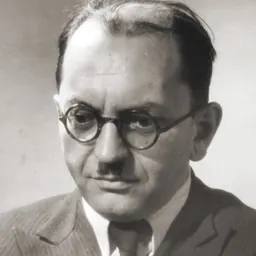



Contemporaries
People whose lives overlapped Creighton Abrams's
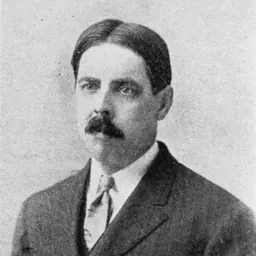
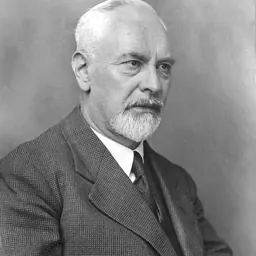
Frequently asked questions
Who was Creighton Abrams?
United States Army General (1914-1974)
When was Creighton Abrams born?
Creighton Abrams was born on 15 September 1914 in Springfield.
When did Creighton Abrams die?
Creighton Abrams died on 4 September 1974 in Washington, D.C..
What was Creighton Abrams's occupation?
Creighton Abrams was a military officer.
What nationality was Creighton Abrams?
Creighton Abrams was American.
Sources & further reading
Cite this page
APA: Biography.guide. (2026). Creighton Abrams. https://biography.guide/creighton-abrams/
MLA: "Creighton Abrams." Biography.guide, https://biography.guide/creighton-abrams/.
Chicago: "Creighton Abrams." Biography.guide. https://biography.guide/creighton-abrams/.
Data last updated: 2026-09-20 · Spot an error? Report a correction.
Page generated 2026-09-27 05:33 UTC