
Count Ferdinand Ernst Gabriel von Waldstein
British Army general
About Count Ferdinand Ernst Gabriel von Waldstein
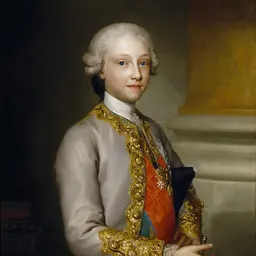
Lived 1762 – 1823 (aged 61). Count Ferdinand Ernst Gabriel von Waldstein was an Austrian patron of the arts, military personnel, composer and lieutenant general.
Count Ferdinand Ernst Joseph Gabriel von Waldstein und Wartenberg (24 March 1762 – 26 May 1823) was a Czech and German nobleman and patron of the arts. A member of the Bohemian House of Waldstein (Valdštejn) and an early patron of Ludwig van Beethoven, his political and military roles included the office of a Geheimrat in Bonn, commander (Komtur) of the Teutonic Order, and (briefly) colonel of a light infantry regiment that he had raised. One of Beethoven's piano sonatas is named after him.
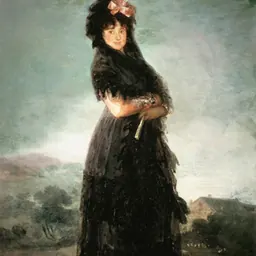
Life Waldstein was born in Vienna, Austria, the son of Count Emanuel Philibert von Waldstein-Wartenberg (1731–1775) and his wife, Princess Maria Anna Theresa of Liechtenstein (1738-1814). One of 11 children, his older brothers included Franz de Paula Adam von Waldstein and Josef Karl von Waldstein (1755-1814), who was an enthusiast of Kabbalah and employer of Giacomo Casanova. His sister Marie-Anne Waldstein (1763-1808) became a famous painter in Spain.
In 1787 he joined the Teutonic Knights and became a novice in Ellingen. Living in Bonn from early 1788 onwards, Waldstein received, on 17 June that year, the knighthood of the Order by its Grand Master Archduke Maximilian Francis of Austria, the Elector of Cologne. He was admitted to electoral court in Bonn and one year later became Geheimrat ("privy councillor") of the Order and a member of its Staatskonferenz . As a gift of Maximilian Francis, he received a knightly estate in Godesberg and became, after submitting his quarters of nobility, a member of the Cologne Landstände in 1793. On 3 June 1795, Ferdinand sealed a contract with Britain on creating a "Mergentheim Regiment". Recruited mainly in the principality of Waldeck and Pyrmont, his regiment arrived in the Isle of Wight, England in 1796. "Waldstein's Light Infantry" was well below its target strength of 1,200 men. While Adjutant Schmitt returned to Germany to continue recruiting, about 800 were sent to the West Indies in 1797. Many died of fever, and at the end of the year or early in 1798 the remaining enlisted men were drafted into the British 60th Regiment of Foot. Many of the officers were offered and accepted British Army commissions. Waldstein was not among them, and it appears that his brief military career ended when his unit was dissolved.
Waldstein's Light Infantry never saw action,
For the next few years, Waldstein spent much of his time in London, although he returned to Germany from time to time. On 23 July 1797, Maximilian Francis wrote, "For over a year neither the order nor his creditors have heard anything from Ferdinand von Waldstein, I wish him much money and intelligence". While in London, he took part in amateur theatricals (for select invited audiences), and is reported to have given creditable performances.
From 1809, Ferdinand lived in Vienna or on his Bohemian estates. He withdrew from the Order in 1811. On 9 May 1812, Ferdinand married the wealthy Countess Isabella Rzewuska and organised numerous festivities on the sidelines of the Vienna Congress. After several unfortunate financial transactions, however, he became impoverished, and died in 1823 in Vienna.
Patron
Waldstein, a fairly good pianist and composer, took an active part in the public life of Bonn. In the literary circles of professor Eulogius Schneider he noticed the young Ludwig van Beethoven around 1790 and he became one of his early patrons. Beethoven's Ritterballet, WoO 1, first performed on 6 March 1791, was attributed to Waldstein until it was discovered later that Beethoven had ghost-written it for his patron. In 1791/92 Beethoven finished a score entitled Eight variations for piano four hands on a theme by Count Waldstein.
It was Waldstein who recommended young Beethoven to Joseph Haydn However, it seems that both men hardly had contact with one another at that time. Beethoven dedicated no other work to Waldstein.
Don’t just read it —
keep it.
Full-length biographies made to live with: read them, listen on the way to work, watch them tonight.
- E-book
- Audio
- Video
Instant download · yours to keep · every purchase keeps this site free
Important facts
People in Count Ferdinand Ernst Gabriel von Waldstein's life
Named in this biography and alive at the same time



Related people
Same field, nearest in time


Contemporaries
People whose lives overlapped Count Ferdinand Ernst Gabriel von Waldstein's




Frequently asked questions
Who was Count Ferdinand Ernst Gabriel von Waldstein?
British Army general (1762-1823)
When was Count Ferdinand Ernst Gabriel von Waldstein born?
Count Ferdinand Ernst Gabriel von Waldstein was born on 24 March 1762 in Vienna.
When did Count Ferdinand Ernst Gabriel von Waldstein die?
Count Ferdinand Ernst Gabriel von Waldstein died on 26 May 1823 in Vienna.
What was Count Ferdinand Ernst Gabriel von Waldstein's occupation?
Count Ferdinand Ernst Gabriel von Waldstein was a patron of the arts, military personnel, composer and lieutenant general.
What nationality was Count Ferdinand Ernst Gabriel von Waldstein?
Count Ferdinand Ernst Gabriel von Waldstein was Austrian.
Sources & further reading
· Wikipedia: Count Ferdinand Ernst Gabriel von Waldstein
· DBpedia: Count Ferdinand Ernst Gabriel von Waldstein
Cite this page
APA: Biography.guide. (2026). Count Ferdinand Ernst Gabriel von Waldstein. https://biography.guide/count-ferdinand-ernst-gabriel-von-waldstein/
MLA: "Count Ferdinand Ernst Gabriel von Waldstein." Biography.guide, https://biography.guide/count-ferdinand-ernst-gabriel-von-waldstein/.
Chicago: "Count Ferdinand Ernst Gabriel von Waldstein." Biography.guide. https://biography.guide/count-ferdinand-ernst-gabriel-von-waldstein/.
Data last updated: 2026-09-25 · Spot an error? Report a correction.
Page generated 2026-09-27 05:11 UTC