
About Count Dillon Gibson
Lived 1921 – 2002 (aged 81). Count Dillon Gibson was an American physician.
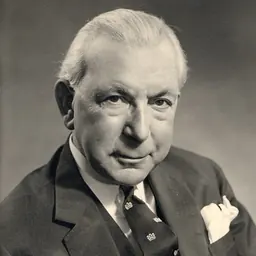
Count Dillon Gibson, Jr. (July 10, 1921 – July 23, 2002) was an American physician known for his advocacy in medical civil rights. As a young professor at the Medical College of Virginia, in 1955 he became the first person outside Tuskegee Syphilis Experiments to raise ethical objections to the study. He was on the medical auxiliary committee that supported voting rights workers during Freedom Summer and with one of his collaborators from that project, H. Jack Geiger, in 1965 Gibson cofounded the first community health center in the United States, beginning a network that grew to serve 28 million low-income patients, as of 2020. In 1965 he was chair of the Department of Preventive Medicine at Tufts University Medical School, but moved to the Stanford School of Medicine in 1969 to chair of the Department of Community and Preventive Medicine. He worked in that role until his retirement in 1988.
Early life Gibson was born in Covington, Georgia, on July 10, 1921, to Count Dillon Gibson Sr. and Julia Thompson Gibson. The family moved to Atlanta in 1933 when his father joined the faculty of Georgia Technical Institute as Professor of Geology. Gibson attended college and medical school at Emory University in Georgia, earning a BS in 1942 and an MD in 1944. He questioned the "ethics of the entire program" as it appeared to him (as was in fact the case) that study participants did not know treatment was being withheld. But he was warned to stay away from the issue by more senior members of the Medical College of Virginia and did not pursue it further.
In 1964, Gibson was one of the medical professionals on the Medical Committee for Human Rights, traveling to Mississippi during the Freedom Summer to provide medical aid to civil rights workers in the voter registration drive. He served as director of the clinic for four years The original Boston clinic was renamed the Geiger-Gibson Health Center in the 1990s. At Stanford he continued to pursue the interdisciplinary approaches to treating health in social context that drove the community health clinic model, engaging not only physicians but also economists, sociologists, statisticians and epidemiologists to work together on challenges in medical care. In 1972, he launched the Interdepartmental Program in Health Services Administration with Nicholas Baloff, a professor at Stanford’s Graduate School of Business (this became the Interdisciplinary Program in Health Services Research). In 1978, Count and Professor William Fowkes organized the Division of Family Medicine.
In California more broadly, he was a supporter of farmworkers' advocate Cesar Chavez as well as Native American activists in the Bay Area. In 1969 Native college students occupied Alcatraz Island for several months to raise awareness of Indian issues and Gibson went to the island to give the students medical care, one of the only non-Native people they allowed in. He founded community health centers in the model he had helped establish, including the Native American Health Center in San Francisco and the Charles Drew Medical Center in East Palo Alto.
Personal life Gibson was a polyglot, speaking Russian, German, Latin and French, as well as studying Spanish, Italian, Dutch and American Sign Language. Shortly before being stationed in Vienna, he converted to Roman Catholicism, but his interest in Russian, fueled by his encounters in Austria with Russian refugees, led him to the Byzantine Church, where he became a devout member. This also introduced him to Katherine Vislocky, daughter of a priest serving Saint Mary's Ruthenian Greek Catholic Church in Manhattan, and they married in 1950. The couple had four children.
After living in California for 30 years, they moved in retirement to West Hartford, Connecticut, in 1999. Vislocky died on February 21, 2002. Gibson died five months later, on July 23, 2002, in Hartford, Connecticut, after a stroke. He was 81.
Don’t just read it —
keep it.
Full-length biographies made to live with: read them, listen on the way to work, watch them tonight.
- E-book
- Audio
- Video
Instant download · yours to keep · every purchase keeps this site free
Important facts
People in Count Dillon Gibson's life
Named in this biography and alive at the same time
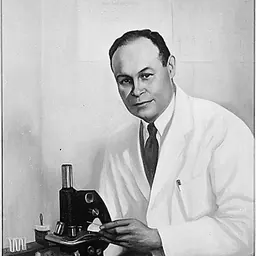

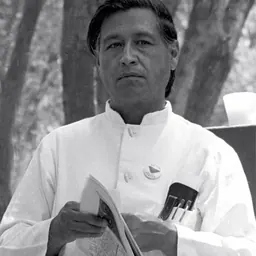
Related people
Same field, nearest in time


Contemporaries
People whose lives overlapped Count Dillon Gibson's




Frequently asked questions
Who was Count Dillon Gibson?
American physician (1921-2002)
When was Count Dillon Gibson born?
Count Dillon Gibson was born on 10 July 1921 in Covington.
When did Count Dillon Gibson die?
Count Dillon Gibson died on 23 July 2002 in West Hartford.
What was Count Dillon Gibson's occupation?
Count Dillon Gibson was a physician.
What nationality was Count Dillon Gibson?
Count Dillon Gibson was American.
Sources & further reading
· Wikipedia: Count Dillon Gibson
Cite this page
APA: Biography.guide. (2026). Count Dillon Gibson. https://biography.guide/count-dillon-gibson/
MLA: "Count Dillon Gibson." Biography.guide, https://biography.guide/count-dillon-gibson/.
Chicago: "Count Dillon Gibson." Biography.guide. https://biography.guide/count-dillon-gibson/.
Data last updated: 2026-09-22 · Spot an error? Report a correction.
Page generated 2026-09-27 05:02 UTC