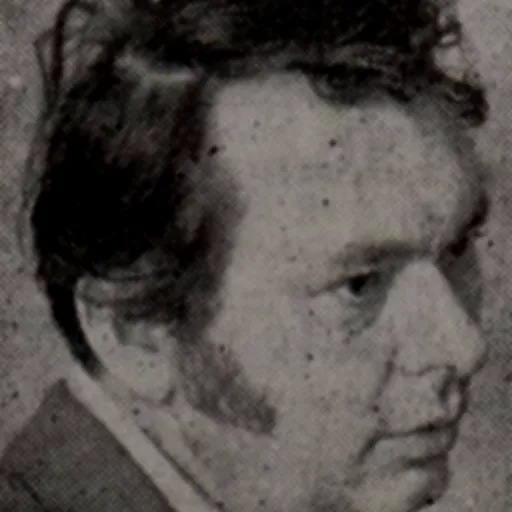
About Cornel Țăranu
Lived 1934 – 2023 (aged 88). Cornel Țăranu was a Romanian composer, university teacher, conductor and musicologist.
Cornel Țăranu (; 20 June 1934 – 18 June 2023) was a Romanian classical composer, musicologist, conductor and cultural manager. A native of Cluj-Napoca in Transylvania, he was always attached to this region, and contributed to cultural cooperation between Romanian and ethnic Hungarian musicians. He studied locally, at the Cluj Academy, assimilating the local avatar of neoclassicism, alongside influences from Romanian folk music—though his debut years also evidenced conformity with Socialist Realism, he was reportedly censured by the communist regime for keeping company with sidelined figures, such as the poet Lucian Blaga. A teacher at his alma mater, he furthered his studies abroad, at the Conservatoire de Paris, becoming an authority on, and posthumous disciple of, George Enescu. Braving controversy, he worked on completing unfinished scores by Enescu, including his Fifth Symphony and a musical poem, Strigoii. In parallel, he founded Cluj's Ars Nova, a chamber orchestra dedicated to contemporary classical music and performance art.
Țăranu's main compositions focus on orchestral work; he wrote two operas, vocal music for soloists and choirs, and critically acclaimed film scores. His style transitioned into a postmodernism with expressionist tinges, used mainly in his shorter pieces, but remained largely neoclassical in his four symphonies. His personal project was a musical companion to modern Romanian literature, directing him to explore various other sources of inspiration. Depending on context, his contributions were informed by folklore (Romanian, Romani and Greek), Byzantine music, and jazz. He also produced a number of distinctly historicist pieces, which took inspiration from political or descriptive texts in the history of Transylvania. Achieving mainstream recognition in the 1980s, when he won the Koussevitzky Prize, Țăranu maintained his reputation after the Romanian Revolution of 1989. A Chevalier of the Ordre des Arts et des Lettres in 2002, he directed the music festival Cluj Modern, and was a long-serving vice president of the Union of Romanian Composers. His film work included collaborations with his brother-in law, director Nicolae Mărgineanu; he was also the son-in-law of psychologist Nicolae Mărgineanu Sr.
Biography Early life and neoclassical debut Țăranu was born in the Transylvanian city of Cluj (now Cluj-Napoca), In 1998, Țăranu's colleague Ferenc László praised him as one of the few Transylvanian composers, whether Romanian or Hungarian, who chose not to leave their "rural" region for success abroad: "As a flexible mind, he succeeded in what few Transylvanians manage: while he lives in Cluj, his work travels around the world." He came from a musical family: "My parents were genuine aficionados, they frequented Cluj's musical milieu, my father played the violin and had a great ear for music. I began to study music at a very early age, then, in the most spontaneous way, I started to improvise, to work on my very own tiny essays in composition."
Țăranu studied at the local Conservatoire (later the Gheorghe Dima Academy) from 1951 to 1957—piano with and composition with Sigismund Toduță. Fifty years later, Țăranu noted that Toduță, as the son in law of the political prisoner Ioan Suciu, was especially fragile and cautious, for being easily blackmailed by the communist authorities. Lacking a "balance between sincerity and diplomacy", he publicly spoke of his teacher as the Romanian Brahms, unaware that such praise of the classics would make Toduță even more exposed to persecution. In 2006, Țăranu spoke of his non-publicized clashes with the Romanian Workers' Party (PMR) and its cultural dogma. As he notes, the troubles started in April 1957, when, as part of his academic assignments, he composed a piece based on Cetini negre, by the poet-philosopher Blaga. It was performed by the Transylvania State Philharmonic Orchestra just days before Blaga was officially blacklisted by communist censors as a "mystical" poet, with Țăranu himself being kept under close watch, for alleged political deviation, until 1959. Țăranu, who was still on friendly terms with former members of the anti-communist Sibiu Literary Circle, also kept contacting Blaga. In 1963, Tîrgu Mureș State Orchestra recorded his hymn for the PMR, with lyrics by Miron Scorobete. That year, music critic Iván Kováts wrote about Țăranu's own activity as a music journalist, praising him for covering the "most up-to-date musical creations"; according to Kováts, Țăranu and Bălan were the leading musicologists active in postwar Romania. In 2023, Alex Vasiliu, himself a music journalist, looked back on Țăranu's contribution as a critic under communism: "Even when ideological avatars have more or less altered the objectivity of many a chronicler, the value of commentary from these past decades endures as almost unblemished, or even intact, when these have been written by musicologists and composers with immaculate training, educated and committed to the truth. Cornel Țăranu a was an indelible portion of that latter category."
The young composer was at the time performing his music in both Romania and the Hungarian People's Republic, generally in collaboration with conductor Mircea Cristescu; one such piece was the musical version of a poem by Attila József. He then provided the film score to József Somogyi's Ítélet, a György Dózsa biopic co-produced by studios in Hungary, Romania, and Slovakia in 1969. In mid-1966, with letters of recommendation from art critic Petru Comarnescu, Țăranu joined the first group of students that the Romanian communist regime had vetted for travel beyond the Iron Curtain—as he recalls, the group also included filmmaker Lucian Pintilie, theater director Andrei Șerban, and actress Irina Petrescu. Comarnescu's credentials allowed him to visit with some leading Romanian exiles, including scholar Ionel Jianu, who took him on an impromptu tour of French artists' studios. He still identified Blaga, alongside the modernist doyen Tristan Tzara (whose love poetry was adapted by Țăranu into five pieces of music) and 1960s poet Nichita Stănescu, as his most treasured mentor. He credited Stănescu, Ana Blandiana, Marin Sorescu and Cezar Baltag as his dear friends, who provided him with a sense that "something was moving" in Romanian art. His work as a composer focused on bridging music and literature, for instance with a series of lieds inspired by Blandiana's verse, first performed for the public in February 1969. In tandem, he contributed several interpretations of novels by his more senior friend, Camil Petrescu. He also scored lyrical fragments from Petrescu's Patul lui Procust, which fascinated him as "strange poems", Țăranu founded the Ars Nova chamber orchestra, that he directed and conducted—including during their first appearance at Toamna Muzicală Clujeană (TMC) festival in October of that year. In a 1969 conversation with Iosif Sava, he mentioned "the widespread echos that the youthful ensemble has stirred among the composers in both Cluj and Bucharest, who have stated their wish to provide a permanent stream of new works for [its] repertoire." Ars Nova and its conductor reportedly enjoyed resounding success at the Warsaw Autumn of 1973. In June 1981, Țăranu himself noted that Ars Nova's live performances had been recorded in London, Paris, Brussels, Mannheim, Zagreb, and Budapest. Over the following decade, Ars Nova had expanded into performance art, through collaborations with Contemp dance troupe (managed by Adina Cezar). At the 1982 TMC, Contemp danced to music by Țăranu, Aurel Stroe, and Janine Charbonnier. The show was poorly reviewed by conductor Casiu Barbu, who suggested that Ars Nova was too obvious and "pedagogical" in its experimentation.
Țăranu completed his habilitation in 1974, having been an assistant professor from 1970, and becoming a full professor in 1990. Țăranu's musicological research was focused on contemporary Romanian music including Enescu, Moldovan, Liviu Glodeanu, and Toduță, and on works by Messiaen, Karlheinz Stockhausen and Iannis Xenakis. (specifically, he worked on the Symphony's Parts I and IV).
In its piano-only version, Strigoii was performed by Țăranu himself at the 1972 TMC, but, as Tabarasi-Hoffmann recalls, it was "insufficiently covered" by the musical press.
Postmodernism and historicism As Kováts notes, Țăranu's music had come to reject traditionalism during the early 1960s: like Olah and Anatol Vieru, "Cornel Țăranu completely renounced the old, tested—and quickly successful—creative methods. We have to say that his new work is neither catchy nor attractive, as much as it is modern and contemporary." In a 1975 piece, done from Eminescu's "Ode in Ancient Meter" and recorded with baritone Ion Budoiu, Țăranu closely adhered to Enescu's standards—as argued by critic Radu Stancu, he was in succession to Œdipe.
Also in 1975, Ars Nova recorded his Tombeau de Verlaine, to a text by Stéphane Mallarmé, during a series of "debate-concerts" hosted by the Romanian Television; it was done for piano, percussion, and two female voices—Kriza and Edita Simion. According to Stan, it marked a peak in that collection: "very singable, very Latin, very well put together." The 1983 Cîntece nomade ("Nomad Songs"), which put to music Baltag's poetic work (and, through it, the staples of Romani folklore), is regarded by critic Virgil Mihaiu as stylistically undefined, an "open work" of "cultural synthesis". Mihaiu argued that it contained "ancestral echoes" filtered through Blaga's philosophy, but also hints to James Joyce's Finnegans Wake. Musicologist Zoltán Farkas sees Țăranu and Baltag as having created a new narrative genre (the "Gypsy opera"), but also notes that Cîntece nomade is at core a belated contribution to expressionist music. was issued as an LP by Electrecord. It won him the Koussevitzky Prize for 1982; jury president Alfred Hoffman offered praise to Țăranu's "vigorous style" of "firm conviction, expressed in a lapidary, contemporary and yet specific manner". In 1984, art critic Oliv Mircea noted that Țăranu had moved away from the classical line with its "strong inserts from folk songs", and was one of the composers embracing "serialism, post-serialism, and aleatoricism", veering into electroacoustic music. Other Romanian innovators, cited by Mircea, included Glodeanu, Moldovan, Nicolae Brînduș, Adrian Enescu, Adrian Iorgulescu, Myriam Marbé, and Fred Popovici. In the four symphonies that he authored over three decades, and which were only published together in 2002, Țăranu adhered more strictly to the neoclassical canon, with subdued national influences. In a 1985 retrospective for Scînteia, Doru Popovici assessed that, like Olah, Vieru, Remus Georgescu and others, Țăranu had introduced "new means of expression" to the "songs for the masses"; these were positive examples, fitting the ideological mold of "Socialist Romania": "We require that songs for the masses have a lyrical content, that highlights the country's beauties, the spiritual bliss one gets from harmony with all of Earth's lovely creatures, the generosity of decent men, namely those who do not live merely for their personal satisfaction, but, first and foremost, for the advancement of society".
As the author of music for films, Țăranu returned in 1976 with Red Apples, a project by Alexandru Tatos and Ion Băieșu. He and director Nicolae Mărgineanu Jr worked on the 1979 film Un om în loden, which earned them both awards at the 1980 film festival in Costinești. In 1983, he composed the score to Mărgineanu's Return from Hell, done from a short story by Ion Agârbiceanu. His contribution earned praise from film critics at Cinema, who spoke of Țăranu's music as being in "perfect unity" with Mărgineanu's direction, as well as a top prize from the Romanian Filmmakers' Association. The composer was by then married to Mărgineanu's sister Dana, a teacher of English. This made him the son-in-law of psychologist and former political prisoner Nicolae Mărgineanu (1905–1980); his mother-in-law, Eufrosina, was the daughter of Konstantinos Arvanitis, a merchant and published diarist of Graeco-Bulgarian descent. The director and composer embarked on another, similarly celebrated collaboration on the 1987 Pădureanca, which earned Țăranu another award at the Costinești film gala.
Late in 1987, Țăranu's Symphony No. 4 "Ritornele", which functioned as his "essay on form", was a centerpiece of the TMC. During the TMC's 1989 edition, Țăranu premiered several new works, all of which garnered praise from critics such as Casiu Barbu: a toccata for saxophone, percussion and piano; a vocal symphony based on texts by Paul Celan; and the especially successful Testament, using Byzantine music and Teodora Cantacuzino's last will as its two sources of inspiration. This formed part of a series of historicist works, which focused on prosaic texts with poetic nuances—also including pieces based on the Supplex Libellus Valachorum, an 1872 Latinate obituary to the national hero Avram Iancu, and an inscription from Roman Dacia. He was receiving accolades for his work as an educator, and specifically for his contribution to fostering intercultural understanding. As noted by László, Țăranu was fluent in Hungarian (as well as English, French, German and Russian), and could establish permanent links with his students. These "did not have to suppress their Hungarianness in the class of a Romanian teacher, and Țăranu even support[ed] their affirmation." He wrote the music to another Mărgineanu film, Somewhere in the East, which premiered in 1991; based on a novel by Augustin Buzura, it told the story of communist crimes during the collectivization of agriculture. His wife Dana became involved with the effort to recover information about the communist imprisonment of civilians such as her father, joining the Cluj branch of Memoria Cultural Institute. Țăranu continued to serve as such for more than two decades. His Cîntece nomade was showcased by Ars Nova at the 1991 Contemporary Music Festival in Budapest—featuring performances by Anton Tauf, Geta Orlovschi, and Călin Forlea. Scholar Ion Pop reviews Oreste-Oedipe as a postmodern work with a "difficult score", noting that it borrowed motifs from Enescu and from Greek musical folklore. From 2000, Țăranu's work on Strigoii was continued by Sabin Pautza, who provided an orchestral arrangement and published the completed piece in 2018. Țăranu died in Cluj-Napoca on 18 June 2023, two days before his 89th birthday.
Trio for violin, viola and cello, 1952
Don’t just read it —
keep it.
Full-length biographies made to live with: read them, listen on the way to work, watch them tonight.
- E-book
- Audio
- Video
Instant download · yours to keep · every purchase keeps this site free
Important facts
People in Cornel Țăranu's life
Named in this biography and alive at the same time


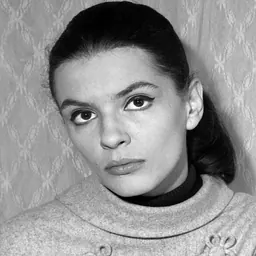

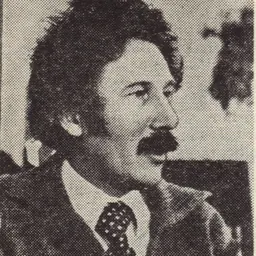
Related people
Same field, nearest in time
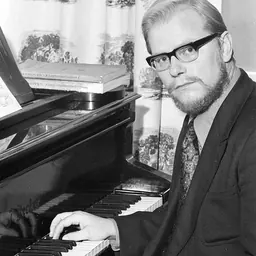
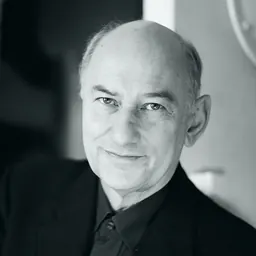



Contemporaries
People whose lives overlapped Cornel Țăranu's


Frequently asked questions
Who was Cornel Țăranu?
Romanien composer and conductor (1934–2023)
When was Cornel Țăranu born?
Cornel Țăranu was born on 20 June 1934 in Cluj-Napoca.
When did Cornel Țăranu die?
Cornel Țăranu died on 18 June 2023 in Cluj-Napoca.
What was Cornel Țăranu's occupation?
Cornel Țăranu was a composer, university teacher, conductor and musicologist.
What nationality was Cornel Țăranu?
Cornel Țăranu was Romanian.
Sources & further reading
Cite this page
APA: Biography.guide. (2026). Cornel Țăranu. https://biography.guide/cornel-taranu/
MLA: "Cornel Țăranu." Biography.guide, https://biography.guide/cornel-taranu/.
Chicago: "Cornel Țăranu." Biography.guide. https://biography.guide/cornel-taranu/.
Data last updated: 2026-09-23 · Spot an error? Report a correction.
Portrait: Wikimedia Commons · author & licence
Page generated 2026-09-27 05:05 UTC